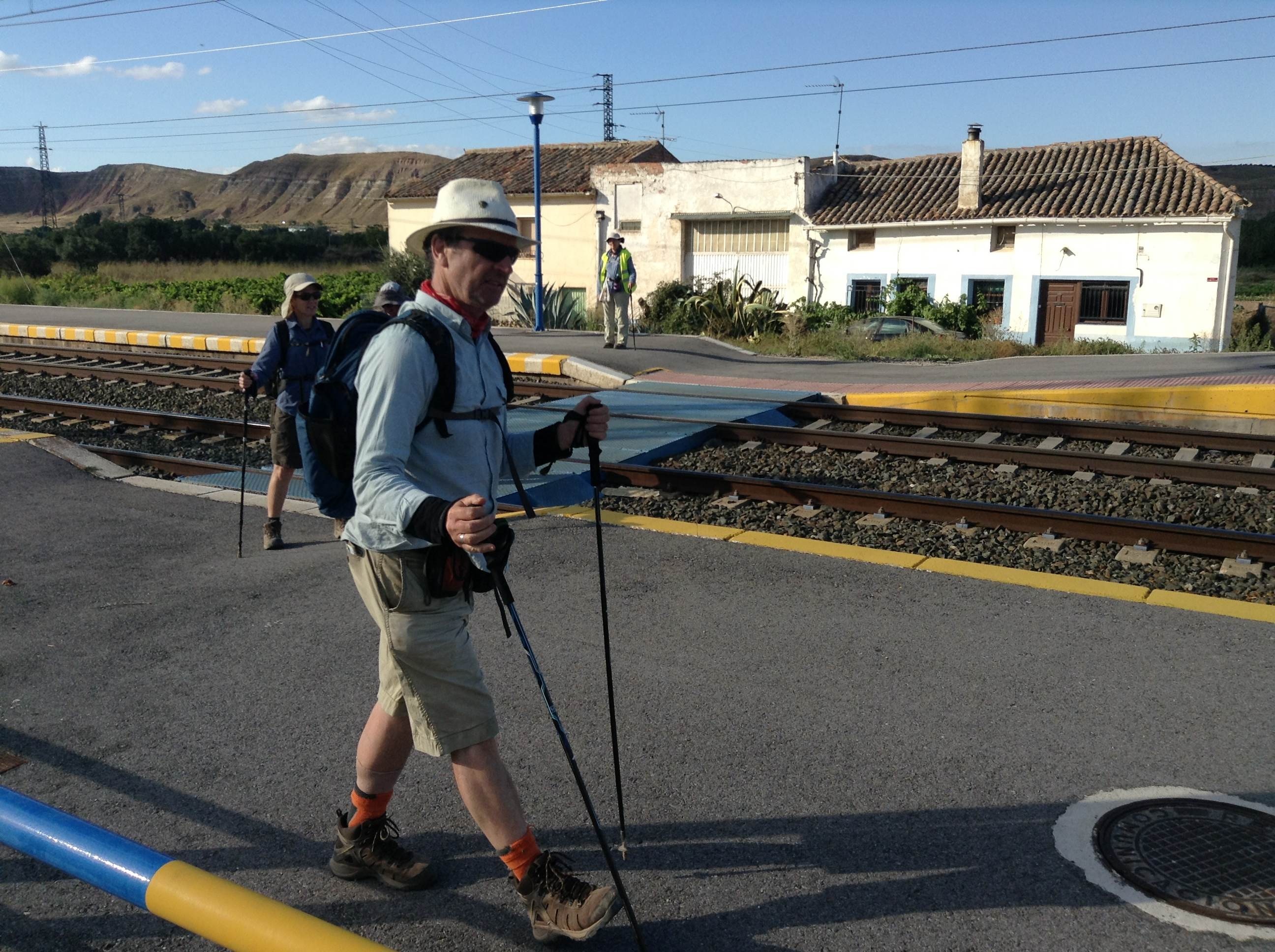
Stage 14: Alagón – Zaragoza (28.8 km)

Some thoughts on pilgrimage. Each day I ask myself, Why are we doing this?  Why do we put ourselves through this? In a paper entitled “Spirituality for the 21st Century” — a draft of which can be found in the Reading section of this weblog under the tab Journal Articles — my friend Bill Schmidt, an Associate Professor of the Institute of Pastoral Studies at Loyola University Chicago, writes:

It has long been suggested that pilgrimage is archetypal, namely, that it represents a universal human impulse within human experience. As archetype it has the capacity to rearrange psychic elements thereby producing psychological, spiritual, and social effects. This seeming capacity to rearrange psychic content is why pilgrimage is so universally present in all its many historical and contemporary forms. Pilgrims often seem profoundly compelled to go on their journeys as if an eruption from deep within resonates and intensifies the desire. Most pilgrims know the road will inevitably bring certain hardships and struggles yet this deters few. No true pilgrim considers their journey a vacation, or a disengagement from the challenges of one’s life, but rather a journey toward the transformative possibility that the journey itself contains (pp. 2-3).

Schmidt sees six distinct types of pilgrimage  (1) Devotional, (2) Healing, (3) Ritual/Life Cycle, (4) Obligatory, (5) Wandering, and (6) Transformational.

A pilgrimage such as the Ignatian Camino is a limit experience. Physically we approach our limits (in my case I pushed beyond my limits and as a result I have not been able to walk for the past six days).  Approaching his or her physical limits forces the pilgrim to slow down and face himself or herself.  The Camino may cause a pilgrim’s defences to disintegrate and a new sense of the self and one’s purpose in life may begin to emerge. In this sense pilgrimage is transformational.

Bill has written a book on his experience of walking the Camino Frances. Entitled Walking with Stones: A Spiritual Odessey on the Pilgrimage to Santiago, it is well worth a read. I wrote one of the book teasers for Walking with Stones which appears on the back of Bill’s book. It reads:

Interweaving his own intimate story with spirituality, psychology, and theology, Bill Schmidt provides, in his remarkably frank and vulnerable account of his pilgrimage to Santiago, a means by we might discover our own way through love and life. Be careful when you read this book: it may well tempt you to pull on a pair of boots and hike across Spain in search of God and self.

I guess that is what I am doing — again!

Saint Ignatius understood the transformational nature of a pilgrimage. In fact he called himself “the pilgrim”.  For Jesuit novices he envisaged that they would each have the experience of making the full Spiritual Exercises over thirty days but that this was only one element in a broader process of conversion in the novitiate which included working with the sick and dying in a hospital and:

…making a pilgrimage for a further month without money, but rather at appropriate times, begging at doors for love of God our Lord—so that they can get used to eating badly and sleeping badly, and so that, at the same time, leaving aside all the hope and expectation that they might have of money or other created things, they might place it whole-heartedly, with true faith and intense love, in their Creator and Lord (Examen, n. 67.1-2).

Ignatius understood that the graces given in the Spiritual Exercises needed to be consolidated and he saw caring for the sick in hospital and a pilgrimage as two means of doing that.

Today’s walk. On the stage from Alagón to Zaragoza we left behind the tranquil farmlands and crossed over the A-68 highway several times.
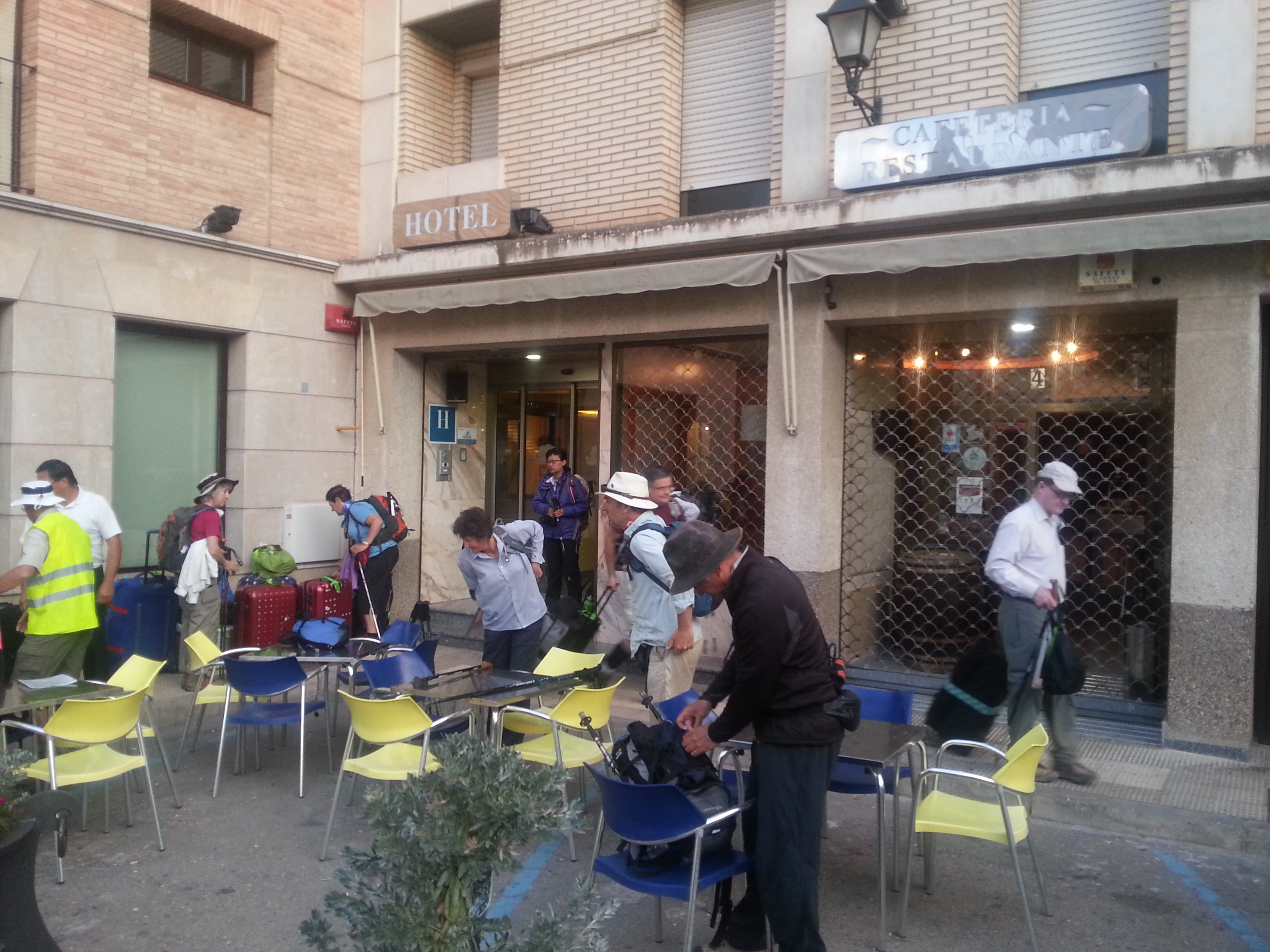
Leaving our hotel in Alagon

Leaving our hotel in Alagon

View of Monzalbarba square

View of Monzalbarba square

Beautifully landscaped council building in  Sobradiel
Beautifully landscaped council building in Sobradiel

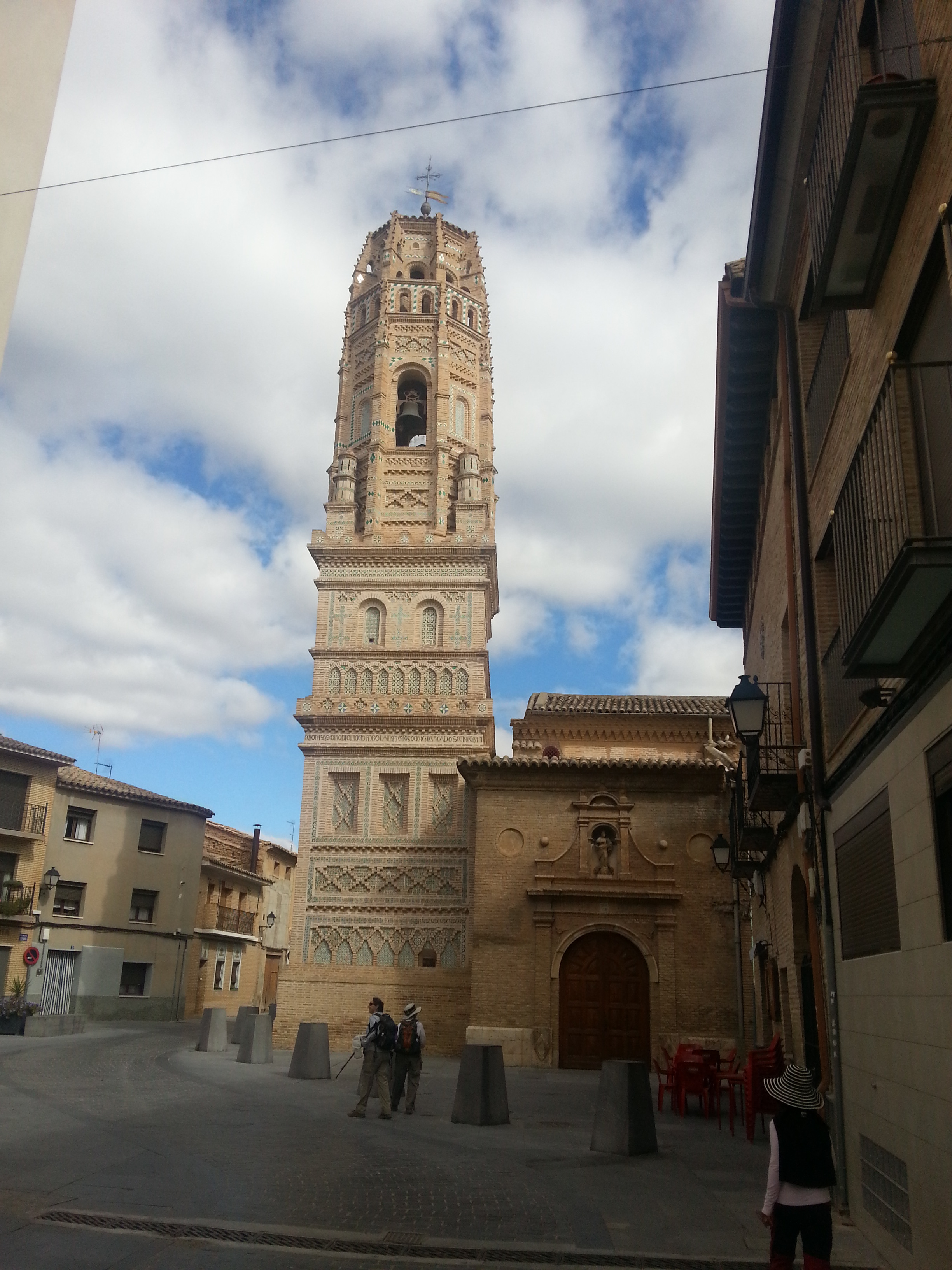
Church spire in a small town called Utebo

Church spire in a small town called Utebo

Lunch in Monzalbarba
Lunch in Monzalbarba

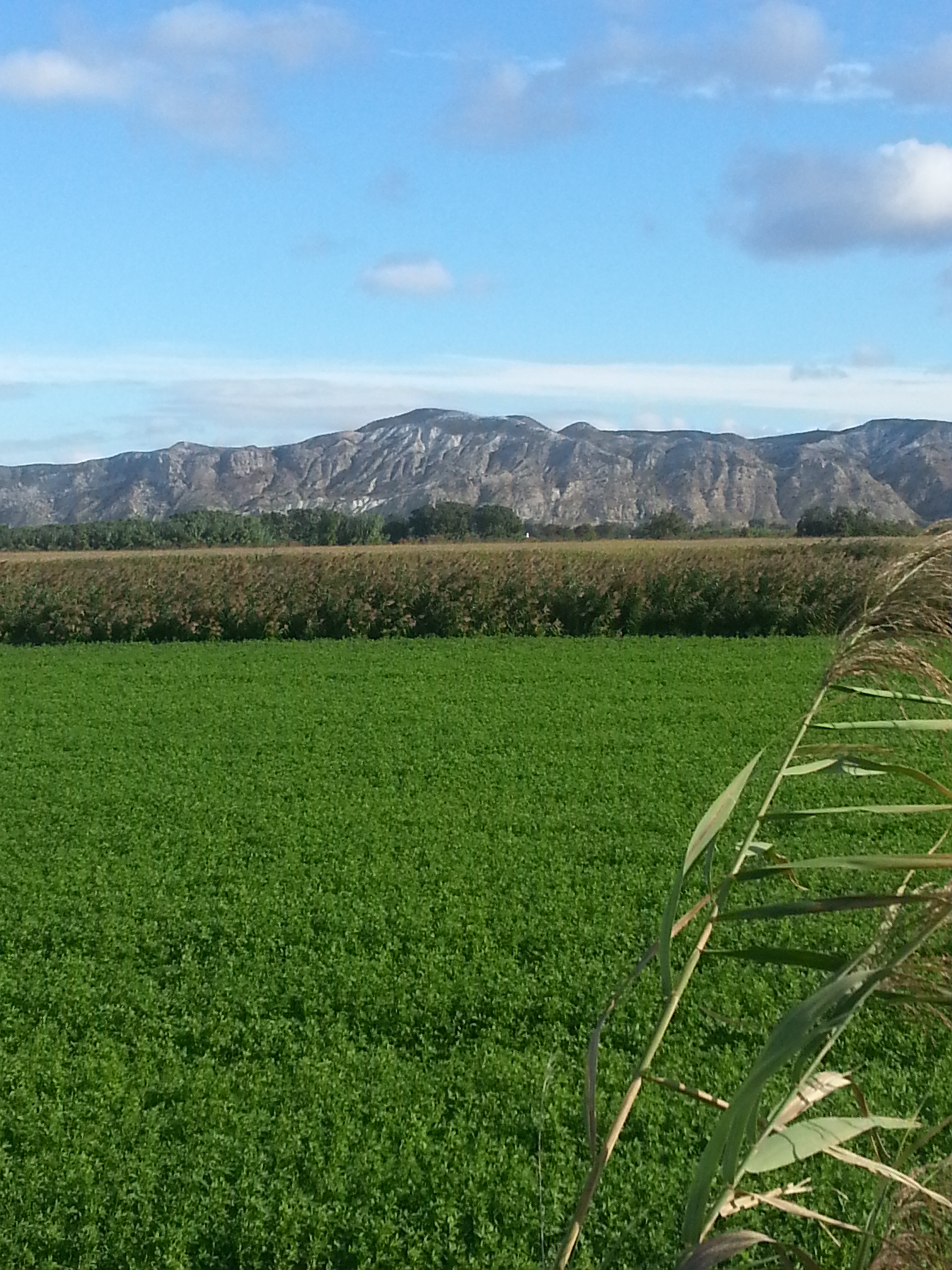
View over farmland to the mountains

View over farmland to the mountains

Rejoining the Ebro River just outside Zaragoza

Rejoining the Ebro River just outside Zaragoza

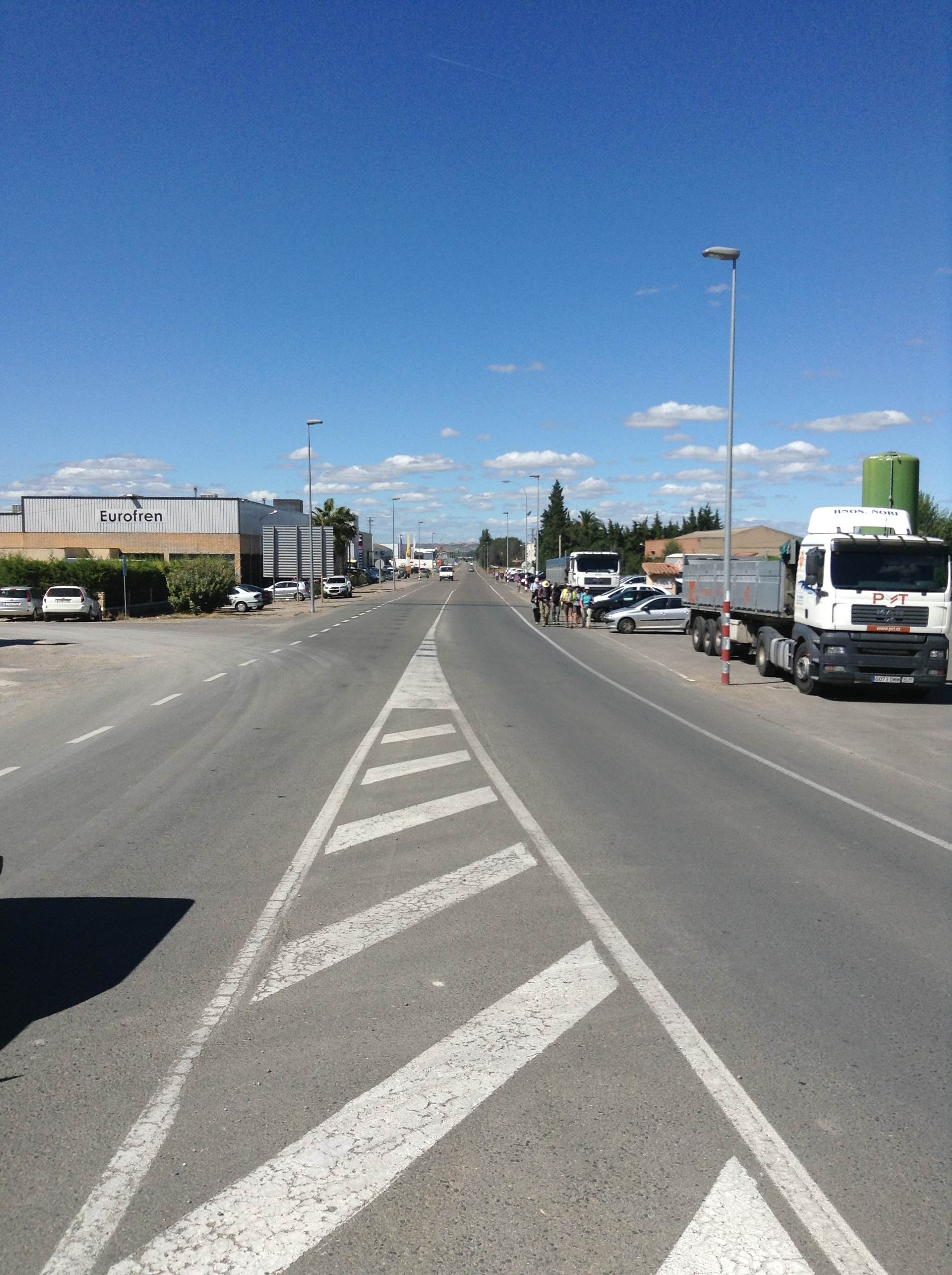
Arriving in Zaragoza

Arriving in Zaragoza — the spires El Pilar in the background

Peter Walden writes:

        “It was another long walk today of 30.8 kms which we finally completed at 4:20pm. Fortunately the weather was kinder to us today with lower temperatures, cloudy conditions and a cool breeze at our backs. Our first break was the 10 kms mark in a small town called Sobradiel which had beautifully landscaped public buildings and we took the opportunity to get our pilgrim passports stamped there. The group walked well today and covered the first 18.5 kms to our lunch destination in a record time.  Our way was a mixture of sealed and unsealed roads which were very stony and uneven in sections. After lunch we only had 12 kms to go and it was not long before we could see the Zaragoza skyline. For the  first time we got lost while trying to enter the city because the route had been substantially altered due to recent construction activity.  After asking directions we eventually found our way.

Stage 13: Gallur – Alagón (21.2 km)


Our two youngest pilgrims, Amanda and Tracy

Our two youngest pilgrims, Amanda and Tracy, ready for the day’s walking

This morning we took the bus back to Gallur where we had our briefing about the route:

Today was a short walking stage, mainly along hard-packed dirt farming tracks.  Peter Walden writes:

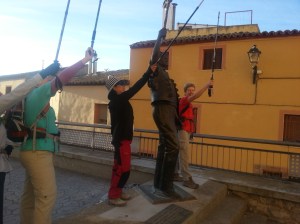
        “We took a bus from our hotel in Tudela to Gallur, our starting point for this leg of the pilgrimage.  We must be getting stronger as we now look upon the 21.2 kms today as an easy day compared to what we have been walking, particularly yesterday. At Gallur we started from the Cathedral and saw that the roof was covered in stork nests. To one side was the statue of a man looking up,  waving his walking stick and yelling.  Our opinion was that he was trying to  frighten the storks away.”

Pilgrims assisting the statue to shoo away the storks

Pilgrims assisting the statue to shoo away the storks

We walked mostly on sealed roads all morning and made good progress. It was hotter today but again we were blessed with a gentle cool breeze at our backs. Once again we passed through fertile land irrigated by water from the Ebro. Many of us enjoyed the wild figs that we were able pick along the road.

Fr John Fitzgerald and Fr Joe Taylor deep in conversation on the road

Fr John Fitzgerald and Fr Joe Taylor deep in conversation on the road

Goats, sheep and donkeys on the road

Goats, sheep and donkeys on the road

Passing through a plantation

Passing through a plantation

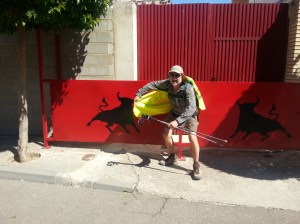
At the 15 km mark we stopped for a group photo to celebrate passing 320 kms which is the half way point of our Pilgrimage. We rejoined the Ebro River in the morning and stopped in a bar in the small town of Cabanas de Ebro for lunch at about 1:30pm. The protective barriers were still in place along the streets as yesterday they had celebrated the running of the bulls through the town streets. 

Fr Paddy Mugavin ready for the  bull run in Cabanas de Ebro,  but one day late

Fr Paddy Mugavin ready for the bull run in Cabanas de Ebro, but one day late

After lunch there only remained another 5kms to our destination for which we were grateful as the heat of the sun was intense. We arrived at Hotel Los Angeles, Aragon at 3:30pm in good spirits.”

The Ignatian Camino passes through Luceni, a small town with an ancient Roman presence (excavations of the first settlements have unearthed coins and medals from the time of 2nd century AD emperor Antonius Pius).

According to historians, it was on the outskirts of Luceni where Ignatius debated about whether or not to kill the Muslim with whom he had had an argument. Here is the quote from Ignatius’ Autobiography:

While he journeyed on, a Saracen mounted on a horse came up with him. In the course of the conversation mention was made of the Blessed Virgin. The stranger remarked that though he admitted that the Mother of Christ had conceived without detriment to her virginal purity, yet he could not believe that after the conception of her divine Son she was still a virgin. He was so obstinate in holding this opinion, that no amount of reasoning on the part of Ignatius could force him to abandon it. Shortly afterward the Saracen rode on, leaving the pilgrim to his own reflections. These were not of the most peaceful nature. He was sorely troubled as he thought over the conduct of his recent fellow-traveller, and felt that he had but poorly acquitted himself of his duty of honoring the Mother of God. The longer his mind thought upon the matter, the more his soul was filled with indignation against himself for having allowed the Saracen to speak as he had done of the Blessed Virgin, and for the lack of courage he fancied he had shown in not at once resenting the insult. He consequently felt impelled by a strong impulse to hasten after him and slay the miscreant for the insulting language he had used. After much internal conflict with these thoughts, he still remained in doubt, nor could he decide what course to follow. The Saracen, who had ridden on, had mentioned to him that it was his intention to proceed to a town not far distant from the highroad. At length, Ignatius, wearied by his inward struggle and not arriving at any determination, decided to settle all his doubts in the following novel way: he would give free rein to his horse, and if, on coming to the crossroad, his horse should turn into the path that led to the destination of the Moor, he would pursue him and kill him; but if his horse kept to the highroad he would allow the wretch to escape. Having done as he had decided, it happened through the Providence of God that his horse kept to the highroad, though the place was distant only about thirty or forty yards, and the way leading to it was very wide and easy.

Inigo and the Moor

Inigo and the Moor

Inigo’s pilgrimage could have had such a dramatically different conclusion had the horse chosen the other path.  He would have become a murderer rather than a saint.  To say that his capacity for discernment at this stage in his life was still quite undeveloped is an understatement.

The destination today was Alagón.  In the old part of town there is a former college of the Society of Jesus, beside the church of Saint Anthony of Padua.


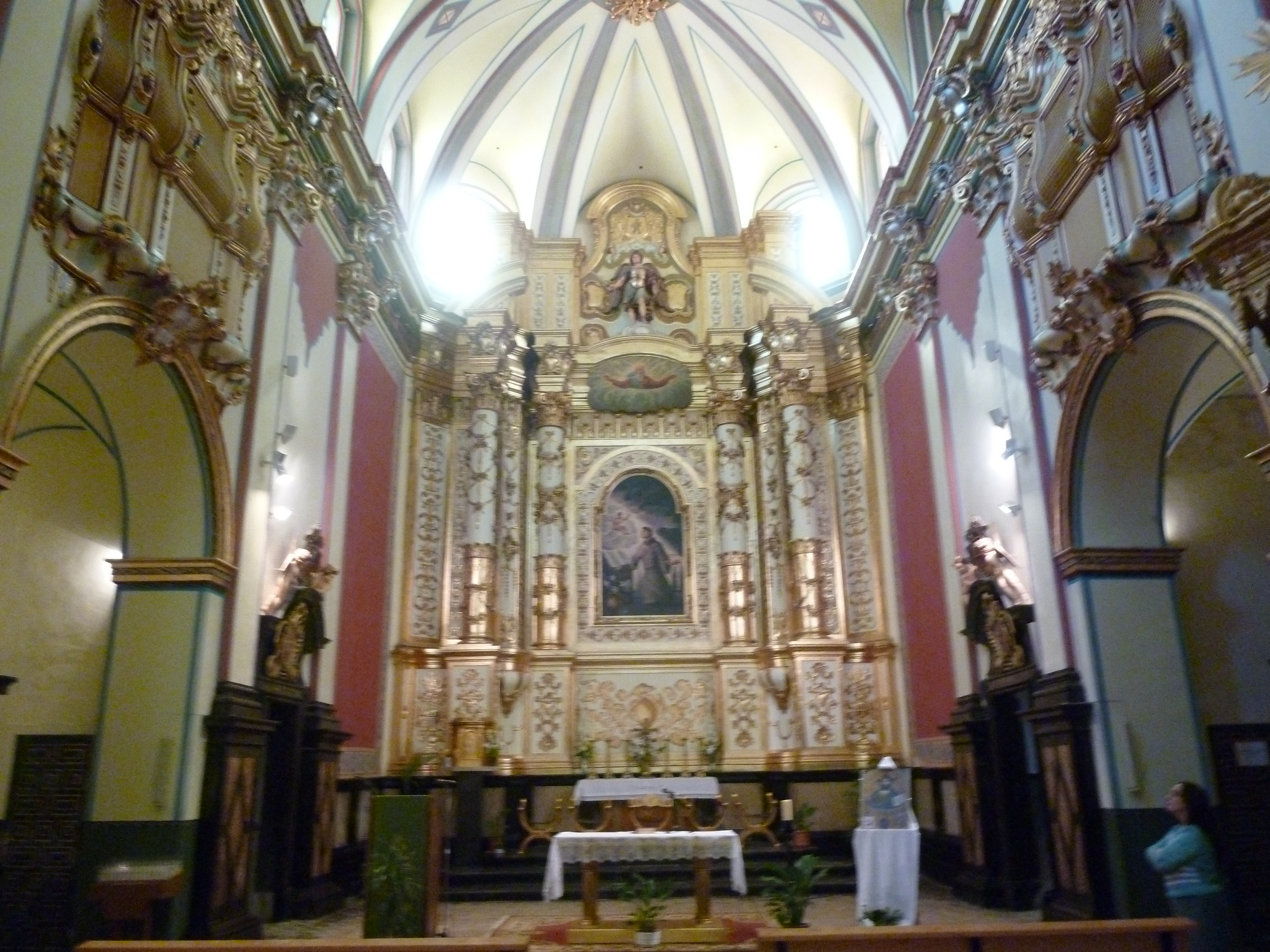
Chapel of the Jesuit School in Alagon

Chapel of the Jesuit School in Alagon

Saint Francis Xavier

Saint Francis Xavier features in the chapel

A mural of Goya’s can be found in the old Jesuit College, which is now a cultural centre and a centre for adult education. He painted the fresco in 1765-66. It covers the vault of the interior staircase and represents the Exaltation of the Name of Jesus.  In the centre appears the anagram of Jesus which is also the symbol of the Society of Jesus (IHS), surrounded by cherubim floating in a cloud of Glory. The composition is simple and of great beauty, and demonstrates that Goya, despite his youth (he was 19 years at the time he painted it) showed a technical and artisitic ability that was already considerable.

Mural painted by Goya

Goya’s mural seen from the bottom of the stairwell

Close up of Goya's Mural

Close up of Goya’s Mural

Stage 12: Tudela – Gallur (36 km)

Pausing along the Way

Pausing along the Way (click on images to enlarge)

Today as they walk the pilgrims are beginning to reflect on Jesus’s public ministry. The scripture passage is Matthew 3:13-17 in which Jesus goes to be baptised by John the Baptist in the River Jordan. I suggested that they reflect particularly on verses 16 and 17:

      “As soon as Jesus was baptized, he went up out of the water. At that moment heaven was opened, and he saw the Spirit of God descending like a dove and alighting on him. And a voice from heaven said, “This is my Son, whom I love; with him I am well pleased.”

The grace we are praying for: I suggested that the pilgrims pray for the grace to hear God say to each of them individually, “(John, Michael, Jan, Sandra, Amanda, Vin, Helen, Paddy, Joe, Tracy, Patrick, Stephen, Peter, Chona…) you are my beloved (son, daughter), whom I love, with you I am well pleased.”

Reflection:  John the Baptist calls sinners to repentance and to conversion. I suggested that conversion is not just religious, but that there are five different sorts of conversion:  (i) religious, (ii) intellectual, (iii) affective, (iv) personal moral, and (v) socio-political. (Of course each of these conversions interrelate with one another.)

In thinking about the different kinds of conversation I am guided by the work of the late Fr Donald Gelpi SJ who outlines the five conversions in his book The Conversion Experience.  To summarise:

A person may be in need of religious conversion if he or she is

  • disinterested in the realm of the Spirit
  • closed to mystery
  • unable to ground his or her existence in the context of God’s love.

A person may be in need of intellectual conversion if he or she is

  • biased, muddled in thinking, fundamentalist
  • close-minded
  • prejudiced
  • unreflective
  • ignorant.

A person may be in need of affective conversion if he or she is

  • neurotic, psychotic, emotionally rigid, compulsive
  • negligibly unaware of his/her own emotions
  • hypertense
  • low in self-esteem
  • a substance abuser
  • uncontrollably anxious
  • constantly angry
  • unable to be intimate
  • unimaginative
  • crass.

A person may be in need of personal moral conversion if he or she is

  • selfish and ethically irresponsible
  • self-indulgent
  • obsessed with personal self-gratification
  • insensitive to ethical values
  • unjust
  • lacking in compassion.

A person may be in need of socio-political conversion if he or she is

  • only concerned with privatised living (“I am okay.”)
  • tribalistic (concerned only for the welfare of my “tribe”)
  • apathetic about social issues
  • uninvolved in the political process
  • unempathetic for the victims of unjust structures.

Maybe God is calling each of us to a particular conversion during this time of pilgrimage?

The walk today.  Although today was a long day on the Ignatian Camino, the terrain was flat as the pilgrims walked along farmers’ roads and past cultivated fields. El Bocal is the first town in which they stopped.  It is the starting point of the Imperial Canal of Castilla — an ambitious project commissioned in 1528 by Emperor Carlos V to create irrigation channels fed from the Ebro River.  In El Bocal is the Palace of Charles V and in its peaceful gardens the oldest oak tree Navarra can be found. The Camino continues through the towns of Ribaforada, Cortes and Mallén en route to Gallur. You are now in the region of Aragon. At the end of the walk the group was transferred by bus back to the hotel in Tudela.

Peter Walden, who also supplied the photos of today’s walk, writes:

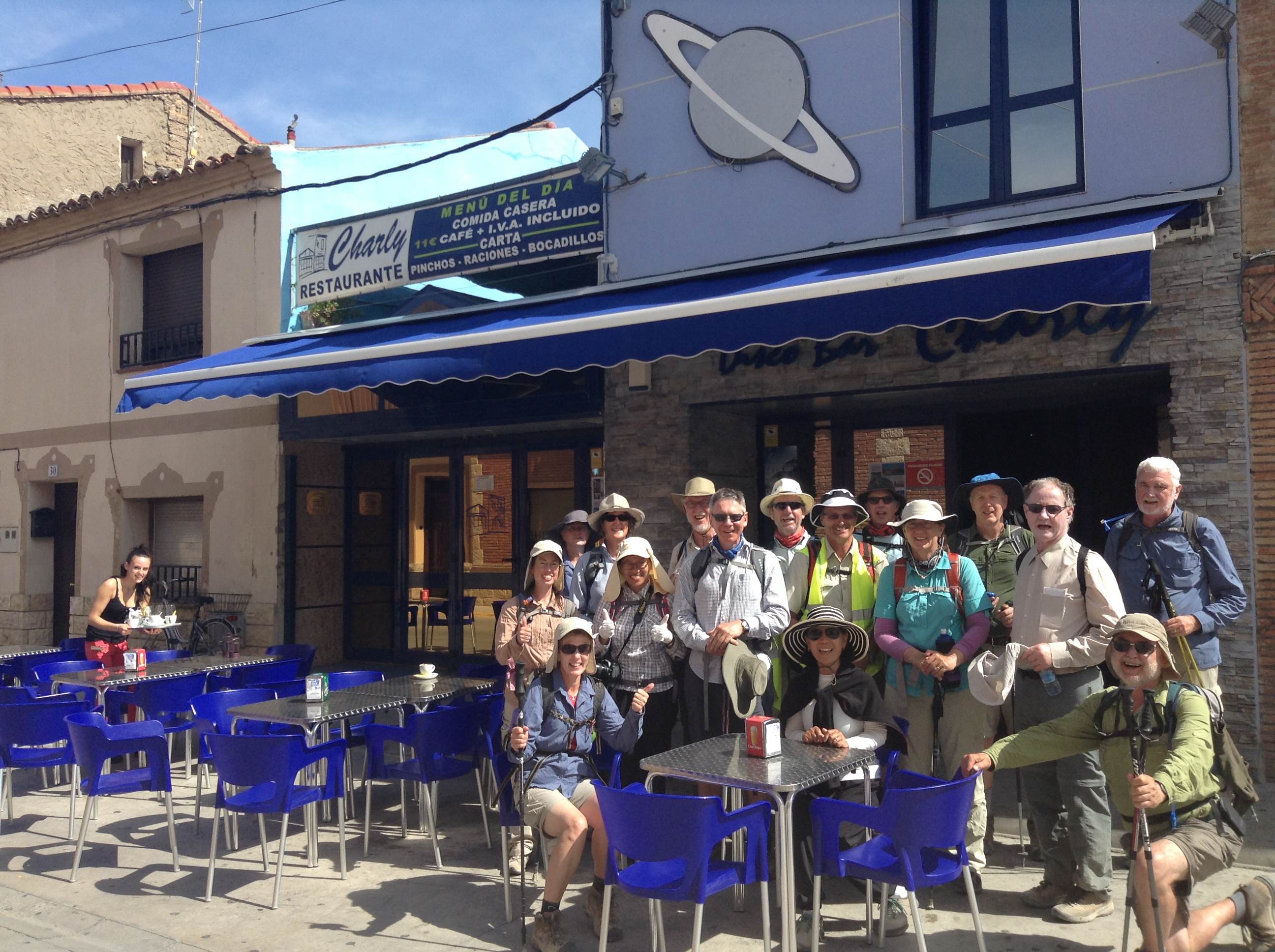
        “We prayed hard last night that we would be able to complete this leg knowing it was our longest walk yet (38kms) through hot conditions with minimal shade. We were relieved to wake up this morning to cool and slightly overcast conditions. We started well with the group covering the first leg of 25 kms to Cortez by 2pm where we stopped for lunch at Charly’s Bar. As usual we proceeded to clean the bar of tapas as the hungry pilgrims restocked on carbs.  For most of the day we were walking next to a large canal called the Royal Canal of Aragon,  that been built high up on the side of a hill so we had panoramic views over the fertile countryside. We also had the benefit of cool wind at our backs of between 10/15 kph which kept the temperatures down. We reached Gallur at 6pm  and we were thrilled to see the bus there even though it had been scheduled for 7pm. The group was on a high on the bus and very thankful having completed this challenging leg and all concluded that God had listened to our fervent prayers last night.”

Some of today's scenery

Some of today’s scenery

Following the canal

Following the canal

The Canal System

The Canal System

Helen Lucas leading the group

A determined Helen Lucas leading the group

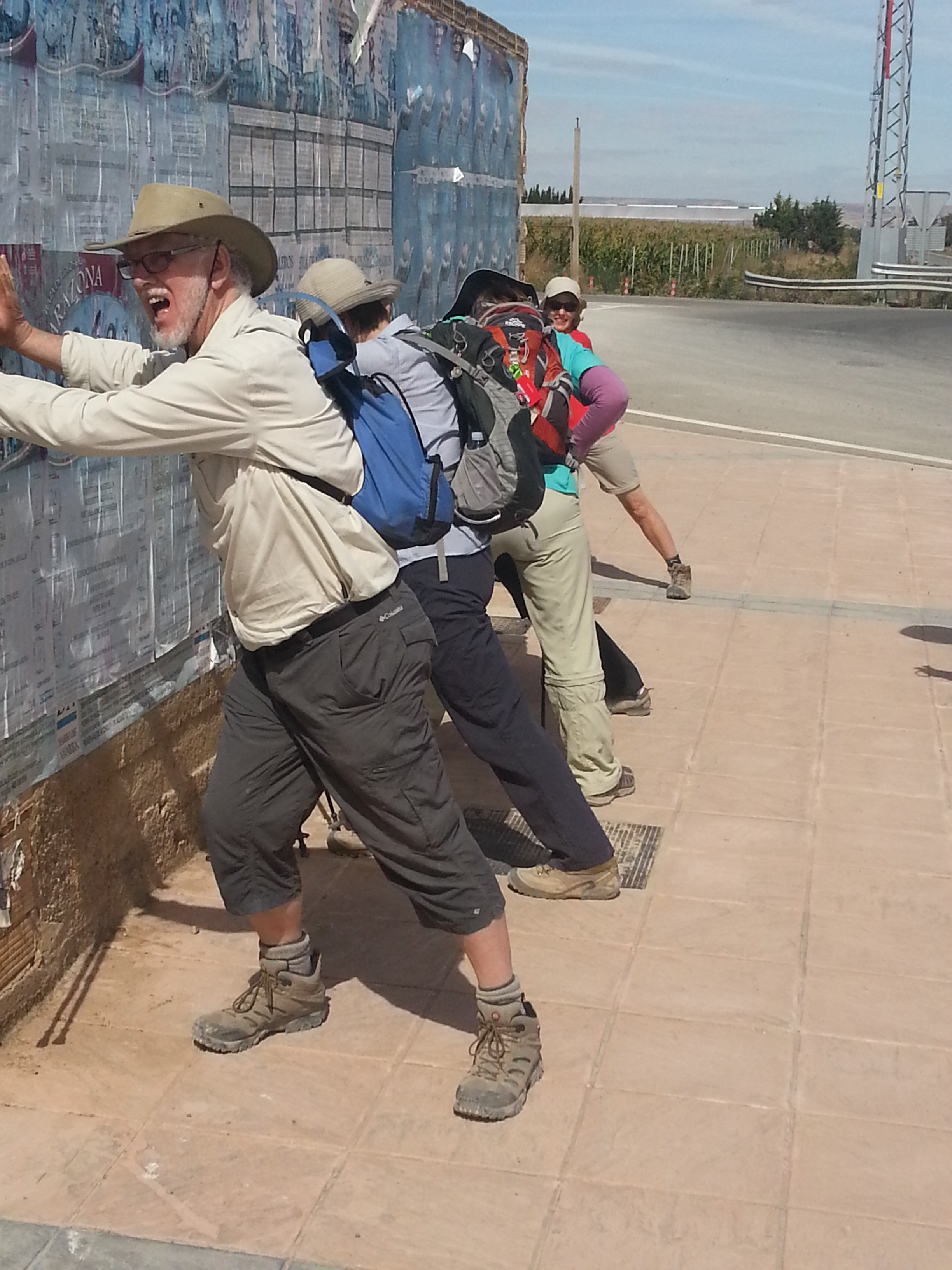
Fr Joe Taylor and others doing stretches during a break

Fr Joe Taylor and others doing stretches during a break

Outside Charly's Bar where the group had lunch today

Outside Charly’s Bar where the group had lunch today

Coming into Gallur at the end of a 38 km walk

Chona Walden coming into Gallur at the end of today’s 38 km walk

El Diari de la Catalunya Central

I got a message from our Basque guide Fermin Lopetegui that our pilgrimage features in the electronic news for the Manresa region in El Diari de la Catalunya Central You can see the article by clicking on El Diari de la Catalunya Central   

The article is in Catalan. Using Google Translate it reads:

MANRESA    The trickle of pilgrims who follow the path of Saint Ignatius from Loyola and Manresa continues. Four days ago the first German to go from start to finish came to the cave shrine, and soon we expect a group of twenty people linked to a university in Melbourne (Australia) .

The Basque Lopetegui Fermin, the first pilgrim to complete the full path in March last year, also did it in reverse in March this year. He walked with the group from Loyola to Logroño, where they arrived on Monday this week.  On Tuesday they took a rest day .  The average age is sixty.  On Wednesday —  the National Day — they resumed the route, the Stage from Logroño to Alcanadre.

They started from the Sanctuary at Loyola on 3 September. In addition there were three Germans and one person from Caceres. This week we have had two more pilgrims start, one yesterday and one the day before yesterday. One of them wants to make it to Logroño and next year will journey from there, and the other, from Bilbao, will decide on whether to fly or walk the full path .

Leading the group is the Australian Jesuit Fr Michael Smith, a senior lecturer at MCD University of Divinity in Melbourne and Director of Campion Centre of Ignatian spirituality in the same city. Two years ago Fr Smith completed the Camino de Santiago, and when he heard about the Camino Ignaciano he wanted to follow him. In March he began preparations for the journey which will be done in 28 days.  Fr Smith also created a website (Walking with Iñigo: The Ignatian Camino — In the footsteps of Saint Ignatius of Loyola ) which is a comprehensive travel diary with explanations of each Stage , photographs and videos. There is also information about Saint Ignatius, route maps , the official website of the way, and how to prepare, among other things. On the Stage before yesterday he put up a picture of his swollen leg after making more than 33 kilometres in one day.

Hospital in Tudela

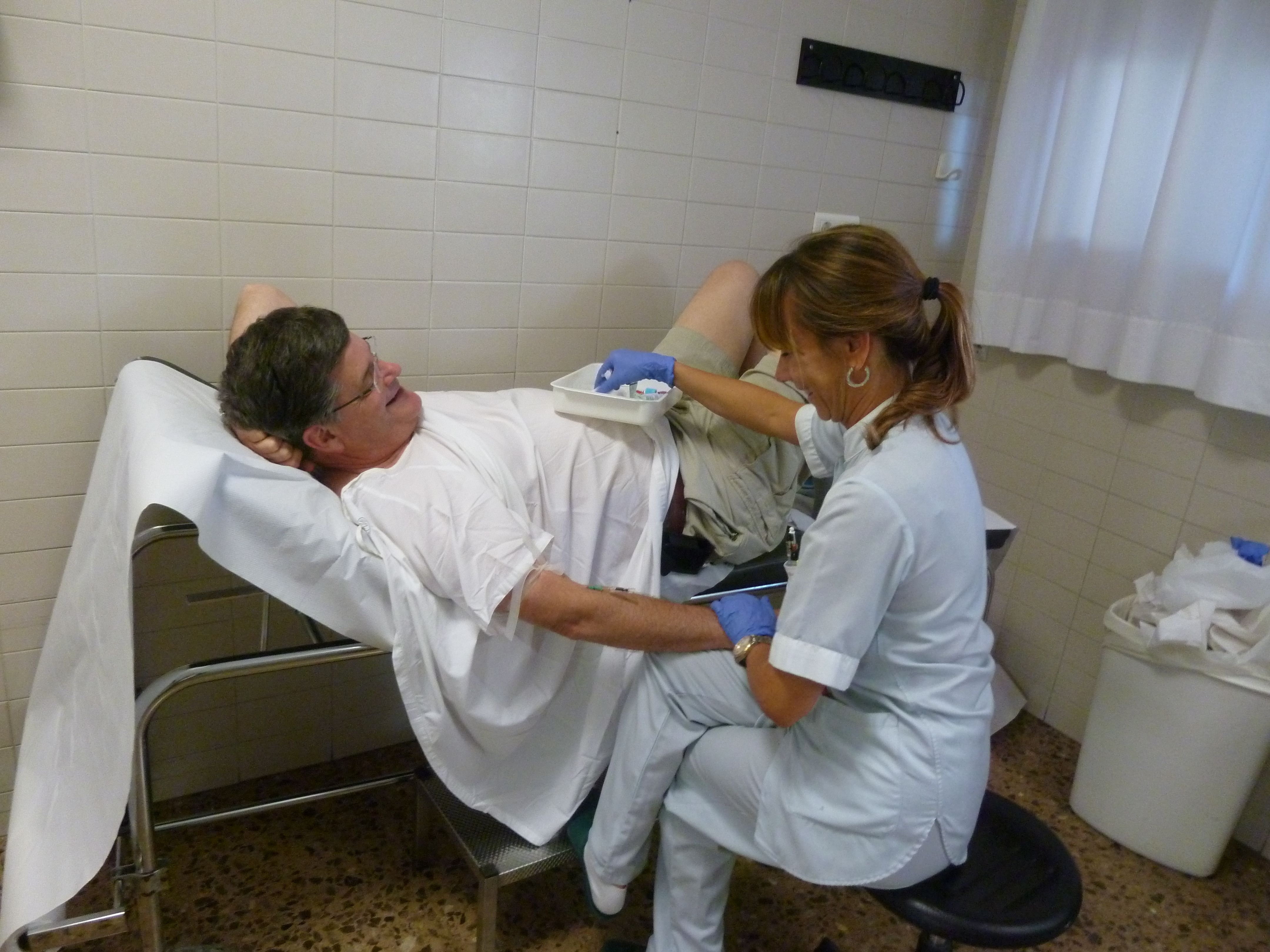
In the early evening I took a taxi with Fr Paddy Mugavin to the “Reina Sofia” Hospital in Tudela. Paddy, who speaks fluent Spanish having been a missionary in Chile for six years in the late eighties and early nineties, was my interpreter. I could not have been happier with care I received.  My blood pressure was 138 over 78, and my heart rate was 58. I had blood and urine tests. All is well. The doctor prescribed some Daflon tablets to drain the build up of fluid in my shins as a result of the trauma and some special Compressport socks which we purchased from a Farmacia on on way back to the hotel.

Having my blood taken at the Tudela Hospital

The nurse taking my blood at the Tudela Hospital

The doctor says I can begin to walk the Camino again when the swelling in my legs goes down.

Stage 11: Alfaro – Tudela (24.6 km)

I woke this morning feeling better in my legs but not yet ready to recommence walking the Stages.

The grace we are praying for: Today we are praying for a greater intimacy with and love of Jesus as we contemplate his birth.

Saint Ignatius invites us to: “see the persons, namely, our Lady, Saint Joseph, the maid and the Child Jesus after His birth.  I will make myself a poor little unworthy slave, and as though present, look upon them, contemplate them, and serve them in their needs with all possible homage and reverence.”

I invited the pilgrims to walk with the contemplation of the nativity: to be present as Mary gave birth to her first-born son and wrapped him in swaddling cloths, and laid him in a manger, because there was no room for them in the inn.

Our special intention today is that people will respect and preserve the environment.

After the rest of the pilgrims had left, I hobbled up to the San Miguel Collegiate Church, and waited until it opened just after 10.00am.  I spent an hour there praying on the nativity scene. I also prayed for the pilgrims on the road.  I prayed at this beautiful side altar which features Our Lady.

The side altar at San Miguel Collegiate Church

The side altar at San Miguel Collegiate Church

After my prayer I looked for a Farmacia in order to purchase a compression sock for my lower right leg.  A man who was playing soccer with his young son in the square in front of the Church showed me the way. I was very touched by his kindness and how welcoming and helpful the people in the Farmacia were.  The compression sock has given me much relief from the pain.
I walked back to the Hotel Palacios in time to catch the bus to Tudela at 11.30am.

Geraldine Naismith wearing the saftey vest

Geraldine Naismith wearing the saftey vest

Our system on the open road. As a group we have developed a system when walking on the open road. The two designated navigators for the day walk at the front.  Michael Bertie and Larry Naismith have GPSs, and Peter Walden has the downloaded the maps from Wikiloc onto his iPad which he carries with him.  One of the two wears a bright yellow safety vest.  The person at the back of the group also wears a bright yellow safety vest and makes sure than no one is inadvertently left behind (at a toilet stop for instance), or takes a wrong turn. We walk in single file.  If a vehicle is approaching from behind people call out, “Car back!”  If a vehicle is approaching from ahead people call out, “Car front!” We are very careful to get right off the road when cars drive by.

Today’s walk:  Peter Walden writes about today’s walk and has emailed me these photos:

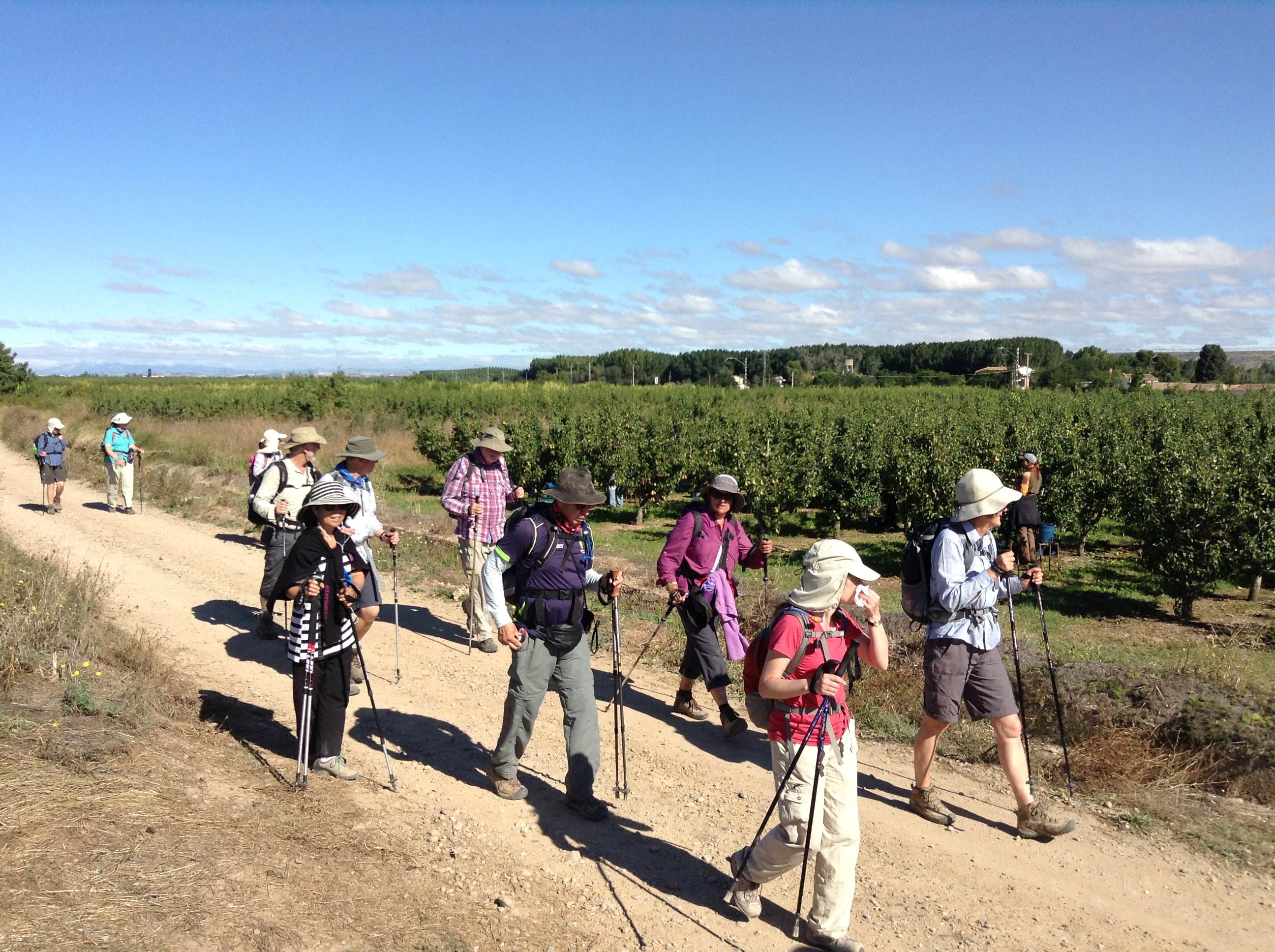
         “We walked 27 kms despite the documentation saying 24.6 km. Some of this can be attributed to the hotel being  1km from the finish of this Stage of the Camino. We arrived safely as one group and we were blessed with slightly cooler weather despite the forecast saying it would be hotter than yesterday. 

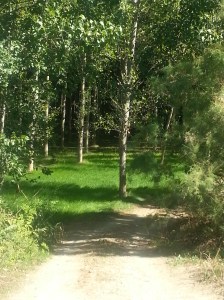
There was very little shade today

There was very little shade today

For most of the day we followed the Ebro River and we were rewarded with excellent views of the river. 

Today we followed the Ebro Rover

Today we followed the Ebro River

A bridge over the Ebro River

A bridge over the Ebro River

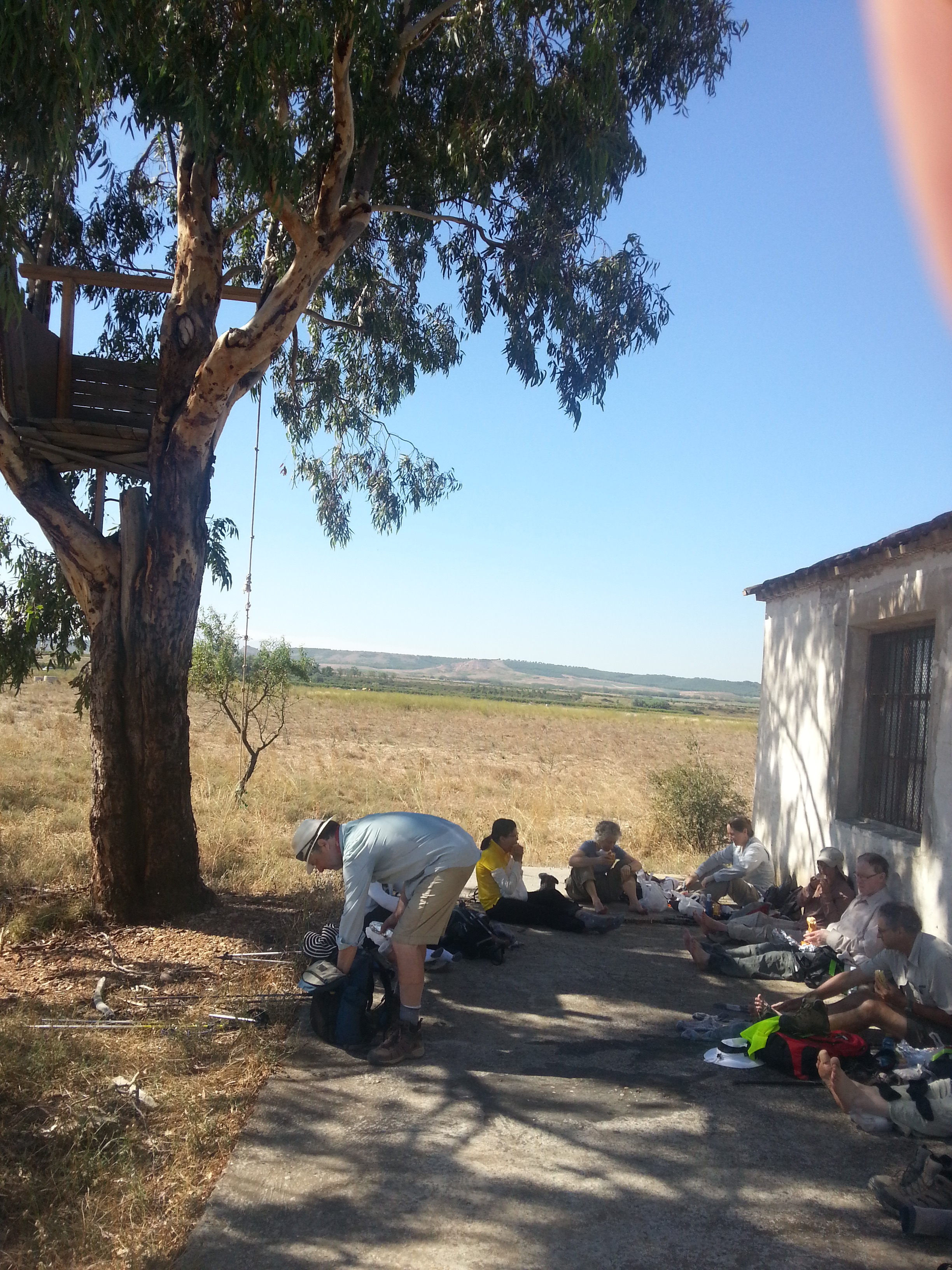
We were struggling to find a suitable lunch site as shade was at a premium again today.  Then before us was a run down house and shading it was a lovely Aussie gumtree, and it even had a tree house. 
Lunch under an Australian gum tree

Lunch under an Australian gum tree

Farming and harvesting was again the theme for today.  Peaches, tomatoes and apples. It was pointed out to us today that the Spanish farmers do not build their houses on their land, but instead live in nearby villages and towns,  and even park their tractors under the house or at the back or their houses. The group covered 27 kms today and they were thankful to reach the hotel in Tudela at 3:45pm.”

About Tudela.  Founded in 802, Tudela is one of the most important cities of Muslim origin in Spain and Europe. For more than 400 years, Muslims, Jews and Mozarabs coexisted, making the city a cultural melting-pot which is reflected in its historic buildings, winding streets, alleyways, walls and watchtowers.

The architectural gem of the city is the 12th century Cathedral of Santa Maria, built over the remains of an old mosque. It features a beautiful doorway, Romanesque cloister, and light-filled Gothic central nave.

Stage 10: Calahorra – Alfaro (23.7 km)


I woke feeling so much better this morning.  The swelling in my right leg has gone down considerably but it is still quite sore to walk on, so I am going to have another quiet day and I will try to begin walking tomorrow.  Having this condition is quite humbling. When we had the preparatory meetings at Campion before the Camino, I said to the group that there would be the possibility of someone taking the bus if he or she was not feeling well — not thinking for a minute that that person would be me!  Dealing with disappointments and aches and pains is all part of the Camino.


We gathered outside the Hotel Cuidad de Calahorra.  I introduced the Ignatian Exercise for the day beginning with the Preparatory Prayer that everything in our day — all our thoughts, words, actions, eating  a peach, changing our socks, conversations along the road, our desires, our memories and so on — would be directed purely to the praise and service of God.

The grace we are praying for.  Today we are praying for intimacy with Jesus, so that we might follow him more closely. I talked about intimacy in relationships, and that when power meets power in an interpersonal relationship, the result is conflict.  And that when vulnerability meets power, the result is alienation and fear.  But when vulnerability meets vulnerability the result is intimacy and love.  So, to grow in intimacy with Jesus all we need to do is to let down our guard and disclose to him what we are feeling and how we really are.

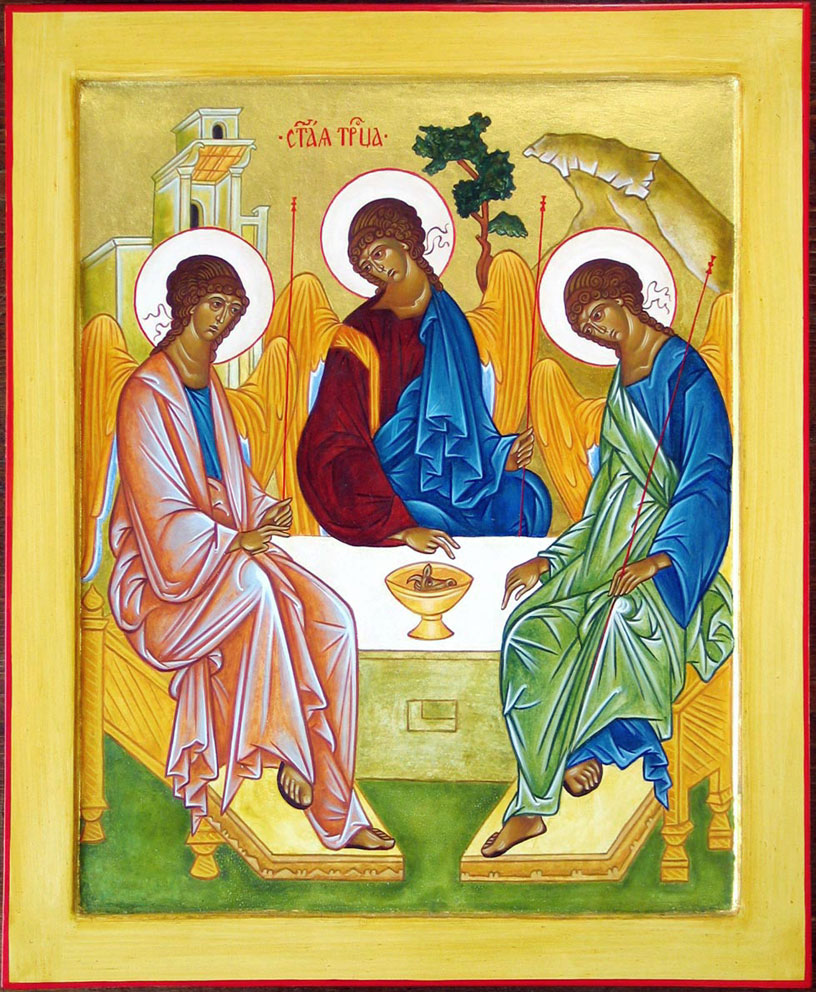
The Trinity (Rublev's Icon)

The Trinity (Rublev’s Icon)

Today we are reflecting on Jesus’s mission of bringing salvation to humankind. Saint Ignatius has us take the perspective of the Trinity looking down on the earth:

I try to enter into the vision of the Triune God looking upon our world: men and women aimless, despairing, hateful and killing, men and women sick and dying, the old and the young, the rich and the poor, the happy and the sad, some being born and some being laid to rest.  

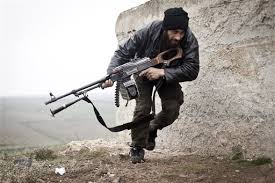
And this is what our world looks like today:

Victims of the Civil War in Syria

Victims of the Civil War in Syria

Fighting in Syria

Fighting in Syria

The victims of war

The victims of war

The leap of divine joy: God knows that the time has come when the mystery of his salvific plan, hidden from the beginning of the world, will become manifest.

And how does the Trinity do this?  In the incarnation. In Luke 1:26-38, God invites Mary, through the Angel Gabriel, to collaborate in the mystery of the Incarnation. Though free to say “no”, Mary chooses to say “yes”. Mary’s “Yes” is the pivotal point of history.  I notice how the Trinity works—simply and quietly.  A world goes on, apparently oblivious of the total revolution which has begun.  I look at Mary’s complete way of responding to her Lord and God:  “Be it done unto me according to your word.”

The Annunciation

The Annunciation

Just as the Trinity works simply and quietly in Mary at the Annunciation, so too the Trinity works in us pilgrims.

What the day held:  After the bus left Sandra Dillon and I waited for the van which was booked to take the pilgrims’ luggage to the next town, Alfaro.  It came at 11.30am.  We helped the driver to load the suitcases and packs into the back of the van, and then rode with him to the Hotel Palacios in Alfaro. Alfaro is a charming town with picturesque streets and town houses with Aragonese Mudejar influences, made of brick. I hobbled up to the town square with Sandra in front of the the San Miguel Collegiate Church, which is  a 16th century Aragonese Baroque masterpiece, and declared a National Historical Monument. The immense rooftop of the church — which has several slopes, pinnacles and cornices — houses the largest urban colony of storks in Europe.

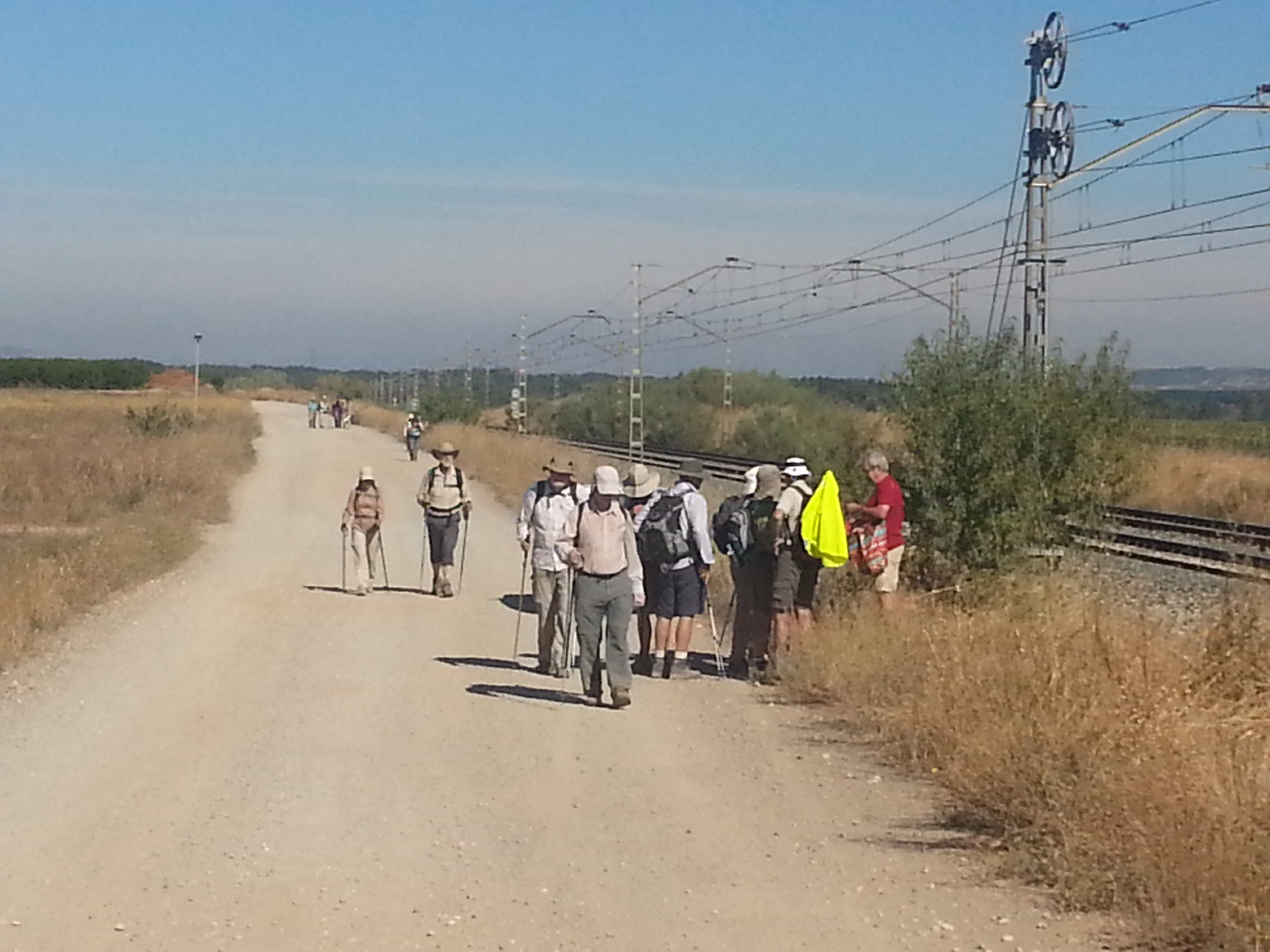
The pilgrims walked through fields today, and along a section of the Rio Ebro. The Camino traces quiet paved and gravel farm roads. Half-way along the trail, the group passed through the small town of Rincón del Soto. Peter Walden writes:

         “We had a good day today. We walked for 14 kms to the town of Rincón del Soto where we had lunch at the municipal building and stayed for 45 mins. The locals were very friendly and we got lots of waves and smiles. They were very keen to know where we were from. We made good time up to there at 4.3 km per hour as the surface was a lot less rough than yesterday. It is definitely harvest time in the region as there was a lot of tractor traffic on the road. They were harvesting pears and grapes. At one point the pear pickers got very excited upon finding out we were Australian and started tossing ripe pears to some of the group. Many of us got pilgrim stamps there. We followed the railway almost all the way and it was very flat. The challenge today was definitely the heat and the mozzies. It felt like 30°C and we were struggling under the sun as there was virtually no shade on the road. The final stretch was up a very long straight road into Alfaro that seemed to go on forever and the heat off the bitumen was quite intense. Anyway, we thankfully made it to the hotel to rest our weary feet. Total distance walked was 25.2 kms.”
In the Hotel Cuidad de Calahorra before leaving

In the Hotel Cuidad de Calahorra before leaving

The church at Calahorra

The Cathedral of Santa Maria in Calahorra

Looking back at Calahorra

Looking back at Calahorra

Walking through the vineyards

Walking through the vineyards

The long stretch up the hill to Alfaro

The long stretch up the hill to Alfaro

Stage 9: Alcanadre – Calahorra (20.6 km)

I woke up this morning feeling very sore.  It was actually difficult to stand up after getting out of bed. I have set myself to walk the entire Ignatian Camino but I think I could do myself some serious damage if I walk today, so I have decided to take a rest for the day in the hotel.  I currently have an ice pack on my right shin in an attempt to bring down the swelling.

My swollen shin

My swollen shin

After breakfast we gathered outside the hotel where the bus was waiting to transfer the pilgrims back to Alcanadre. Peter Walden again briefed us on the walk helped by Larry Naismith’s advice on the weather and the lack of small towns on the way where pilgrims could find water.  Pilgrims took plenty of water in their daypacks.

Ignatian exercise.  I talked about the Ignatian exercise for the day.  Today we begin the “Second Week” of the Spiritual Exercises. Our point of entry is through a meditation that invites us to follow Christ the King.

The grace we ask for: Despite my limitations, and aware of the love of the Father for me, I ask for the grace to feel personally called to journey with Jesus as his companion and co-laborer.

The grace we were praying for yesterday was a deep awareness of God’s merciful love.  When a person experiences being a loved sinner, it often leads him or her to desire to respond to that love. Today we begin to meditate on Jesus’ invitation to walk beside him in his work. In the Spiritual Exercises Ignatius places God’s call to work with Christ just after the meditations that touch on our own human sinfulness. The juxtaposition is important: God calls us to work closely with him in the world as ‘loved sinners’. The gospel for today is Luke 5: 27-32 in which Jesus calls Levi, a Tax Collector and a hated public sinner, to “Follow me”. Even though we may feel unworthy of being called to be companions of Jesus, he calls us nonetheless.

Vin Dillon also suggested that pilgrims spend the the first two hours of silence praying for families.

Fr Joe Taylor and I are both feeling a little “worse for wear” today so we stayed behind. As we waved off the others on the bus back to Alcanadre I felt a twinge of sadness. My goal of walking the entire Ignatian Camino will not be met.

Downtown Cahahorra

Downtown Cahahorra

Modern Calahorra

Modern Calahorra

I took some time in the morning to wander, gently, around Calahorra.  It was a city of great importance in Roman times when it was called “Calagurris”.  There are still Roman ruins to be found in the city. Calahorra has a long pilgrim tradition, as can be seen in the baptismal font of the 16th century Cathedral of Santa María (covered with shells, gourds, and the image of St. James).

I purchased a pair of new boots and visited a Farmacia for some 600 mg Ibuprofen (we can only get 200 mg tablets in Australia) and some gel to rub on.

Peter Walden took some photos if the walk today which are displayed below.

The Hotel Cuidad in Calahorra

The Hotel Cuidad of Calahorra

At the Alcanadre Station ready to start

At the Alcanadre Station ready to start


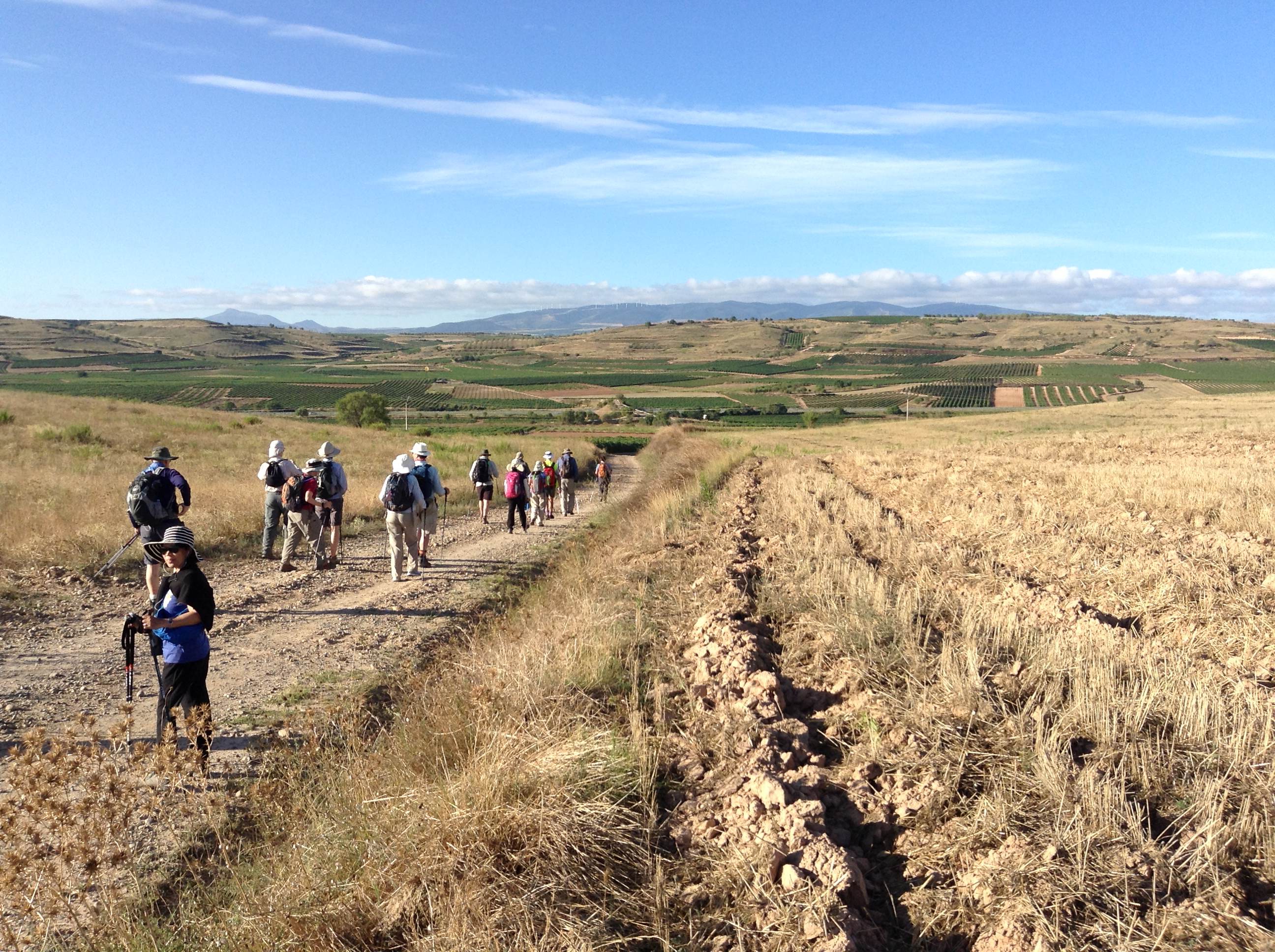
The walk was fairly flat today

The walk was fairly flat today

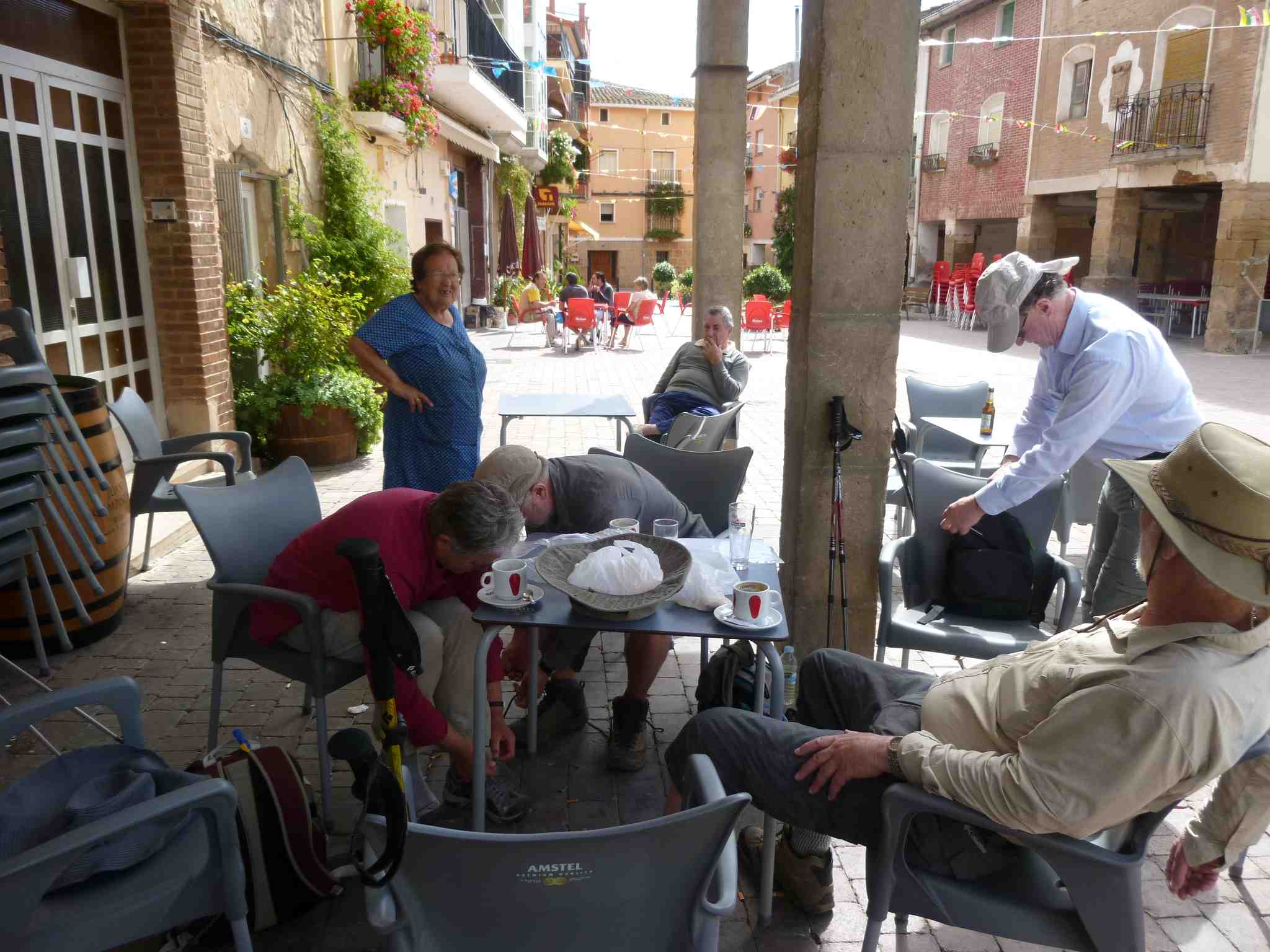
Enjoying lunch under a tree

Enjoying lunch under a tree


Stage 8: Logroño – Alcanadre (32.4 km)

After a  rest day in Logroño, we embarked upon a long, and as it turned out, difficult stage of the Camino Ignaciano.  We gathered in the park outside the hotel and were briefed by Peter Walden about the walk.  Then I talked about the Ignatian exercise for the day which was on sin and healing. Vin Dillon suggested that we pray for friends and family who are sick and suffering. We each mentioned someone whom we were going to carry in our hearts today.  Then we set off in silence through the streets of Logrono filled with people getting to work or dropping their children at the school gate.

A big job:  how to stop the bell tower from falling over?

A big job: how to stop the bell tower from falling over?

En route to Alcanadre we passed through several small towns and villages located on – or close to – the mighty Ebro River, and walked through vineyards and olive groves.

Sandra, Daddy, Patrick and Joe getting ready to start again after lunch

Sandra, Daddy, Patrick and Joe getting ready to start again after a break for lunch

On the road from Logrono to Alcanadre

On the road from Logrono to Alcanadre

Stork nests feature on the bell towers of many churches

Stork nests feature on the bell towers of many village churches

We passed trough many vineyards today

We passed through many vineyards today

Not long after leaving the hotel in Logrono I developed shin splints in my right leg.  As the day wore on they started in the left leg too.  It was very painful to walk.  I thought about taking a bus or a taxi or a train to Calahorra, but none was available, so I had to keep on walking.  We left Logrono at 8.20am and it was 6.10pm when we arrived in Alcanadre.  We were on the road for almost 10 hours.  It was a very long day made possible with Voltaren cream, Ibuprofen, Panadol and very supportive fellow pilgrims.

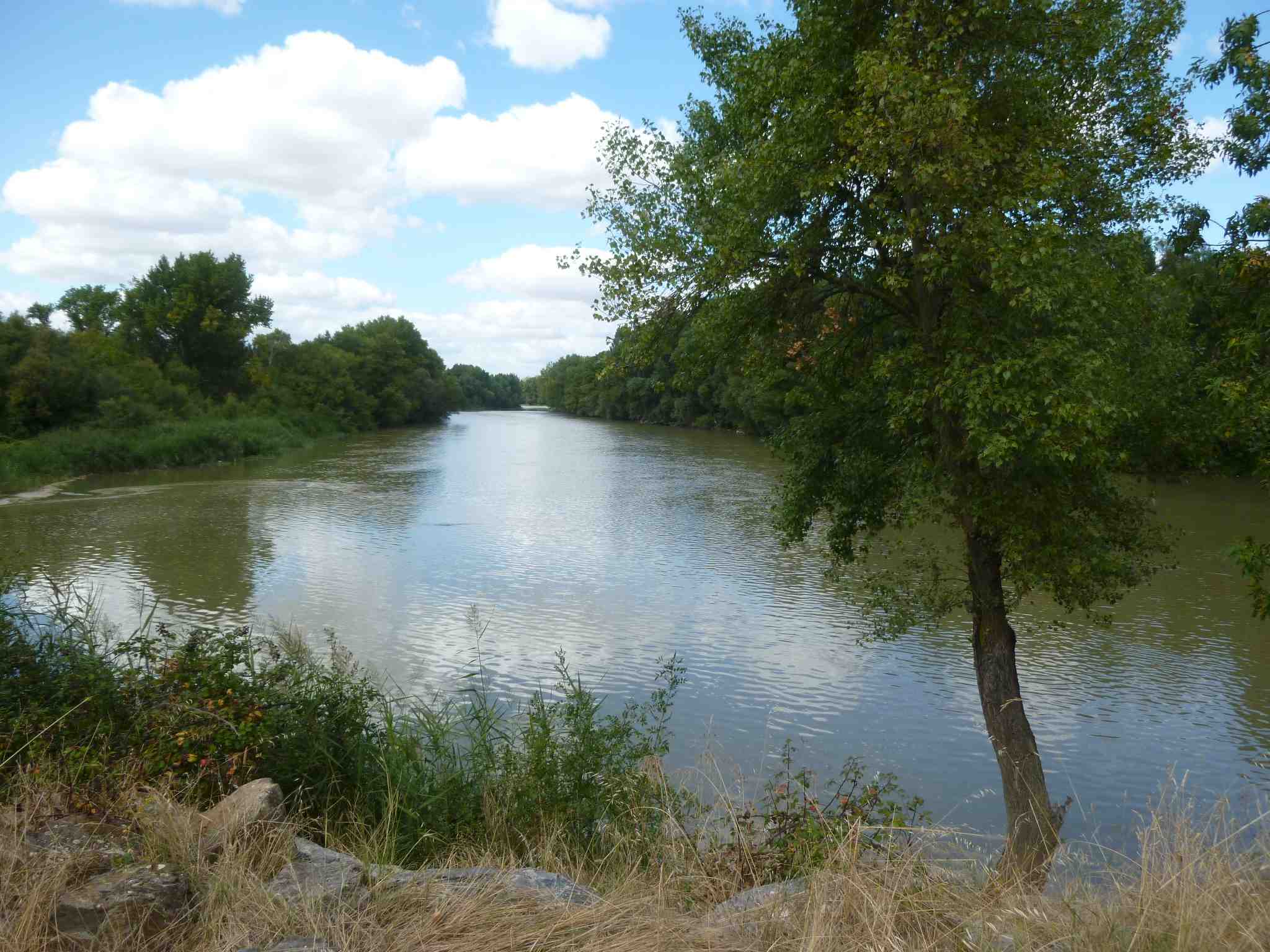
The Ebro River

The Ebro River

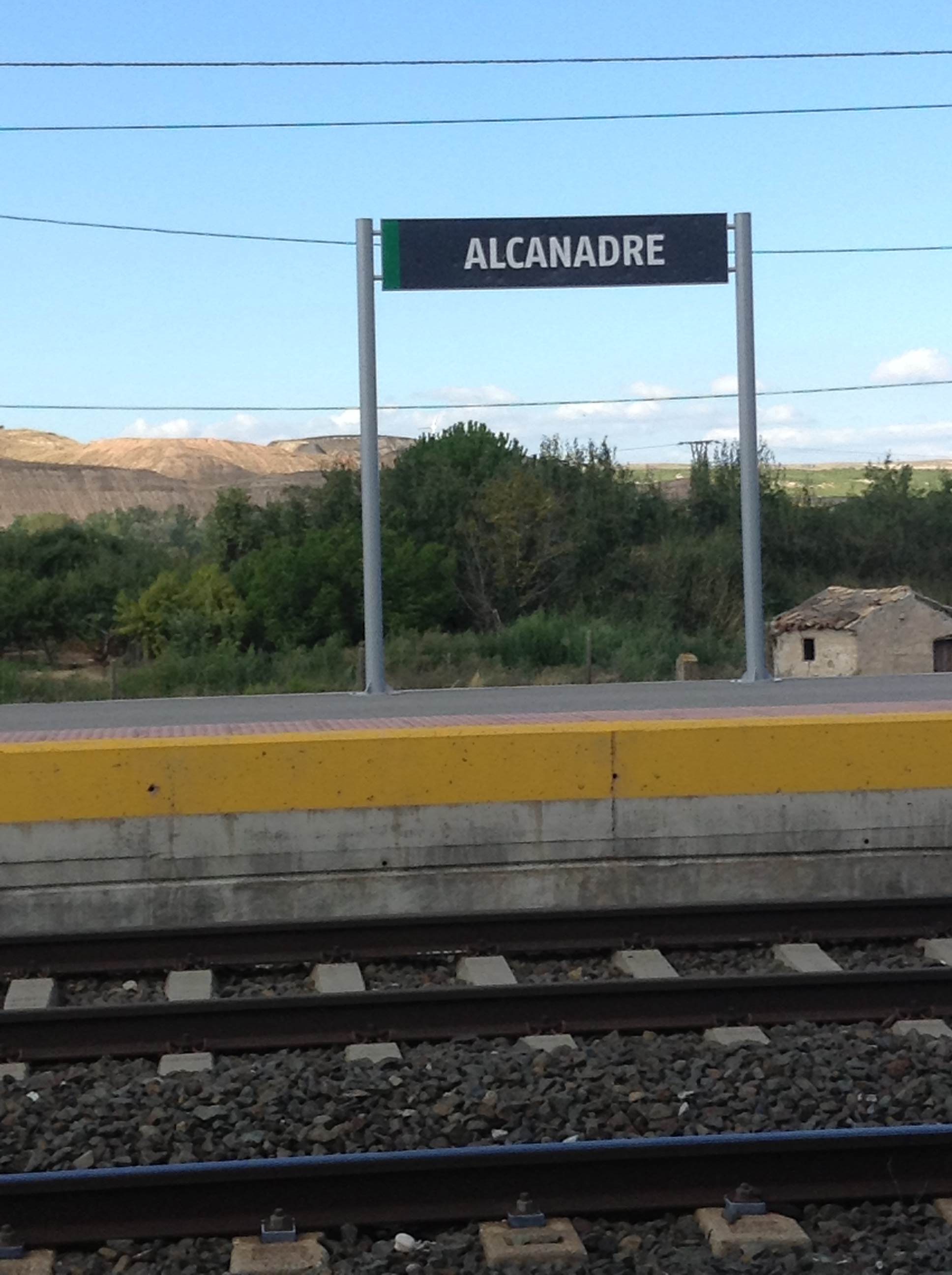
The Alcanadre railway station where we met the bus

The Alcanadre railway station where we met the bus

The name of Alcanadre is Arabic in origin: Al-Cana-Dre, referring to the “bridges” or “arches” of an old bridge over the Ebro River, whose ruins are near the town.  The 16th century church of Santa María preserves a lovely Romanesque image, while the remains of a 1st century Roman aqueduct can also be seen.

Fr Stephen Delbridge still going strong after 32.4 kilometres

Fr Stephen Delbridge still going strong after 32.4 kms

After we arrived in Alcanadre, a coach  transferred us to our lodgings in Calahorra.

In the evening we had Mass at the hotel celebrated by Fr Paddy Mugavin which we integrated with our sharing of the joys and struggles of the day. Dinner was at 9.00pm, so it was a late night after an exhausting day.