What are the elements of the Ignatian Camino?

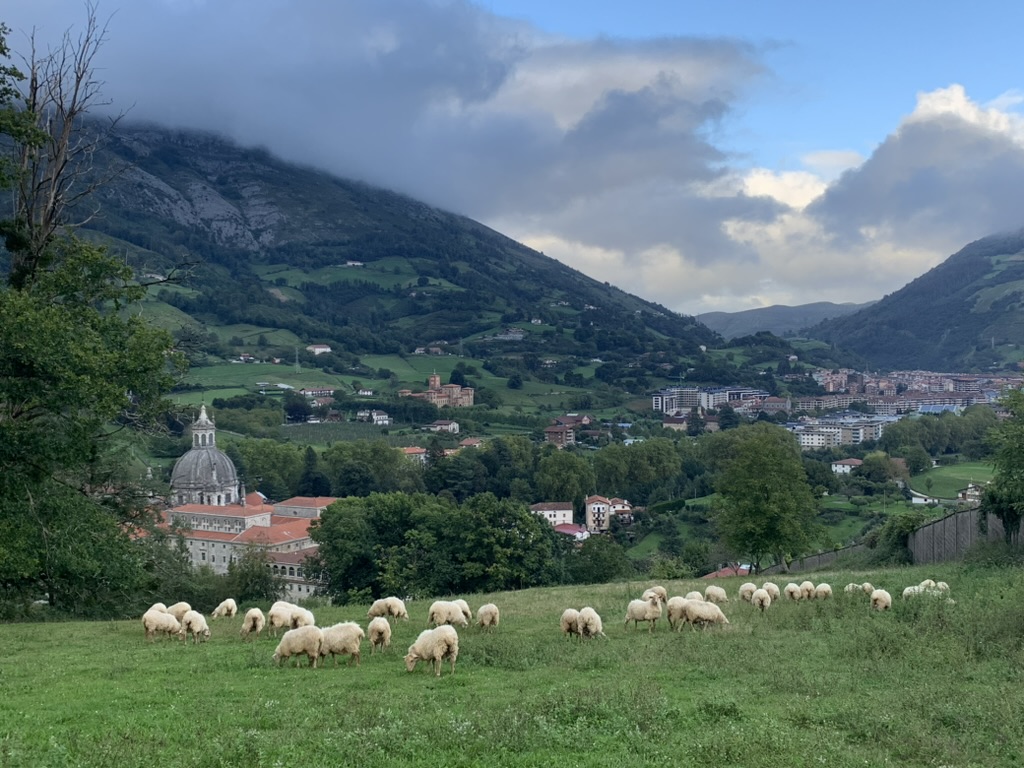
The Loyola Sanctuary

FIVE ELEMENTS are fundamental to the Ignatian Camino: (1) Silent Prayer, (2) Celebration of the Eucharist, (3) Encountering Challenges, (4) Sharing in the Pilgrim Circle, and (5) Individual Examen. During “Walking with Inigo: The Ignatian Camino” these five elements will be present:

  1. Silent Prayer

Each morning, before we commence our walk, there will be a 5-minute introduction to the theme of the day followed by two hours of silent meditation as we walk. After lunch, we will have another hour of silent prayer as we walk.

2. Celebration of the Eucharist

We will either attend Mass in a local church or celebrate the Eucharist at the place where we are staying.

3. Encountering challenges

Pilgrimage challenges us in unexpected ways and can lead us to learn much about ourselves. The challenge can come from various directions: it might be that the walking puts me in new situations, it might be the people we meet, cultural differences, relationship with my companions, living conditions, being far from home, or just weariness. What comes up for me during my walking—memories, regrets, suffering—will also challenge me.

The Loyola Sanctuary from the base of Monte Izarraitz

4. Sharing in the Pilgrim Circle

The Pilgrim Circle is a central element of the Ignatian Camino. It gives pilgrims the chance to reflect on the day lived together, and to recount some of their personal experiences. The Pilgrim Circle is not a matter of discussing or responding to whatever each one says. Rather, we make room for one another, listening with respect and learning from each other’s experiences and insights. The Pilgrim Circle takes place in groups of 7 or 8 people. Ideally, the Pilgrim Circle should last between 30 and 45 minutes. It is led by the spiritual director or by one of the pilgrims, and has these steps:

A) A brief reflection. Each person takes a moment to look over the day, or days, just past.

B) The first two rounds are for listening only. As each person speaks the others listen; what the person says is not discussed — unless, if necessary, to ask for clarification.

Round 1

  • How has the day gone for me?
  • When did I feel joy?
  • When did I find things hard?

Round 2

  • How were the day’s themes and the texts read in the morning reflected over the course of the day?

C) In the third round there can be more discussion about what has been said. However, it’s not about imposing a point of view or convincing others of a particular opinion. The object is to share experiences and learn from one another.

Round 3

  • What especially struck me from what someone has said?
  • Is there anything else I’d like to share in the light of what I’ve heard?

D) Rapid last round. Conclusion. Each one responds to the last question with one word or short phrase:

  • What is my feeling at the end of this Pilgrim Circle?

5. An Individual Examen of the Day

Ignatius considered the Examen of the day a prayer of great importance, so much so that he wrote that if a Jesuit finds himself short of time to pray, at least he should not omit his Examen. Why? Because God can be found in our daily lives. 

If you think about it, each day is filled with impressions, encounters, and experiences. We go through happiness and disappointment; we feel sadness, desire, enthusiasm, and many other things besides. We mustn’t make too rapid a judgment on what we experience: God sometimes speaks to us in what energizes us, at other times God does so in what upsets us, and wants to lead us by means of all these experiences. If we allow ourselves to listen to the voice of God with us, we will be able every day to grow a little freer, more patient and more filled with love.

The Ignatian Examen can be made anywhere: on the beach, in a car, at home, in the library. It takes some 10 or 15 minutes and consists of five very simple steps, which can be set out in various ways. Here is one way:

  1. I begin with some sign or gesture, such as bowing the head or making the sign of the cross. I thus recall God’s presence — even if at that moment I don’t feel it.
  2. I ask the Spirit for light and assistance, to aid me as I look at the day just past.
  3. I review the day, placing it before God. One by one, I allow the events I have lived through to emerge into view. If it helps, I can ask myself:
    • What am I most grateful for in my day? Why?
    • What am I least grateful for in my day? Why?
    • What do I think God was trying to say to me in these moments?
  4. I thank God for the day I have lived through. I ask pardon for anything that has led me away from him. I ask for God’s help and grace in whatever I may feel I need at this moment.
  5. I look forward to tomorrow. I place it in God’s hands. I end by praying the Our Father or another prayer, finishing with the same gesture I began with.

How to be open to God on the Ignatian Camino (and in life…)

Here are a few suggestions to help you open yourself to God on the Ignatian Camino:

1.    Enter into the silence of the Camino

Isaac of Nineveh (613-700 AD):

“Many are continually seeking, but they alone find who remain in silence. Everyone who delights in a multitude of words, even though they say admirable things, is empty within. If you love truth, be a lover of silence. Silence like the sunlight will illuminate you in God. Silence will unite you to God. More than all things love silence; it brings you a fruit that tongue cannot describe. In the beginning, we have to force ourselves to be silent. But then there is something born that draws us to silence. May God give you an experience of the ‘something’ that is born of silence. If only you practice this, untold light will dawn on you in consequence. After a while a certain sweetness is born in the heart of this exercise and the body is drawn almost by force to remain in silence.”

Ammonas of Egypt (4th Century):

“I have shown you the power of silence, how thoroughly it heals and how fully pleasing it is to God. It is by silence that the power and the mystery of God will become known to you.”

2.    Invest time in prayer

As you walk, give as much time as you can to hours of relating to God. If you invest much time, your prayer will deepen considerably and this will be a lasting treasure you take from this Camino.

3.    Desire God

If you wish to attain a deeper experience of God on this Camino, desire God. God desires that you desire him. If you want to deeply desire God, ask God for the desire, beg God for it.

4.    Courage and generosity

My vocation as a pilgrim

“I believe my vocation is essentially that of a Pilgrim and an exile in life, that I have no proper place in the world, but that for that reason I am in some sense to be the friend and brother of people everywhere, especially those who are exiles and pilgrims like myself….My life is in many ways simple, but it is also a mystery which I do not attempt to really understand, as though I were led by the hand in the night where I see nothing, but can fully depend on the Love and Protection of Him who guides me.”

                                                Thomas Merton, Cold War Letters, 2006, p. 129-130.

Thomas Merton

Thomas Merton

Pie Jesu — liturgical dance

On Saturday evening before dinner, and again at the 10.30am Mass, two of the pilgrims, Jan Sebastian and Kay Quisenberry performed a liturgical dance in the sanctuary of St Joseph’s Church, Warnnambool. They danced to John Rutter’s setting of Pie Jesu.

“And David danced before the LORD with all his might”  (2 Samuel 6:14).

“Then young women will dance and be glad, young men and old as well. I will turn their mourning into gladness; I will give them comfort and joy instead of sorrow”  (Jeremiah 31:13).

My conversion on the Ignatian Camino

On Sunday 16th March 2014 I gave a homily at the 8.30am Mass at St Joseph’s Church in Warrnambool, Victoria. 16 of the 20 pilgrims who walked the Ignatian Camino gathered for a reunion on the weekend of 14-16 March. This is the text of my homily:
                                                                                         __________

In September last year I accompanied a group of 20 pilgrims on the 686 km pilgrim route taken by Saint Ignatius of Loyola in 1522 from his home in Spain’s Basque country to Manresa in Catalonia.  We walked virtually the same route that Ignatius did, passed through many of the towns that he did, prayed at churches where he prayed, and marveled at the same natural wonders that he saw.

This morning I would like to tell you what a great success it was… but instead I will tell you about my failure on the Camino and how that became an experience of conversion for me.

Our days were quite structured. Each morning before we began walking we gathered outside the particular hotel at which we happened to be staying at 8.00am and I gave the pilgrims points from the Spiritual Exercises to pray on during the day.  Then we walked the first two hours in silent prayer.  In the evenings we had Mass and shared our experiences of the day over dinner.

Walking the Camino somehow gets your head straight. Kierkegaard notes:

Above all, do not lose your desire to walk; every day I walk myself into a state of well-being… I have walked myself into my best thoughts, and I know of no thought so burdensome that one cannot walk away from it… If one just keeps on walking, everything will be all right.

Well, I tried to keep on walking, but sadly, everything was not all right. The first eight days of the Camino, while physically very demanding, went well. Then on the ninth day we had a rest day in the city of Logroño. After the rest day we embarked upon a long, and as it turned out, disastrous stage of the Camino from Logroño to Alcanadre.  As we walked through the city streets of Logrono I began to feel the sharp pain of shin splints in my lower right leg. I thought I could walk through the pain, but I couldn’t. As the day wore on the pain started in my left leg too.  It was excruciating to walk.  After 12 kilometers we arrived at a small town. I wanted to take a bus or a taxi or a train to our lodgings in Calahorra, but none was available.  I had no option but to keep on walking.  After 19 kilometers we arrived at another small town. Still there were no taxis. So I again had to keep on walking. I walked the whole 30 kilometers in pain. We left Logrono at 8.20am and it was 6.10pm when we arrived. We were on the road for almost 10 hours.  It was a very long and painful day only made possible with liberal smearing of Voltaren cream on my legs, popping 600mg Ibuprofen and Panadol tablets and very supportive fellow pilgrims.

My swollen shin

My swollen shin

I woke up the next morning feeling very sore.  It was difficult to even stand up after getting out of bed. I could only hobble. I had set myself to walk the entire Ignatian Camino but I knew I that I could do myself some serious and long-term physical damage if I continued to walk.  So I took a rest day in the hotel with ice packs on my right shin to bring down the swelling. When the others left on the walk I had a deep sense of loneliness. I also felt a failure. I could not walk the whole distance and others could.  The group carried on without me. I felt frustrated at not reaching my goal and ashamed of my weakness. It took six days of rest, a visit to a hospital, and some physiotherapy before I was able to walk again.

Acupuncture needles

Acupuncture needles

Rafael the physiotherapist and his grateful patient

Rafael the physiotherapist and his grateful patient

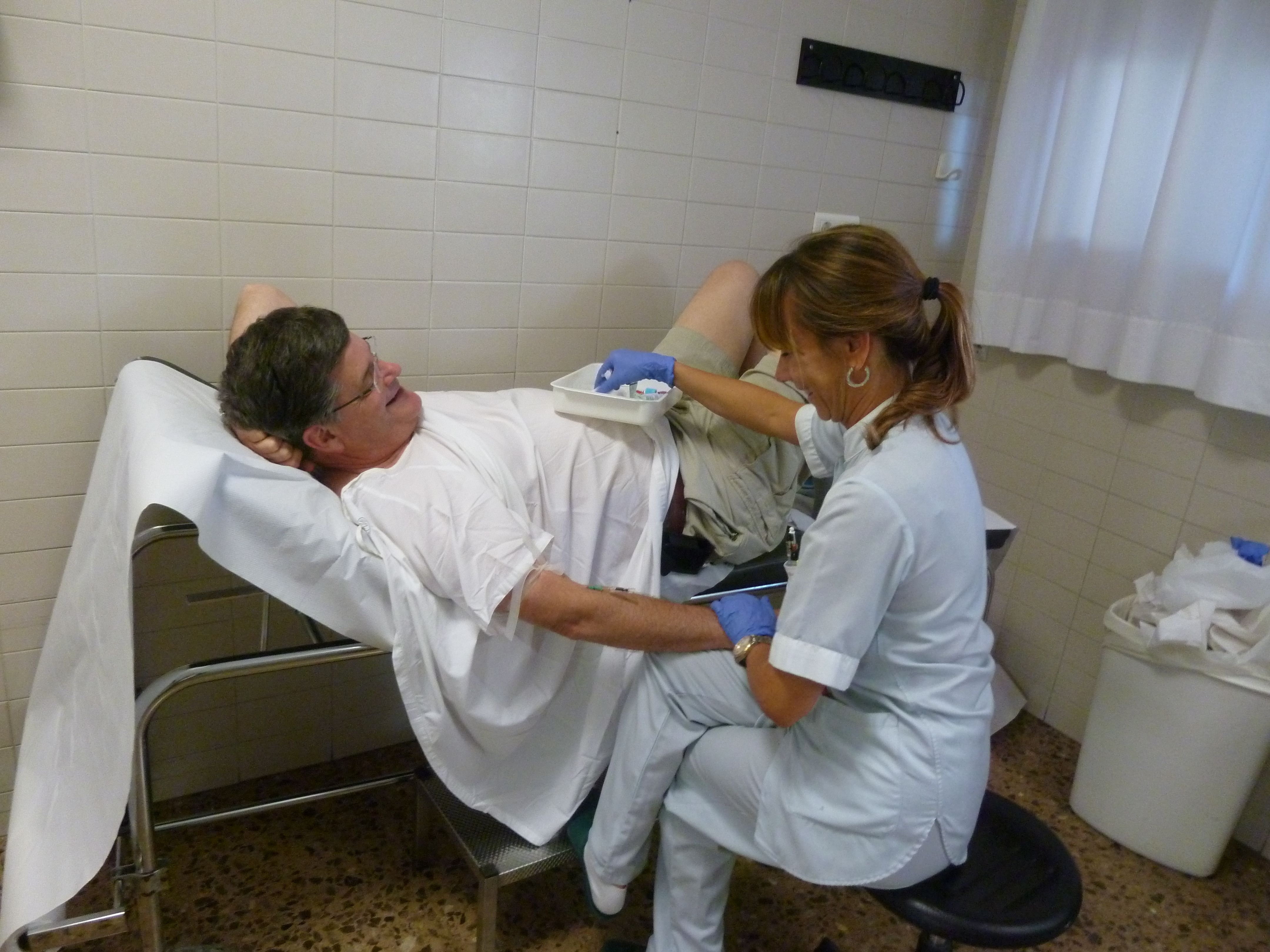
Having my blood taken at the Tudela Hospital

Having my blood taken at the Tudela Hospital

The morning that I recommenced the Camino with the other pilgrims I was filled with deep apprehension.  Would I make it through the day?  Or would my body break down again? As we began our walk I found myself saying to Jesus, “I need you to be my companion today.”  At that stage on the pilgrimage we were contemplating Jesus in his Passion.  In this period of the retreat Ignatius suggests that we ask God for the following grace:

[203] In the Passion it is proper to ask for sorrow with Christ in sorrow, anguish with Christ in anguish, tears and deep grief because of the great affliction Christ endures for me.

The last two words “for me” are critical. Ignatius uses these words carefully and deliberately because he wants me to know that the awful events that are unfolding are an act of love “for me”.

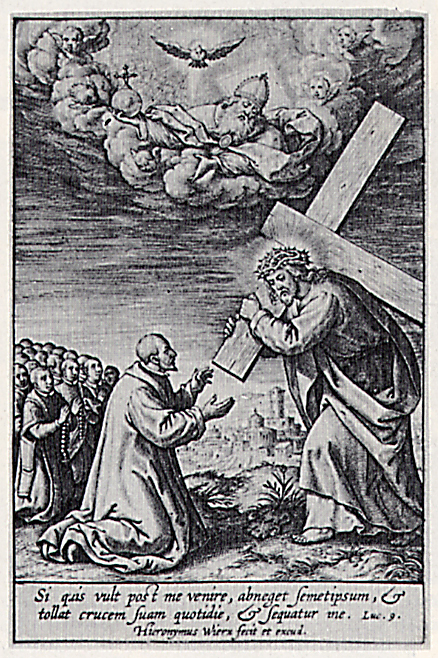
Ignatius' vision of Jesus carrying his cross

Ignatius’ vision of Jesus carrying his cross

This engraving shows Ignatius felt-sense that Jesus' suffering and death on the cross was "for him"

This engraving shows Ignatius felt-sense that Jesus’ suffering and death on the cross was an act of love for him

As we walked for the first two hours in silence I was filled with a deep sense of Jesus accompanying me and loving me. As I walked with Jesus I had the deep felt-sense that he was walking on his way to Calvary for me, that he was suffering for me.  I felt consoled and supported. I had never before had the heart-felt knowledge that Jesus died for me, but I received it that morning.  That was my conversion experience.

When I look back on that day I realize that if I hadn’t had the shin splints, if I hadn’t failed in my goal of walking the whole Ignatian Camino, if I hadn’t felt ashamed of my failure, if I wasn’t filled with apprehension, then I wouldn’t have needed Jesus to be my companion and I probably wouldn’t have received the grace of heart-felt knowing that he died for me.

My Camino was not about success or failure. It was about acknowledging my utter dependence upon God. Pain and failure opened me up to God. I met my limits and there I encountered Jesus.

I would love nothing more than to be back on the Camino, to pull on a pair of boots and hike across Spain in search of God and self, but I cannot. I have responsibilities here.  A story helps me to come to terms with this:

In the 10th century there lived a man who gave his whole life to pilgrimage.  He walked thousands of kilometers until finally, in his old age, his legs told him “Enough!” and he retired to a monastery hidden in the mountains to get a well deserved rest.

The old man, though he never sought such, earned the reputation of being one of the wisest men, if not the wisest man in the known world.  As a result, many young pilgrims from far and wide began to come to him in search of counsel.

One day a young Pilgrim arrived at that monastery.  Despite his youth, he had completed the majority of the known pilgrimages.  He approached the elder and asked him, “Master, what must I do to be a true Pilgrim?”  The weathered man looked him in the eye and felt compassion for him.  “Son, if you truly want to be an authentic Pilgrim, return home to your family, your neighbours, your friends and enemies and listen to them, serve them, forgive them and love them.  In that way you will become a true Pilgrim.”

They say that the young man dropped his gaze, turned and left that place without saying a word, deeply saddened because while he would have been perfectly able to hike thousands of kilometers more with a heavy load on his shoulders, he was incapable of carrying out the task that the wise old man had entrusted him.

Our primary task is to listen to, serve and forgive our families, our neighbours, our friends and our enemies. In serving, forgiving and loving them we will become a true pilgrims.

I would like to finish with a prayer from Thomas Merton:

My Lord God I have no idea where I am going.  I do not see the road ahead of me.  I cannot know for certain where it will end.  Nor do I really know myself, and the fact that I think I am following your will does not mean that I am actually doing so.  But I believe that my desire to please you, does in fact please you.  And I hope that I have that desire in all that I am doing.  I hope that I will never do anything apart from that desire.  And I know that if I do this you will lead me by the right road though I may know nothing about it.  Therefore will I trust you always though I may seem to be lost and in the shadow of death. I will not fear, for you are ever with me, and you will never leave me to face my perils alone.[1]

In the name of the Father, and of the Son, and of the Holy Spirit. Amen.


[1] Thomas Merton, Thoughts in Solitude, 1956, p.81.

Six weeks later… some reflections on the Camino

On Saturday 16 November, six weeks after we returned from the Ignatian Camino, some of the pilgrims gathered in Melbourne for a barbecue in the Jesuit community at Xavier College. It was a joyful reunion. Stephen Delbridge told us at the barbecue that he had started a blog on his experience of the Ignatian Camino. You can read Stephen’s blog by clicking the link here.

Libby and Stephen Delbridge, Frank and Dani Chamberlin

Libby and Stephen Delbridge, Frank and Dani Chamberlin

Patrick Hynes, Dani Chamberlin, Stephen Delbridge and Michael Bertie

Patrick Hynes, Dani Chamberlin, Stephen Delbridge and Michael Bertie

I took the opportunity to interview some of the pilgrims during the afternoon. Here are their reflections on the experience of walking the Ignatian Camino.