Today was another hard day of climbing up a mountain range and descending the other side. The view from the top made the effort worthwhile.
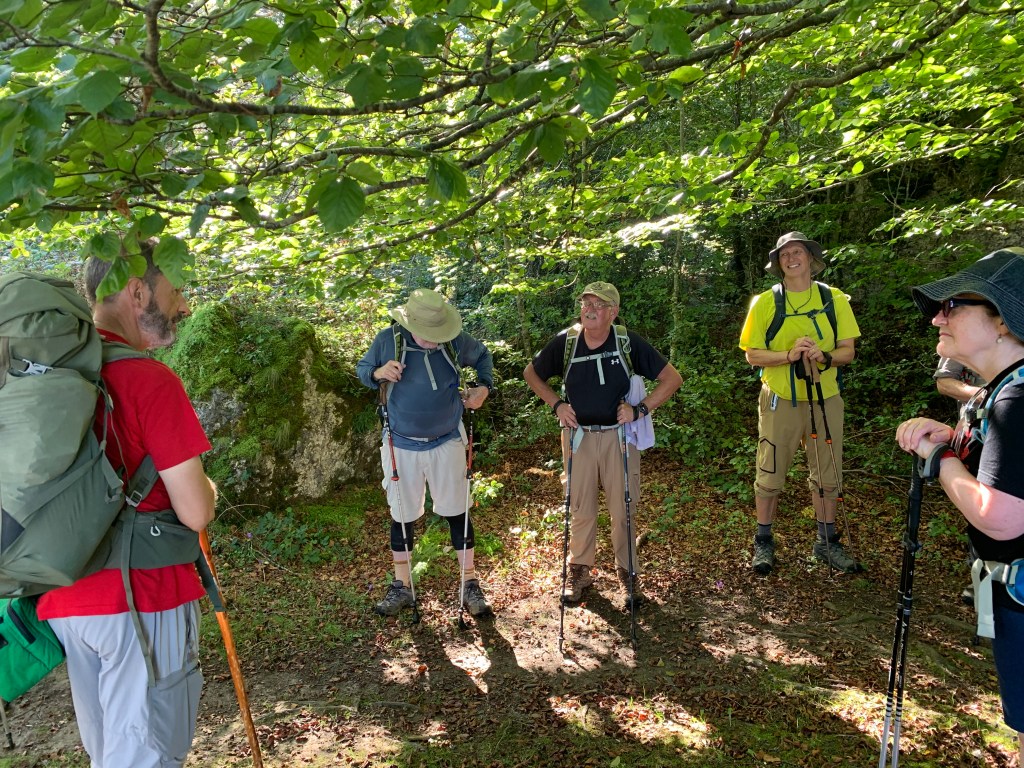

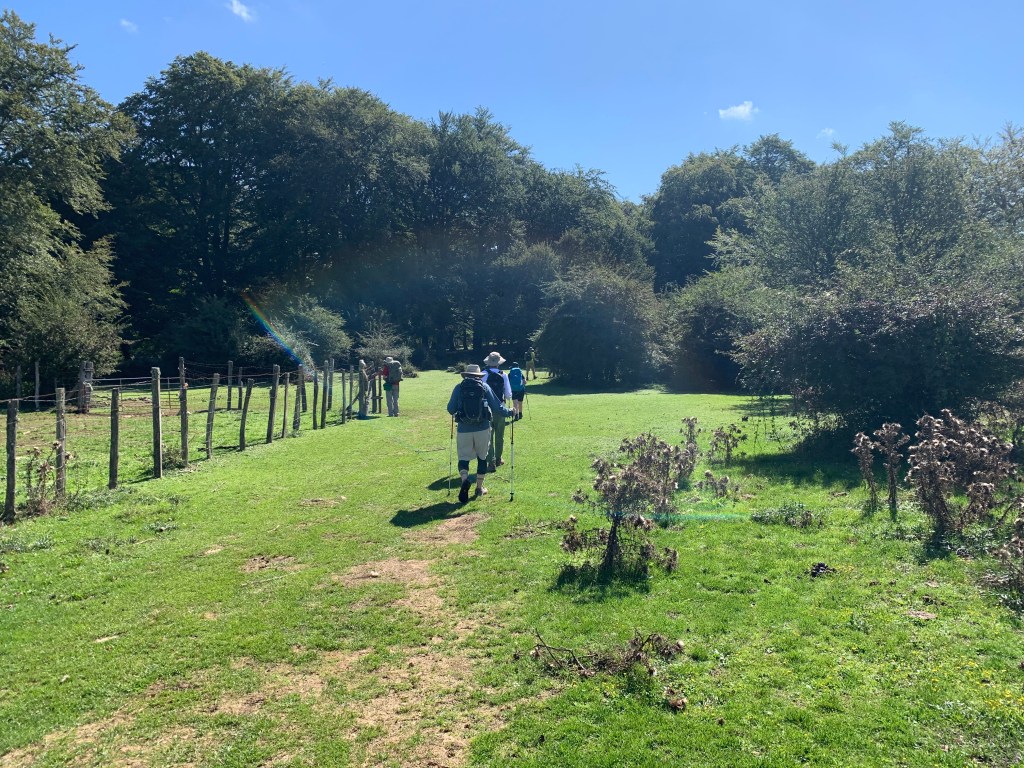

Today was another hard day of climbing up a mountain range and descending the other side. The view from the top made the effort worthwhile.
IT IS HELPFUL TO UNDERSTAND THE DYNAMIC of your God-given Name of Grace in terms of its three interconnected elements: Identity —> Vocation —> Mission.[1] The starting point is identity and its connection with story. Each of us constructs and lives a narrative. The rough and perpetually changing draft of the autobiography you carry in your mind shapes your life. This narrative is you, your identity. Like most people you tell stories about yourself. The ‘self’ is a storyteller. In telling these stories to others you may, for most purposes, be said to be performing straightforward narrative actions. In saying that you also tell them to yourself, however, you are enclosing one story within another. This is the story that there is a self to tell something to, a someone else serving as audience who is yourself or your self.
The Ignatian Camino is a time to stop telling yourself your own story. Since the day you were born, your mother, father, maybe the teachers at school, your friends, everybody, without your even asking, have told you who you are and what you should be. They will tell you your story. Before long, you begin to believe these stories. Unknowingly you say, “This is my story. This is who I am.” The Ignatian Camino is a time to stop telling yourself your own story and to go through this process of Identity —> Vocation —> Mission to find your real story. The reason why you stop telling yourself your story is because you want God to tell you your story. This requires silence, openness and listening on your part.
Your true story. Only God knows your true story. Do not let other people tell you the story of who you are and what your identity is. God knows your identity. God gave it to you. Listen, and God will tell you your story. If there is something in your life that bothers you, tell God about it. Whatever you do, keep it relational with God. No matter what the issue, and how much it may be getting to you, don’t focus on that. Focus instead on your relationship with God, and bring your concern into that relationship.
You get your identity in the presence of the Word of God, by listening to the Word of God. It is true your mother and father told you about God and that is part of the “word”, and you went to school and the teachers told you, or you had religious education classes, or a picture book that tried to tell you your story. Those early experiences come into it. Then one day you say, “This is who I really am before God. I believe now, not because my mother does, or my father, or my family, but I believe. You don’t have to tell me.”
The Ignatian Camino is a time when you try to understand your story from God’s perspective. It is as if God enters into your life and says, “Listen”. This is not a whispering in the ear. It is a realization coming from your presence to the Word of God. It is a realization of God’s breaking into your life This is Name of Grace, a calling. Identity —> Vocation —> Mission. God wants you to go on mission, to help Him build the Kingdom.
Identity. The process begins with identity: Who am I as a person? What identity has God given me? Then comes vocation, a calling. When you speak of “vocation”, you are not necessarily talking about a religious vocation. God calls everyone to holiness. God says, “You, come. Come here.” In Scripture when God calls, He often symbolises that call by changing the person’s name: Abram becomes Abraham; Saul becomes Paul; Simon Bar-Jona becomes Cephas, the Rock. There is a change in name. God calls you by your name. He says in Isaiah 43, “I have called you by your name, you are mine.” Your response is, “Here I am. Send me.”
Vocation. To follow that call you may have to walk “through towns and villages” (Luke 13:22). You are going around that circle: Identity —> Vocation —> Mission. Vocation also has about it the notion of “with others”. In communion with whom? Who are going to be my companions, my friends, my colleagues? Vocation always has the notion of contextualizing how one’s life is going to be lived out, with what people, where, and with what concerns. That is part of vocation. You follow that vocation, and the vocation becomes mission. Your walking “through towns and villages” to follow a calling or vocation is the mission.
Mission. The notion of mission can profit from some explicit reflection. In the church of the Gesu of the Society of Jesus in Rome is a marvellous picture of St. Francis Xavier kneeling at the feet of St. Ignatius. Ignatius is pointing off to the far reaches of the Indies and saying, “Go and set everything on fire.” Ite incendite et flammate omnia. Notice it is in the plural. Ignatius is saying it to Francis and to the Holy Spirit. That makes great art: Go and set everything on fire! It is great art, but poor theology.
Mission is never “Go”; mission is always “Come”. God never says to anyone, “I am here. You, go there.” God says, “I am here. Come here.” Those persons who live under obedience or who are the superiors of those who live under obedience should take note of the theology of mission.
Obedience. For true obedience there has to be a dialogue so that the one who gives the mission is content and the one who is missioned is content that he is going where he can find God and is called by God. One does not go where one cannot find God. Someone who is going to the inner city to bring God to the inner city had better not go. If they do not know that God has been there in the inner city for a hundred years before they ever thought of it, they should not go. If they are going to meet God there, that is fine. The same is true for someone going to the foreign missions. If someone is going to the foreign missions to bring God to some God-forsaken place, he had better not go. There is no God-forsaken place! God has been there thousands of years before anyone ever got the idea of going there “on mission”.
The discerning dialogue between a superior and a person-to-be-sent has to uncover the presence of God there; and both have to have possession of that grace, that ability to find that God is there already.
In the process of Identity —> Vocation —> Mission, often one of those aspects of your life with God will shine very brightly and throw light on the other two. Sometimes one or the other or two of them will be dim. I may not really know what my vocation is, nor do I know what my mission is, but my identity is shining very brightly and casting light on vocation and mission. Sometimes the mission will be very bright and the identity will have grown dim and vocation may have grown dim also. Mission will cast light on identity and vocation. You will go around that cycle many times in your life: Identity —> Vocation —> Mission —> Identity —> Vocation —> Mission —> Identity —> Vocation —> Mission —> Identity —> Vocation —> Mission.
Name of Grace. You learn and gain insight as you go through this cycle many times. You begin to know and become aware of your Name of Grace. What is your Name of Grace? Each person has a very specific, unique and individual Name of Grace. God has related with no one ever before, nor will God ever again relate with anyone in precisely the same way that God relates with you. You have your very personal, individual, unique relationship with God. God calls you by your name. “I have called you by your name” (Isaiah 43:1). That name is not just Tom or Jim or Peter or Michael. That name is an ontological calling: being called into existence, into relationship with God.
Examples of Name of Grace. There are many interesting, but very different examples of “Names of Grace” in history. St. Francis of Assisi, for instance, Il Poverello, “God’s Little Poor Man”, had a very specific Name of Grace. That is what Francis was to reflect to the world: that aspect of God that could somehow be symbolised by Francis being Il Poverello, God’s Little Poor Man. St. Therese of Lisieux, the Little Way, is another very discernible Name of Grace. The “Little Way” was St. Therese’s way, her “Name of Grace”, her identity and vocation and mission.
A very interesting Name of Grace was that of St. Robert Cardinal Bellarmine, a priest of the Society of Jesus. He was not just a very brilliant man, but also a true genius. The Pope wanted him to become a cardinal. The Society of Jesus said, “No, we would rather not.” The Pope said, “Yes,” and the Society said, “No, we would rather not.” Finally, the Pope put his foot down and said, “The Church of God has not his like in learning. He will be a cardinal.” And so it came to pass. He became a cardinal. As cardinal this very brilliant man, a man of genius, had a palace. He had a coach and four horses to take him around Rome. He ate good meals. He had butlers and housemaids and cooks; and he had quite an extensive personal library, which was quite unusual for that time. Books were enormously expensive; most of them were still scribed. He moved in a certain echelon of society because he was a cardinal.
Things that were fitting for St. Robert Cardinal Bellarmine would not at all be fitting for Il Poverello, God’s Little Poor Man. Robert and Francis knew that. Certain things did not fit their Name of Grace. Francis slept on a mat. Robert Bellarmine slept in a palace in a nice bed. Francis ate what he could beg. Robert Cardinal Bellarmine had good meals prepared for him. If they were alive today, Robert Cardinal Bellarmine would probably have at least a top of the range Ford; and Francis, God’s Little Poor Man, would possibly have a push bike with no gears.
It was not just in material things that their lives were very different. Bellarmine was a truly learned man of genius; it is possible that Francis of Assisi could not read or write. He was certainly not a learned man. Certain things were fitting to their Name of Grace: the way they prayed, the way they thought, the way they talked and so on. They came to know their Name of Grace. Francis could tell immediately that the coach and four horses did not fit his Name of Grace. Bellarmine could say, “Yes, I have to have my library. That fits my Name of Grace.” Both were great saints; yet both were very different. Different though their lives were, they were both great saints because they were faithful to their Name of Grace. During this camino my hope is that you will come to come to know your God-given Name of Grace.
Discernment. Apostolic spirituality is a spirituality of choice at the level of faith, a spirituality of decision-making. To make good decisions you have the process of discernment. Discernment is an experiential knowledge of self in which the object of choice is congruent with your fundamental religious orientation.
Let me unpack that phrase. It is an experiential knowledge of self. It is not head knowledge, a conceptual knowledge, but it is an experience, as the Scripture means knowledge when it says, “a man KNEW his wife.” He had a deep experience of his wife. An experiential knowledge of self may be comparable to what a woman goes through when she is going to a dinner-dance. She opens her closet, looks the dresses over, and says, “It is that one.” She knows. That is what fits. That is experiential knowledge. There are many objects of choice. Will I study for a Masters degree in Counselling? Will I become fluent in Spanish? Will I accept a position in Fiji? Will I train as a spiritual director? Whatever the choice to be made is, it must be congruent with your fundamental religious orientation.
Your fundamental religious orientation is your Name of Grace. A good decision fits with your Name of Grace. It is “experiential knowledge of self in which the object of choice is congruent with your fundamental religious orientation.” The decision and how you understand yourself before God fit. They come together. You are comfortable. Your head, heart and faith are saying the same thing. It is energising.
If you come to know and have insight into your Name of Grace, you will find that you use it to make good decisions. You can say, “This decision fits with my Name of Grace.” It fits with your fundamental religious orientation, your unique individuality before God. Discernment of that truest and deepest self is the authentic, the most profound and radical meaning of the “Election” which is the goal of the Exercises. The authentic meaning of the Election in the process and dynamics of the Ignatian Exercises is a becoming aware in growing inner freedom of God’s personal design or plan for me so that I can accept it profoundly in my life to live it out faithfully and generously. You may never get to the point where you can say your Name of Grace in twenty-five words or less, but you may get a sense of it and a sense of how to make decisions: discernment is experiential knowledge of self in which the object of choice is congruent with your fundamental religious orientation. Hopefully during this Ignatian Camino your Name of Grace will be raised to consciousness, and you will be better able to see how God is calling, identifying and missioning you.
[1] George Schemel and Judith Roemer. Beyond Individuation to Discipleship: A directory for those who give the Spiritual Exercises of Ignatius, University of Scranton: Private Printing.
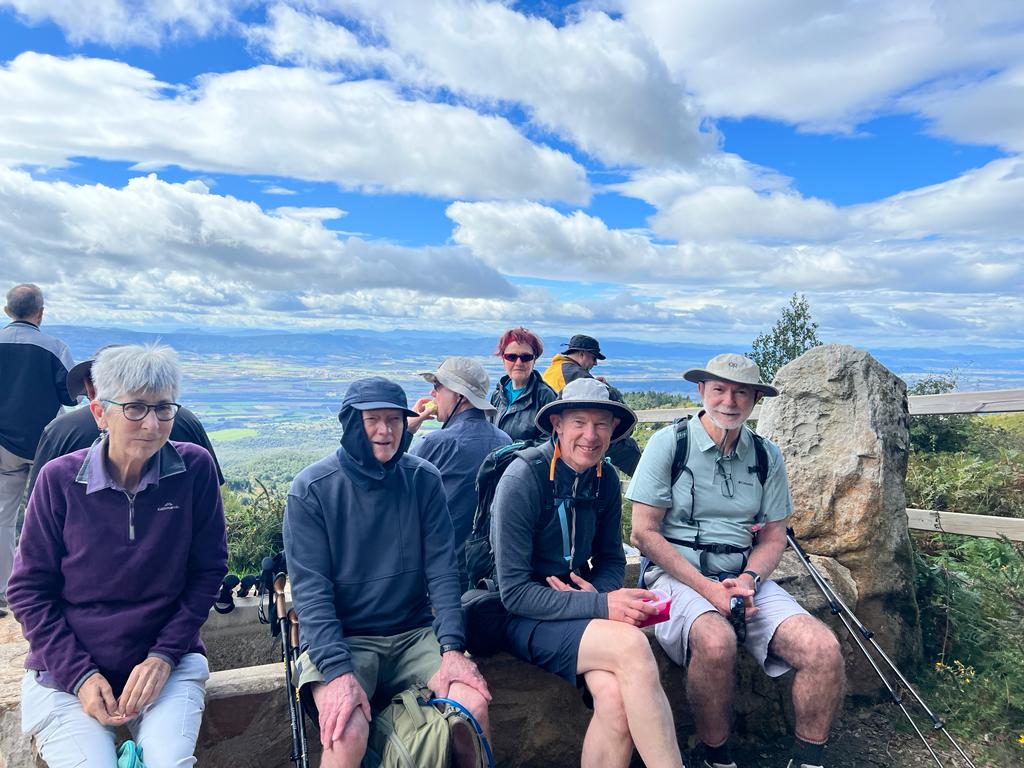
This morning we left Arantzazu at 8:30 AM. It turned turned out to be a very long and tough day. We finally arrived at Eguino just before 6 PM. The first 2 hours were spent climbing a mountain. At the top we stopped at the shelter of Urbia where we had coffees in the bar at the shelter. One of the barman was also a shearer and he told me that he is about to leave the Basque Country for Taumarunui, New Zealand, where he will work for six months as a shearer.




EARLY IN HIS SPIRITUAL EXERCISES IGNATIUS INVITES US TO REFLECT on the Principle and Foundation, which we will do now.
God freely created us so that we might know, love and serve him in this life and be happy with him forever. God’s purpose in creating us is to draw forth from us a response of love and service here on earth, so that we may attain our goal of everlasting happiness with him in heaven. All things in this world are gifts of God, created for us, to be the means by which we can come to know him better, love him more surely, and serve him more faithfully. As a result, we ought to appreciate and use these gifts of God insofar as they help us towards our goal of loving service and union with God. But insofar as any created things hinder our progress towards our goal, we ought to let go of them. In everyday life, then, we should keep ourselves indifferent or undecided in the face of all created gifts when we have an option and we do not have the clarity of what would be a better choice. We ought not be led on by our natural likes and dislikes even in matters such as health or sickness, wealth or poverty, between living in the east or in the west, becoming an accountant or a lawyer, and so on. Rather, our only desire and our one choice should be that option which better leads us to our goal for which God created us.
My Principle and Foundation
This prayer will help me to tap into the big desires of my heart, starting with the desire to praise, reverence, and serve God our Lord and to have Jesus as my intimate companion. My prayer time should be grounded in my longing to be with Christ—to love him, to praise him, to serve him.
Writing in your journal “God has created me to…
[1] This prayer is taken from the book, God’s Voice within: Ignatian Intuition in Everyday Life by Mark E. Thibodeaux, SJ.
We left Hotel Arrupe and Loyola Sanctuary at 8:15AM and set off on our 20 kilometer walk along the bicycle and walking track that follows the River Urola towards the town of Azkoitia. In Azkoitia we saw the house where Inigo’s mother was born. Much of the day, we followed a disused railway track and passed through many tunnels. The group all managed the walk, which was uphill most of the way.

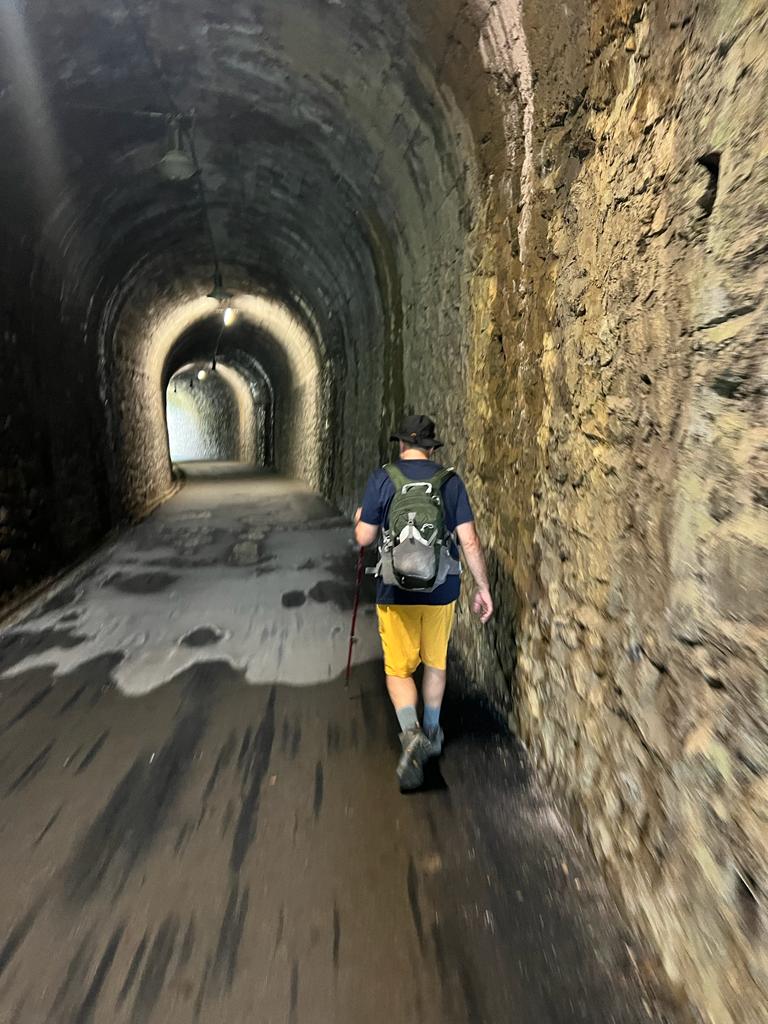
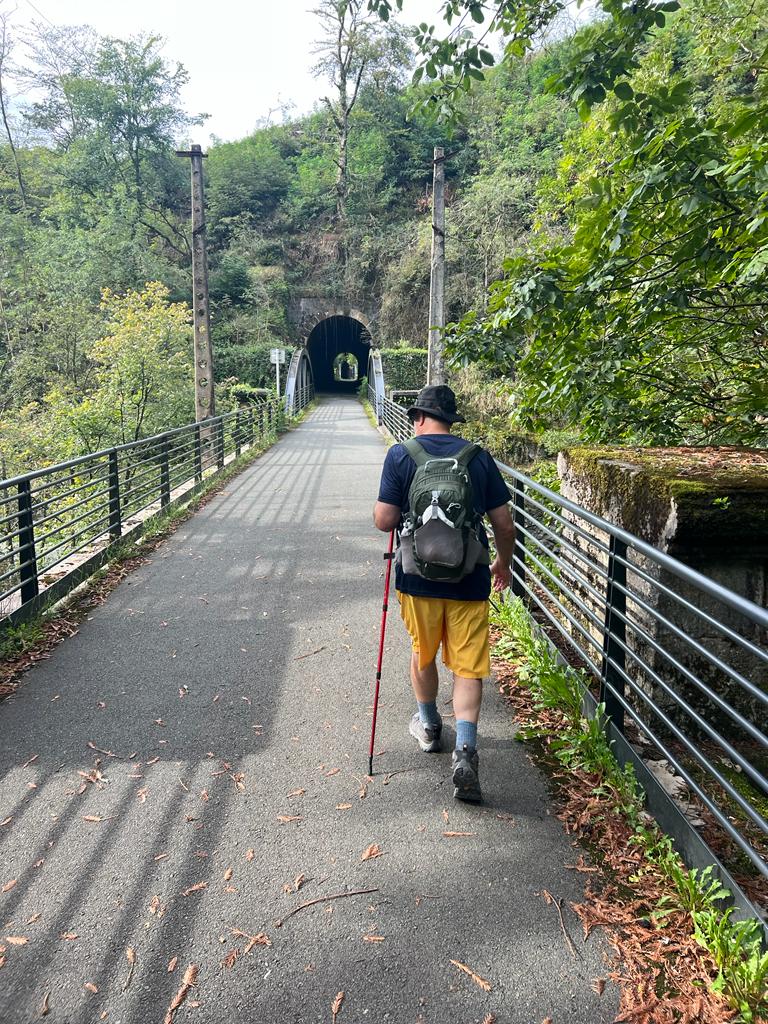
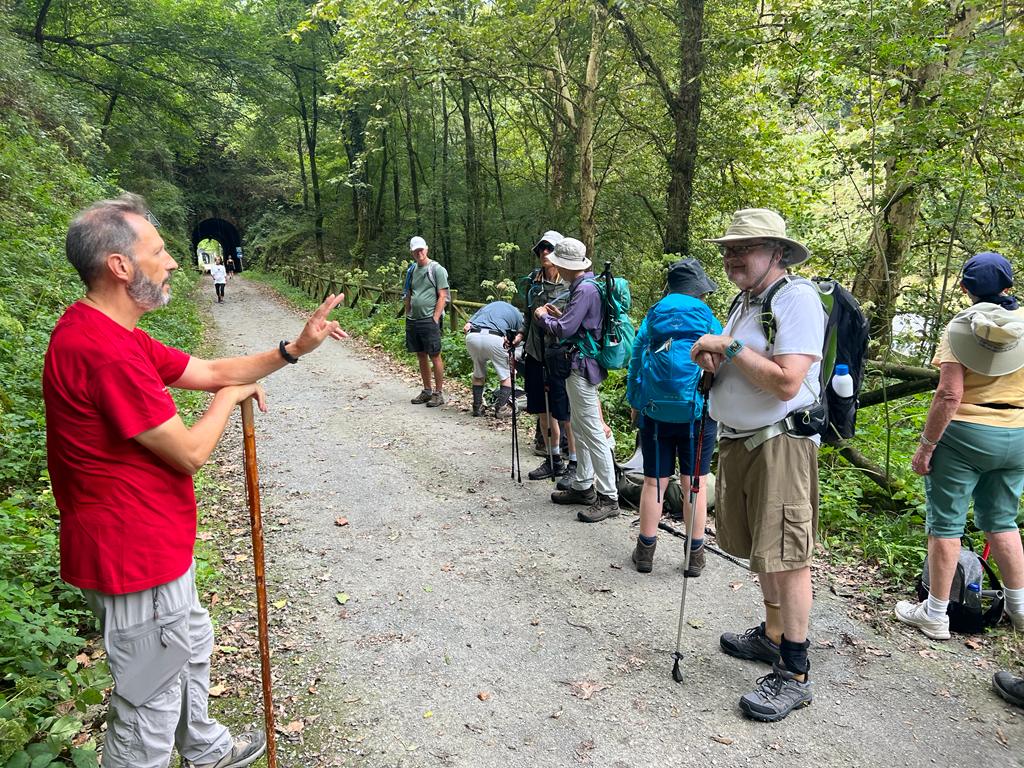
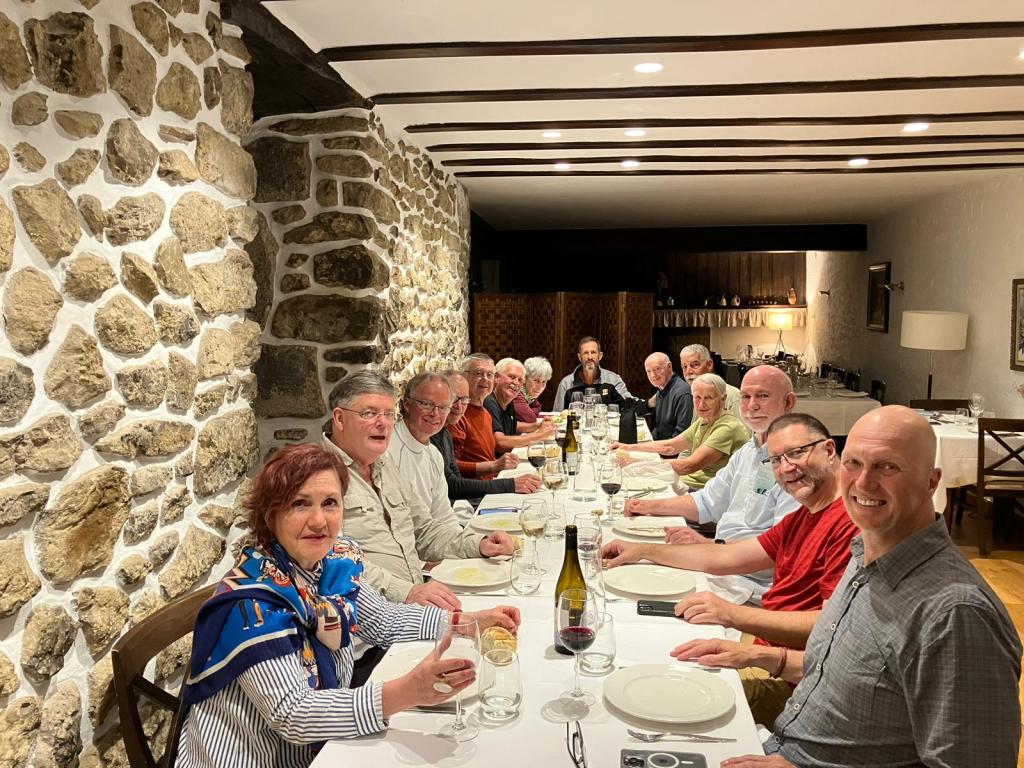
Just before we started our first stage of walking — from Loyola to Zumarraga — I spoke to the group about three of the most important processes in Ignatian spirituality, namely, (i) desire (the id quod volo — asking God for what it is I desire), (ii) the use of the imagination in the composition of place, and (iii) the colloquy. Concerning the colloquy, Saint Ignatius writes in his Spiritual Exercises:
“The colloquy is made, properly speaking, as one friend speaks to another … communicating one’s affairs and asking advice in them” [SpEx. 54].
The colloquy is the conversation in which you engage at any time during a prayer exercise. This dialogue can be with Jesus, with God the Father, with the Holy Spirit, with Our Lady, with God, with a saint, etc.
The colloquy is a conversational technique intended for any moment during the prayer exercise. It is made when you feel moved to make it. At times you enter into such a colloquy when you pray for the Grace [id quod volo]. It is made as a friend with a friend [54]; during it, you pour out your thoughts to God [53]; during it, you talk over what is happening in your experience, be it temptations, desolations, consolations, or desires. You talk over what you need—seeking advice, inquiring how you could be more open, asking for enlightenment as to some particular issue [199]. Like any conversation, it is a dialogue. Monologues are not conversations; nor are they colloquies. The colloquy is an instrument of discovery and freedom. When you talk out your experiences and pour out your thoughts, there may be a release from some of painful experiences that shadow your heart. Revelation and discovery come both from within yourself and from the grace of God’s enlightenment. Often you begin the colloquy in one fashion, then forget yourself in the conversation and discover yourself saying things and expressing deeper and unexpected desires. In the development of these desires and in their indication of growing spiritual freedom, you recognize the impulse of the Spirit.
The colloquy is a two-way conversation. You may find that you have no trouble talking to Jesus or God as Father, but you may fail to talk with them. The colloquy is a conversation and conversation is dialogical. As you pray, feelings and thoughts about life will surface through your prayer. As these feelings and heartfelt thoughts become more evident, express them to God. Talk to God about these feelings. Don’t be afraid to express how you really feel when you are at prayer. Sometimes it helps to imagine Jesus walking the Ignatian Camino with you. Tell him what is on your mind and what is in your heart. Then be silent and imagine Jesus responding to you. Together you enter into a conversation. Make your inner reactions available to Jesus.
When you are unaware of deeper reactions being touched off in your prayer, God seems distant or impersonal. It is as if you are hiding something from the one you love. When you hide something from someone you love, you feel more distant from that person. You may do this to remain on safe territory. There is no significant growth in prayer unless you allow God to influence your real interior reactions that are presently needing to surface.

Who am I? Where do I come from? Where am I going? I am nothing. Everything I possess, my being, life, understanding, will and memory—all were given me by God, so all belong to him. Twenty short years ago, all that I see around me was already here. Everything was proceeding in its appointed way under the watchful eyes of Divine Providence. And I? I was not here. Everything was being done without me, nobody was thinking of me, nobody could imagine me, even in dreams, because I did not exist. And you, O God, with a wonderful gesture of love, you who are from the beginning and before all time, you drew me forth from my nothingness, you gave me being, life, a soul, in fact all the faculties of my body and spirit; you opened my eyes to this light which sheds its radiance around me, you created me. So, you are my Master, and I am your creature. I am nothing without you, and through you I am all that I am. I can do nothing without you; indeed, if at every moment you did not support me, I should slip back whence I came, into nothingness.
O Lord, I am now in the evening of my life. I am in my seventy-sixth year. Life is a great gift from our heavenly Father. Three-quarters of my contemporaries have passed over to the far shore. So, I too must always be ready for the great moment. The thought of death does not alarm me. Old age, likewise, a great gift of the Lord’s, must be for me a source of tranquil inner joy, and a reason for trusting day by day in the Lord himself, to whom I am now turned as a child turns to his father’s open arms.
A DESIRE IS AN INCLINATION towards some object (or person) accompanied by a positive affect (or feeling). The quality of a desire comes from the object whereas the intensity comes from the affect.
On the following day, as John stood there again with two of his disciples, Jesus passed, and John stared hard at him and said, “Look, there is the Lamb of God”. Hearing this, the two disciples followed Jesus. Jesus turned around, saw them and said: “What do you want?” They answered, “Rabbi,”— which means teacher — “where do you live?” “Come and see,” he replied. So they went and saw where he lived, and stayed with him the rest of that day.
After reading the text, please spend an hour in prayerful silence reflecting on Jesus’ question, “What do you want?” Hear him ask you this question. Listen to his question resounding in your heart. When you are ready, you can respond to Jesus from your heart.
At the conclusion of the prayer you might write brief responses to the following questions:
[1] These notes are taken from an article by Edward Kinerk SJ, “Eliciting Great Desires: Their Place in the Spirituality of the Society of Jesus,” Studies in the Spirituality of Jesuits 16, No. 5 (1984).
We spent the first day exploring the Sanctuary of Loyola and the nearby town of Azpeitia, which are in Spain’s Basque region.
Ignatius was born in 1491 in a four-storey castle which still stands. This is where Ignatius returned to convalesce after he had his right leg shattered by a cannonball in 1521. The thirty-year-old Íñigo López de Loyola led the Spanish forces defending the castle of Pamplona against a significantly stronger French army. Combat lasted until a cannon-ball struck Íñigo shattering his right leg below the knee and wounding his left leg. On May 21, 1521 the garrison surrendered.

Íñigo spent months convalescing at the family castle at Loyola. As a result of his injury, he would limp for the rest of his life. His brief military career was over.
As so often happens in times of personal tragedy, the crisis opened him to God. He began a journey from a courtly style of life into the less worldly lifestyle of penitent and pilgrim.
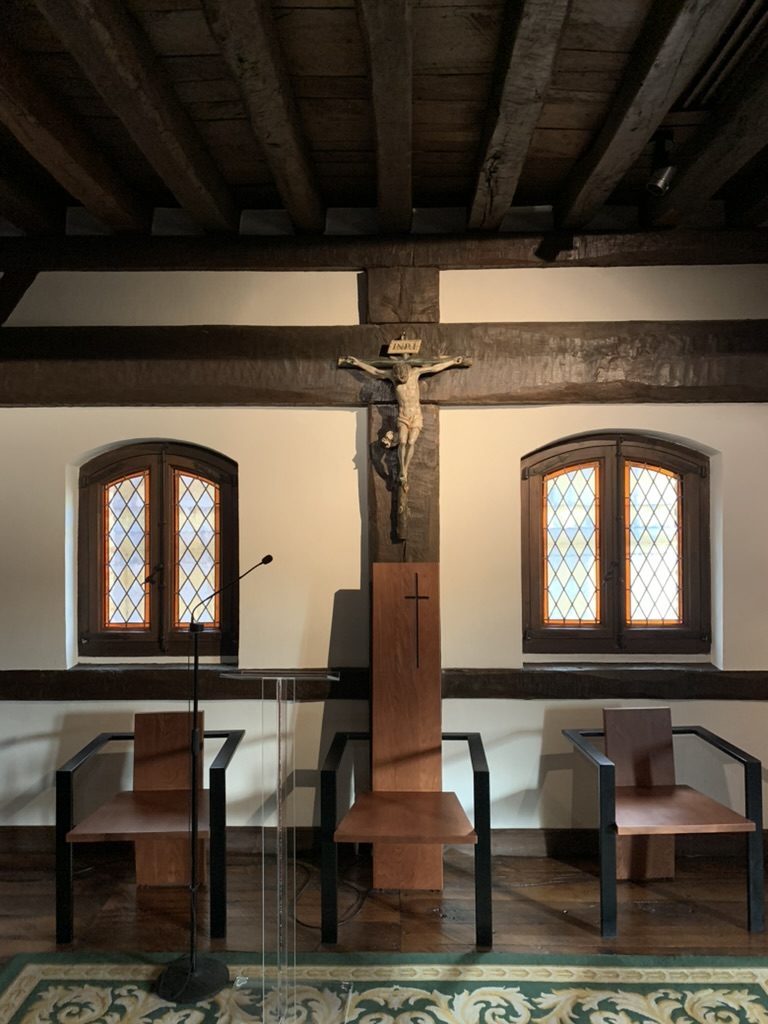
On his sickbed, Íñigo (who later took the name Ignatius) spent hours reading tales of chivalry, and day-dreaming about a noble woman and winning her hand. Weary of day-dreaming, he asked for something religious to read. He was given The Life of Christ by Ludolph of Saxony, and a book about the lives of the saints called the Flowers of the Saints, both in Spanish.. An inveterate day-dreamer, he started to imagine himself being like these holy and daring people.
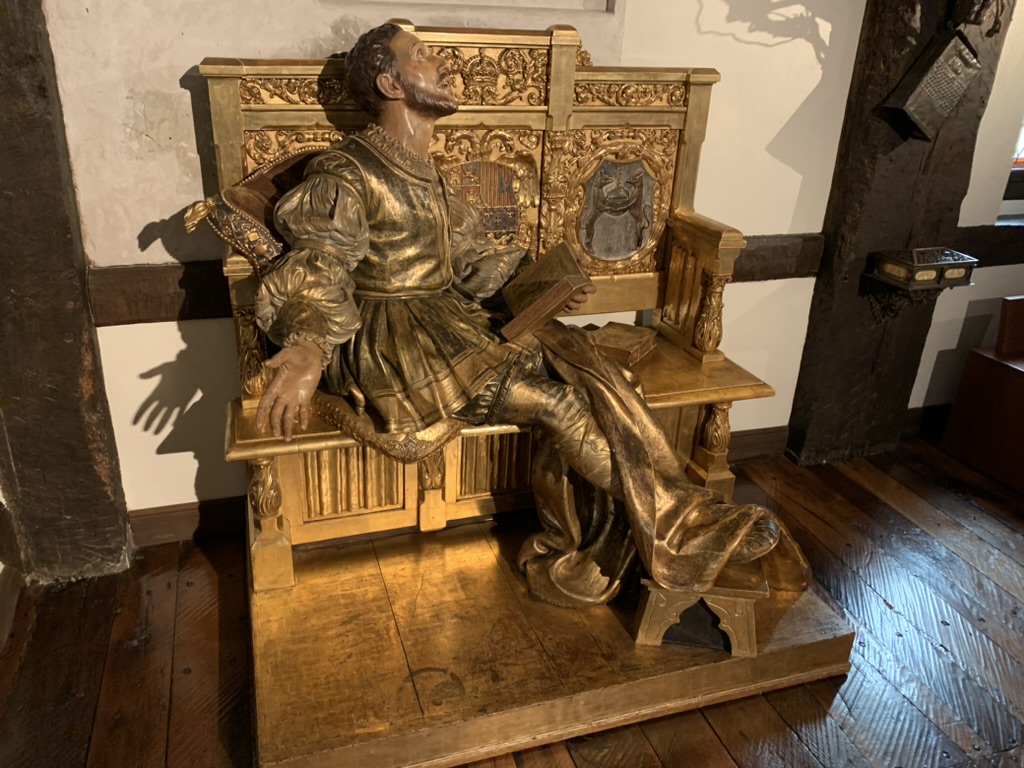
In his Autobiography Ignatius describes how he slowly began to conceive of serving God like Saint Francis and Saint Dominic had. His first steps along this new life path were to embark on a pilgrimage to Jerusalem. So it could not be more fitting that our pilgrimage begins in this room just like his did.
AS MOST OF US ON THIS IGNATIAN CAMINO ARE OVER THE AGE OF 65, we are at the eighth of Erik Erikson’s stages of psychosocial development—ego integrity versus despair. This stage is associated with aging and approaching death. The task of this stage, which occurs in Late Adulthood (from age 65 until death), is to gather up the wisdom learned from earlier psychosocial stages of life and apply that wisdom in the world. Failure to master the eighth stage results in a failure to acquire wisdom. Erikson proposed that such failure would result in the opposite of wisdom which he saw as disdain—a contempt for life, one’s own or anyone else’s.
Wisdom or disdain?
Wisdom is the ego strength that results from the resolution of the dilemma of ego integrity versus despair. At this stage, a person looks back at his or her life. Integrity comes from an overall acceptance of his or her life and achievements. Inevitably there will be some episodes of his or her life story that will elicit pain and shame when remembered, and others that will elicit joy and fulfillment. The task a man or woman faces at this stage is to accept and rejoice in the good decisions taken and the love shown during life, and to be reconciled to any bad choices and failures to love. A man or woman who is basically satisfied with his or her life will be ready to face death.
Erikson states that integrity and wisdom are the result of, “…the acceptance of one’s own and only life cycle and of the people who have become significant to it… free of the wish that they should have been different, and an acceptance of the fact that one’s life is one’s own responsibility.”[1]
Despair
According to Erikson, despair results from dissatisfaction with one’s life as one considers aging and approaching death. A person may realise that he or she is not able to “start over” at this stage in life. A person may feel as though he or she has “run out of time” to complete the milestones of previous stages of development. This anxiety reflects both the fear of dying and the fear of not achieving life’s goals:
Despair expresses the feeling that time is short, too short for the attempt to start a new life and to try out alternate roads to integrity. Such a despair is often hidden behind a show of disgust, a misanthropy, or a chronic contemptuous displeasure with particular institutions and particular people.[2]

Despair is suffering without meaning
Since suffering is an inevitable part of life, one must try to find meaning in it. Psychiatrist Viktor Frankl writes, “despair is suffering without meaning.”[3] According to Frankl, “Life can be made meaningful … through the stand we take toward a fate we no longer can change (an incurable disease, an inoperable cancer, or the like).”[4] Since human beings have free will, they can choose to find meaning in their suffering. What makes the difference between despair and meaning? Frankl answers: The “attitude we choose toward suffering.”[5] He explains:
Caught in a hopeless situation as its helpless victim, facing a fate that cannot be changed, a person still may turn his or her predicament into an achievement and accomplishment at the human level. He or she thus may bear witness to the human potential at its best, which is to turn tragedy into triumph.[6]
Frankl, a Holocaust survivor, recalls the negative and positive responses of prisoners to suffering in the Nazi concentration camps. He says that a person “may remain brave, dignified and unselfish. Or, in the bitter fight for self-preservation, he or she may forget human dignity and become no more than an animal.”[7] When a person’s situation or circumstance changes for the worse, then his or her attitude must change for the better in order to accept it. The kind of person that one becomes in suffering is the result of “an inner decision,” not the result of the suffering alone. To paraphrase Frankl: What kind of attitude will I have toward my suffering? Will I become bitter or better by it?
A study ranking traumatic events in old age lists first, death of a spouse, then being put in an institution, the death of a close relative, major personal injury or disease, and finally losing a job and divorce. Erikson expands on this list and describes how the elderly can experience diminishment in each of life’s eight stages. “Old patients seem to be mourning not only for time forfeited and space depleted but also… for autonomy weakened, initiative lost, intimacy missed, generativity neglected—not to speak of identity potentials bypassed or, indeed, an all too limiting identity lived.”
He sees the reminiscing so characteristic of later years as a looking backward which is set in motion by looking forward to death. It is as if nature equips us to integrate life by remembering experiences to garner wisdom rather than despair. The elderly person also instinctively knows the wisdom of beginning with positive memories of “the good old days,” because negative memories without love’s positive foundation can lead to despair, the trap of this stage of life.

[1] Erik Erikson, Identity and the Life Cycle, W. W. Norton & Company, 1994, 98.
[2] Erik Erikson, Growth and Crises of the Healthy Personality, 1950.
[3] Viktor Frankl, The Unconscious God, New York: Washington Square Press, 1985, p. 137.
[4] Viktor Frankl, Psychotherapy and Existentialism, New York: Simon and Schuster, 1967.
[5] Ibid, p. 24.
[6] Viktor Frankl, The Unconscious God, pp. 125-126.
[7] Viktor Frankl, Man’s Search for Meaning, New York: Pocket Books, 1963, p. 107.
FIVE ELEMENTS are fundamental to the Ignatian Camino: (1) Silent Prayer, (2) Celebration of the Eucharist, (3) Encountering Challenges, (4) Sharing in the Pilgrim Circle, and (5) Individual Examen. During “Walking with Inigo: The Ignatian Camino” these five elements will be present:
Each morning, before we commence our walk, there will be a 5-minute introduction to the theme of the day followed by two hours of silent meditation as we walk. After lunch, we will have another hour of silent prayer as we walk.
2. Celebration of the Eucharist
We will either attend Mass in a local church or celebrate the Eucharist at the place where we are staying.
3. Encountering challenges
Pilgrimage challenges us in unexpected ways and can lead us to learn much about ourselves. The challenge can come from various directions: it might be that the walking puts me in new situations, it might be the people we meet, cultural differences, relationship with my companions, living conditions, being far from home, or just weariness. What comes up for me during my walking—memories, regrets, suffering—will also challenge me.

4. Sharing in the Pilgrim Circle
The Pilgrim Circle is a central element of the Ignatian Camino. It gives pilgrims the chance to reflect on the day lived together, and to recount some of their personal experiences. The Pilgrim Circle is not a matter of discussing or responding to whatever each one says. Rather, we make room for one another, listening with respect and learning from each other’s experiences and insights. The Pilgrim Circle takes place in groups of 7 or 8 people. Ideally, the Pilgrim Circle should last between 30 and 45 minutes. It is led by the spiritual director or by one of the pilgrims, and has these steps:
A) A brief reflection. Each person takes a moment to look over the day, or days, just past.
B) The first two rounds are for listening only. As each person speaks the others listen; what the person says is not discussed — unless, if necessary, to ask for clarification.
Round 1
Round 2
C) In the third round there can be more discussion about what has been said. However, it’s not about imposing a point of view or convincing others of a particular opinion. The object is to share experiences and learn from one another.
Round 3
D) Rapid last round. Conclusion. Each one responds to the last question with one word or short phrase:
5. An Individual Examen of the Day
Ignatius considered the Examen of the day a prayer of great importance, so much so that he wrote that if a Jesuit finds himself short of time to pray, at least he should not omit his Examen. Why? Because God can be found in our daily lives.
If you think about it, each day is filled with impressions, encounters, and experiences. We go through happiness and disappointment; we feel sadness, desire, enthusiasm, and many other things besides. We mustn’t make too rapid a judgment on what we experience: God sometimes speaks to us in what energizes us, at other times God does so in what upsets us, and wants to lead us by means of all these experiences. If we allow ourselves to listen to the voice of God with us, we will be able every day to grow a little freer, more patient and more filled with love.
The Ignatian Examen can be made anywhere: on the beach, in a car, at home, in the library. It takes some 10 or 15 minutes and consists of five very simple steps, which can be set out in various ways. Here is one way:

 Walking with Inigo — The Ignatian Camino