Sin—the distortion or misuse of God’s gifts to me

Every sin is the distortion or misuse of what was originally given to me as a gift by God.

For instance:

The sin of:May be an abuse of the gift of:
CovetousnessHaving deep desires
PrideLeadership
LustIntimacy
Destructive angerZeal to change what needs to be changed
GluttonyA deep hunger and thirst for life within and communion
EnvySeeing gifts and growth in another
Paralysing fearSensitivity; an awareness of what needs to be done
StubbornnessPerseverance

Prayer to find the gift in my sinfulness

Ask Jesus to help you get in touch with what you feel is your greatest sin. Ask Jesus to reveal to you the gift that lies beneath this sin. Ask Jesus to redeem this part of you, restoring what you understand as your sin to the gift that it was originally intended to be. With your breathing, inhale the light of Jesus with each breath. Exhale the fear, darkness and the hurt that have caused this gift to become distorted and sinful.

Day 7: Navarrete – Logroño – Xavier

In the morning, we had a three-hour walk from Navarrete to Logrono where we had lunch. At 3 pm, we took a bus to Xavier.

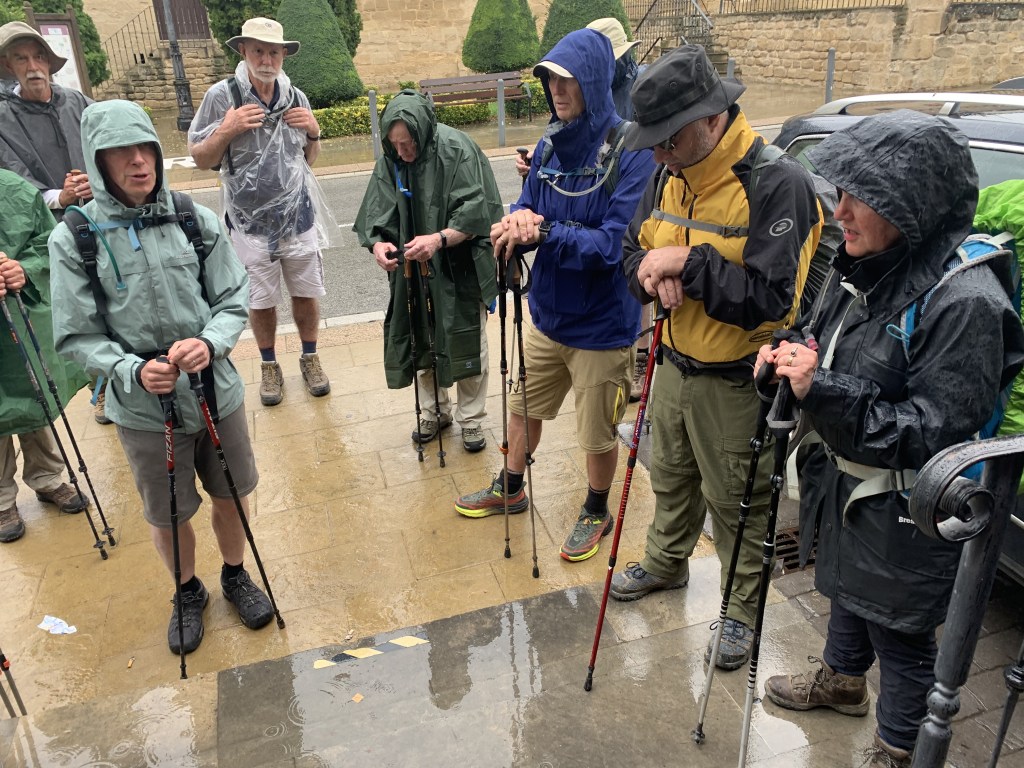
Fr Josep giving instructions in the morning. Behind is the place where we stayed last night. It was the house where Ignatius used to stay when he worked for the Duke of Navarre.
The bull on the hill on the road between Navarrete and Logrono
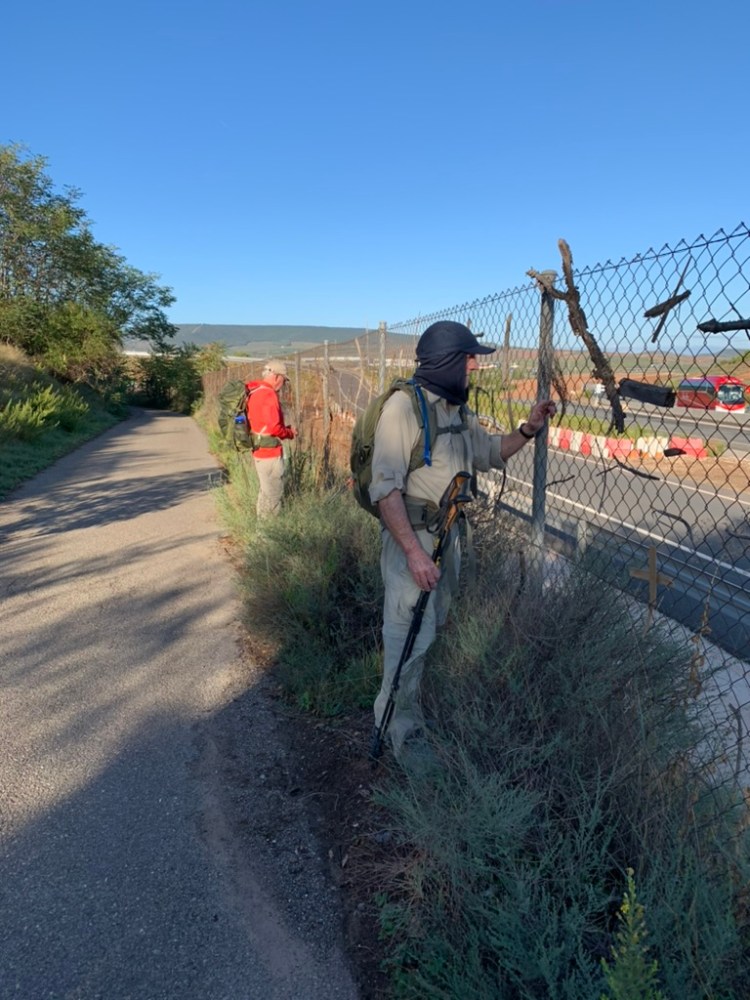
Jim Strickler and Peter Davine putting up crosses made out of twigs and pieces of wood on a fence along the highway

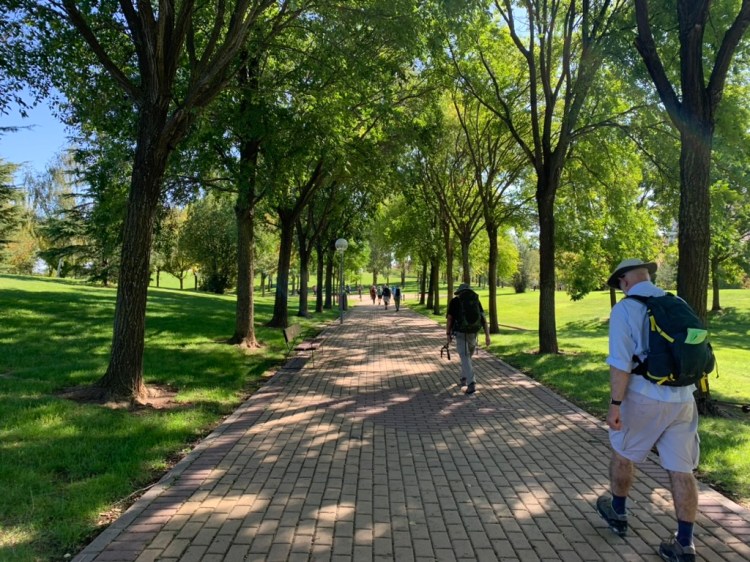
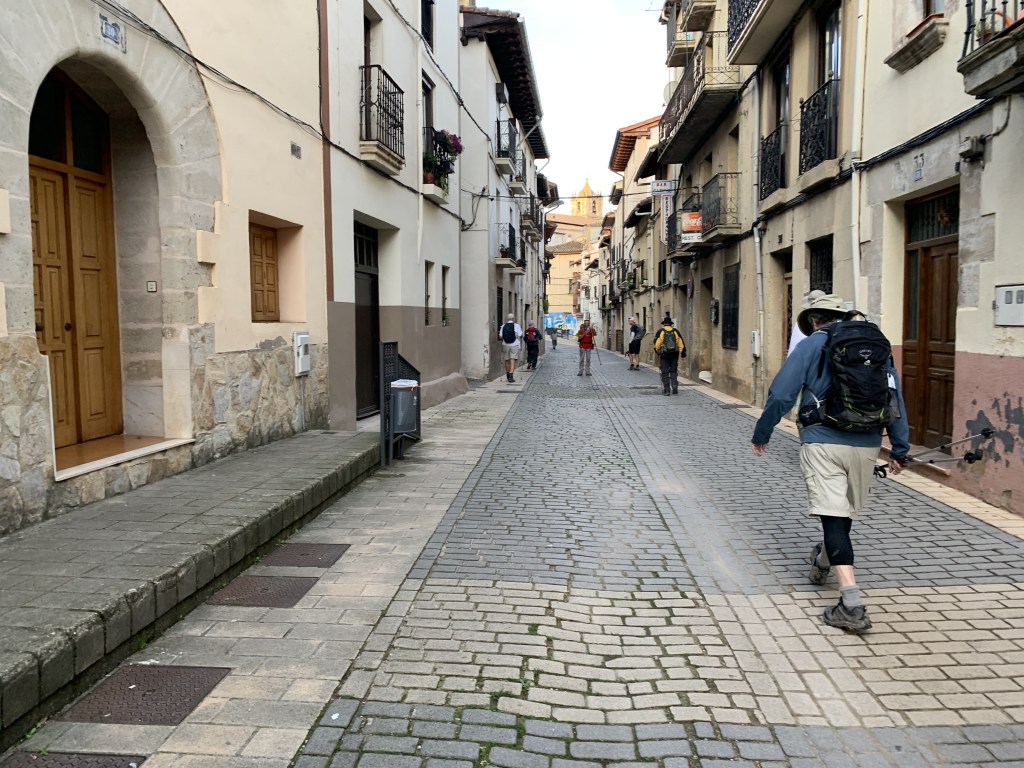
The trail into Logrono was through beautiful public parks

Release from Resentment[1]


AN UNWILLINGNESS TO FORGIVE OTHERS for the real or imaginary wrongs they have done us is a poison that affects our health—physical, emotional, and spiritual—sometimes very deeply.  (It can affect our family and community life and our work and social life). 

Here is a simple way of ridding yourself of resentments that you may be nursing:

First, imagine that you see the person you resent there in front of you. Tell him or her of your resentment, and express all your anger to him or her as forcefully as you can. Do not baulk at your choice of words!

After expressing all your resentment, but only after, look at the whole incident that caused the resentment from the other person’s point of view. Take the other person’s place and explain the whole thing.  How does the incident look when seen through his or her eyes?

Another way of ridding yourself of anger and resentment is this:

Imagine, that you see Jesus on the Cross…Take all the time you need to picture him in vivid detail…

Now go to the scene of your resentment…Stay with it for a while… Then return to Jesus crucified and gaze at him again… Keep alternating between the event that caused your resentment and the scene of Jesus on the Cross…until you notice the resentment slipping away from you and feel the freedom, joy and light-heartedness that follows. 

[1] Anthony de Mello, Sadhana— a way to God.  

The Sorrowful Mysteries of my life [1]


AYBE YOU CARRY WITHIN YOU WOUNDS FROM THE PAST that still rankle in your heart. It is helpful to return to the events that produced these negative feelings so as to drain them of any harmful effect that they might be having on you today.

Return to some scene in the past where you have felt pain or grief or hurt or fear or bitterness… Relive the event. See the place and the people and what was done in detail… But this time seek and find the presence of the Jesus in it… In what way was He present?

Or imagine that Jesus himself is taking part in the event… What role is he playing?… Speak to him. Ask him the meaning of what is happening… Listen to what he says in reply…

Return to the event again and again in your imagination until you are no longer affected by the negative feeling that is produced.

It would be good to write down your personal reminiscences of where you have felt pain, grief, hurt, fear, or bitterness. Journaling in this way will help you to take hold of those events in your life story rather, than having the events take hold of and influence you.

Questions to reflect on and write about after the prayer:

  • What happened in the prayer?
  • What did Jesus do?
  • Did you experience any spiritual and emotional benefits in this exercise?

[1] Anthony de Mello, Sadhana— a way to God.  

Day 6: Laguardia – Navarrete

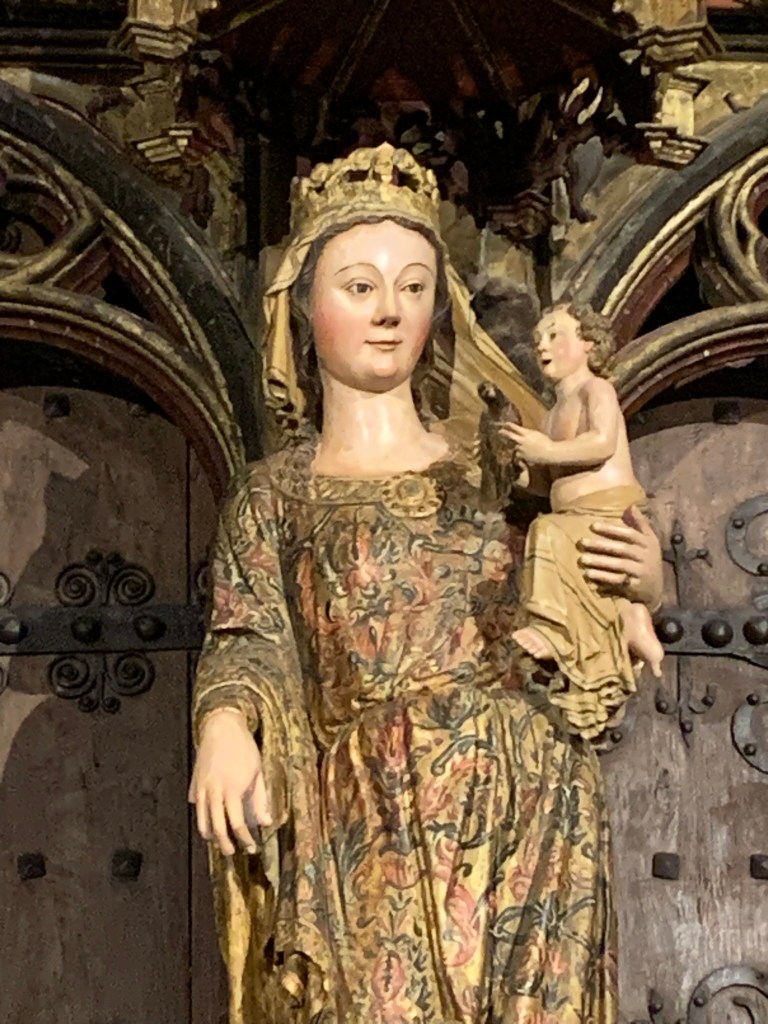
Today was a much easier day. After breakfast, we spent the morning visiting the Church of Santa María de los Reyes in Laguardia. We had an interesting description of the portico.

Our Lady of the Kings (Santa Maria de los Reyes)

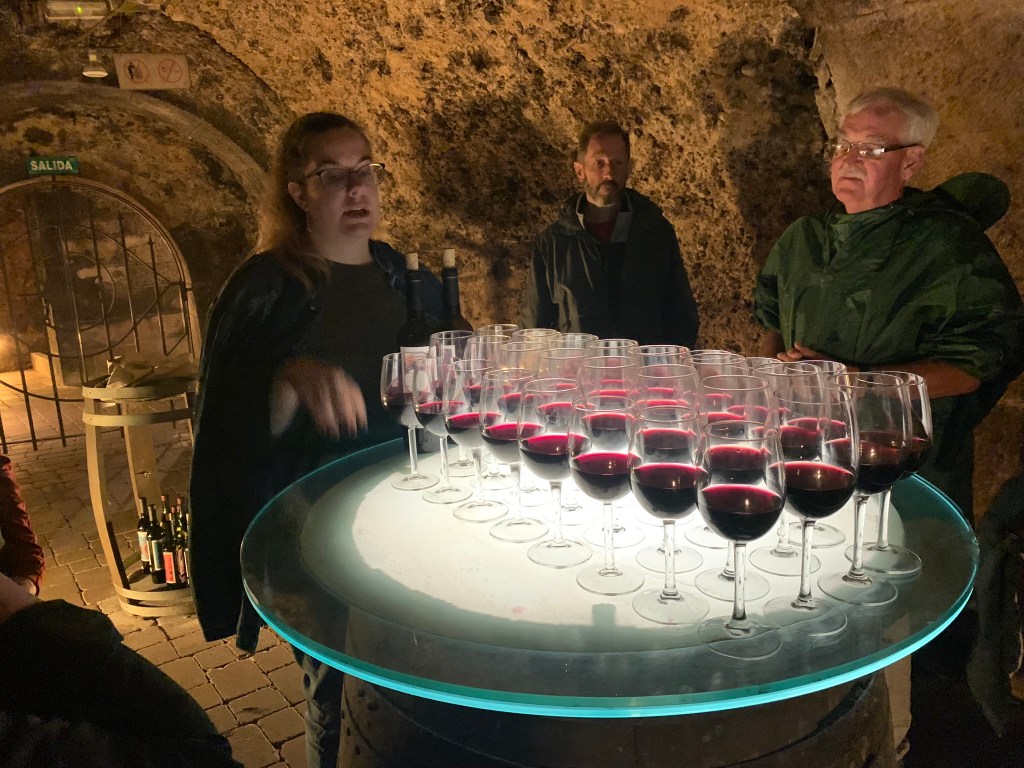
We also did a tour of an underground winery winery.

Wine-tasting in an underground tunnel

We left at 1 pm and walked from Laguardia to Lapuebla de Labarca, about 9 km, where we had lunch at 3:30 pm, and then a bus drove us to Navarrete.

Getting ready for 2 and a half hours of walking in the rain
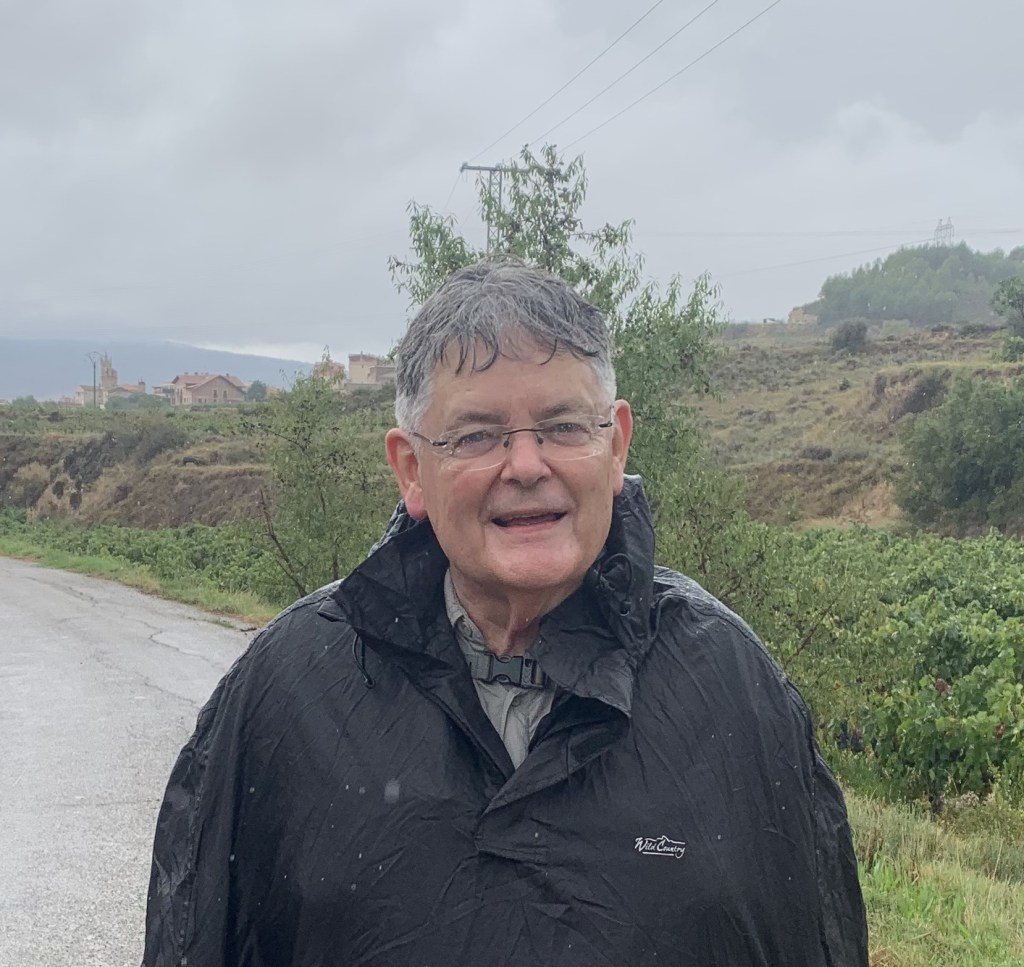
A bit worse for wear
Ready for a hot shower at the hostel
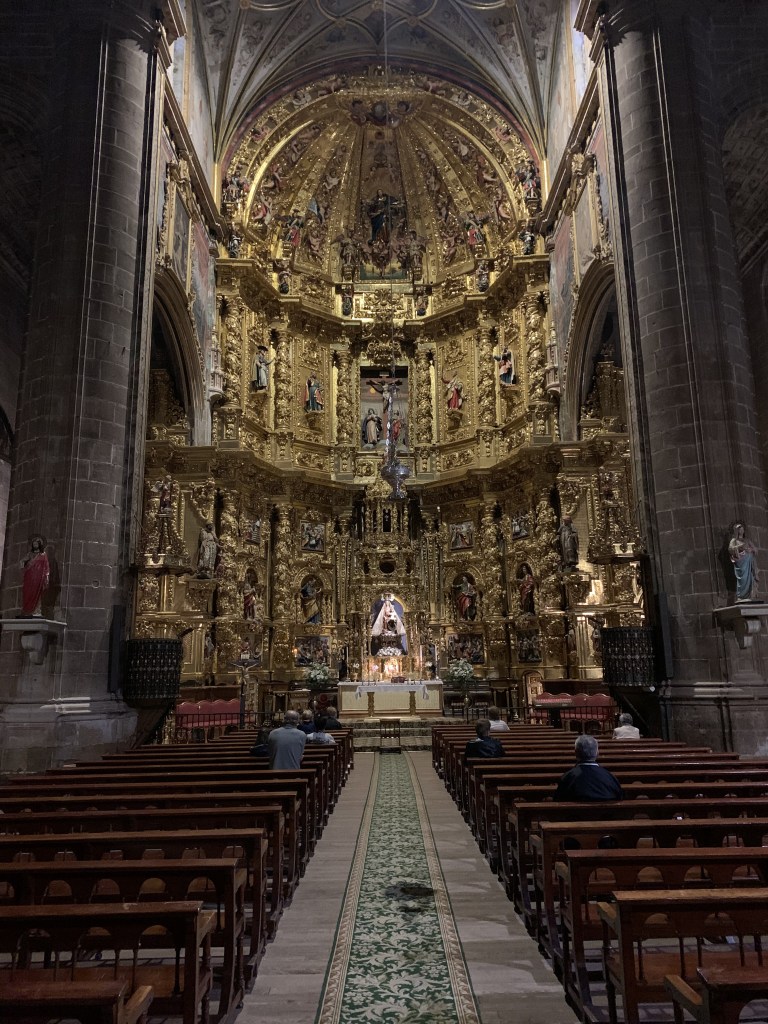
The Church of Nuestra Señora de la Asunción de Navarrete
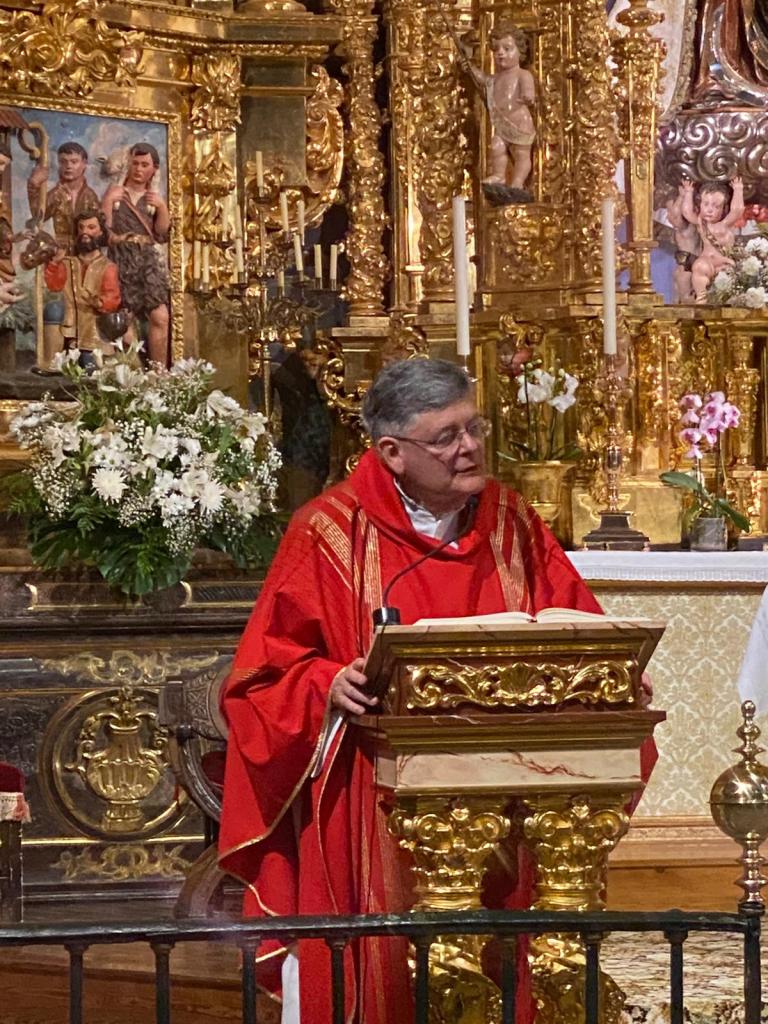
I gave a brief homily at Mass

The Prayer of a Grateful Heart

  1. Imagine that you are at a slide show. Watch as only pictures of the happy moments of your life appear on the screen. Breathe in once more the “yes” to your life that was in those moments.
  2. As your “yes” to your own life deepens, see if some moments appear on the screen that surprise you—moments which at the time seemed meaningless or which you couldn’t accept, but which you now see as gifts because of the good that has come from them. As you continue to breathe in your “yes” to the moments that you see on the screen, breathe out any feelings of failure or fear that your life has been meaningless.
  3. Thank God for the gift of your entire life and the way that all of it has meaning in God’s eyes.

Three Blessings

Give thanks to the Lord, for he is good; his love endures forever (Psalm 106:1).

A Gratitude Deficit[1]

SAINT IGNATIUS OF LOYOLA THOUGHT that a particular type of ignorance was at the root of sin. The deadliest sin, he said, is ingratitude. It is “the cause, beginning, and origin of all evils and sins.” If you asked a hundred people to name the sin that’s the origin of all evils, I’ll bet none of them would say ingratitude. They would say pride or disobedience or greed or anger. The idea that we sin because we’re not sufficiently aware of God’s goodness probably wouldn’t occur to too many people. By emphasizing gratitude, Ignatius was saying something about the nature of God. God is the generous giver, showering us with blessings like the sun shining on the earth. If we truly understood this, we would return God’s love with love. We wouldn’t sin. Gratitude is a good word for this fundamental quality of our relationship with God. Ingratitude, our blindness to who God truly is, is thus the root of all sin.

Three Blessings[2]

The Three Blessings Exercise is intended to increase your gratitude, happiness, and well-being. It does this by a simple method of redirecting attention towards positive thoughts and away from negative thoughts. Human beings have evolved to spend much more time thinking about negative experiences than positive ones. We spend a lot of time thinking about what has gone wrong, what stinks about life, or how we aren’t stacking up. In the past, there may have been an evolutionary advantage to this way of thinking since it seems to be innate. However, for modern humans, this negative bias is the source of a lot of anxiety, depression, and a general lack of well-being. Luckily, by re‐directing our thoughts on purpose towards positive events, we can do a lot to correct this negative bias.

Method

This exercise is done each night before going to sleep.

Step 1: Think about anything good that happened to you today. It can be anything at all that seems positive to you. It need not be anything big or important. For example, you might recall the fact that you enjoyed the oatmeal you had for breakfast. On the other hand, you might also recall that you got a clear result from a medical test, or you had uninterrupted sleep. Anything from the most simple to the most exalted works, as long as it is a good, positive, happy thing.

Step 2: Write down these three positive things.

Step 3: Reflect on why each good thing happened. Determining the “why” of the event is the most important part of the exercise. For example, you might say that your oatmeal tasted really good this morning because your spouse took the time to go shopping at the local farmer’s market where they have fresh, organic oatmeal. Or, if you are a parent, you might say that your child took its first step today because God was pouring blessings down upon your family, or because your small daughter really wanted to get to some cookies on the table. You decide the reasons for each event.

Step 4:  Thank God for the three blessings of your day.


[1] Jim Manney A Gratitude Deficit https://www.ignatianspirituality.com/a-gratitude-deficit/

[2] This exercise was created by psychologist Martin Seligman. He is considered to be an expert on depression and happiness, has been called the “father of Positive Psychology,” and is one of the preeminent psychologists of the 20th century. He is also the director of the Positive Psychology Center at the University of Pennsylvania. The Three Blessings Exercise has been clinically demonstrated to be effective.

Day 5: Santa Cruz – Kripán – Laguardia

Today was our third day of steep ascents and descents. It was a tough day.

Starting Day 5 at 8.30am in Santa Cruz
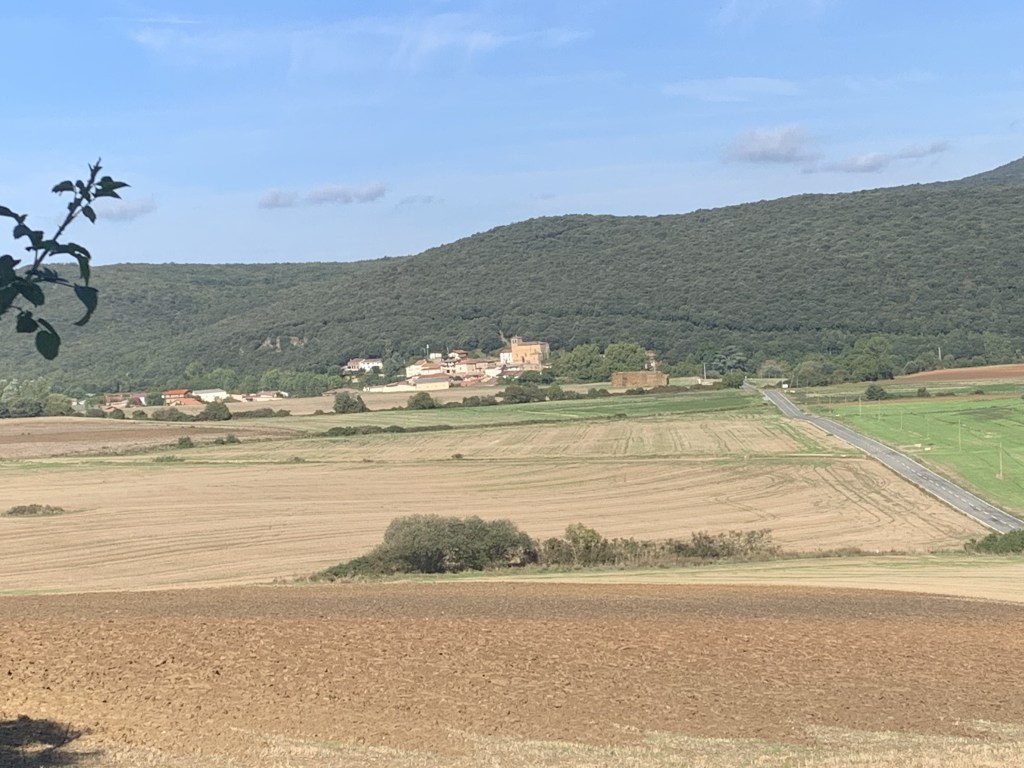
On the outskirts of Santa Cruz
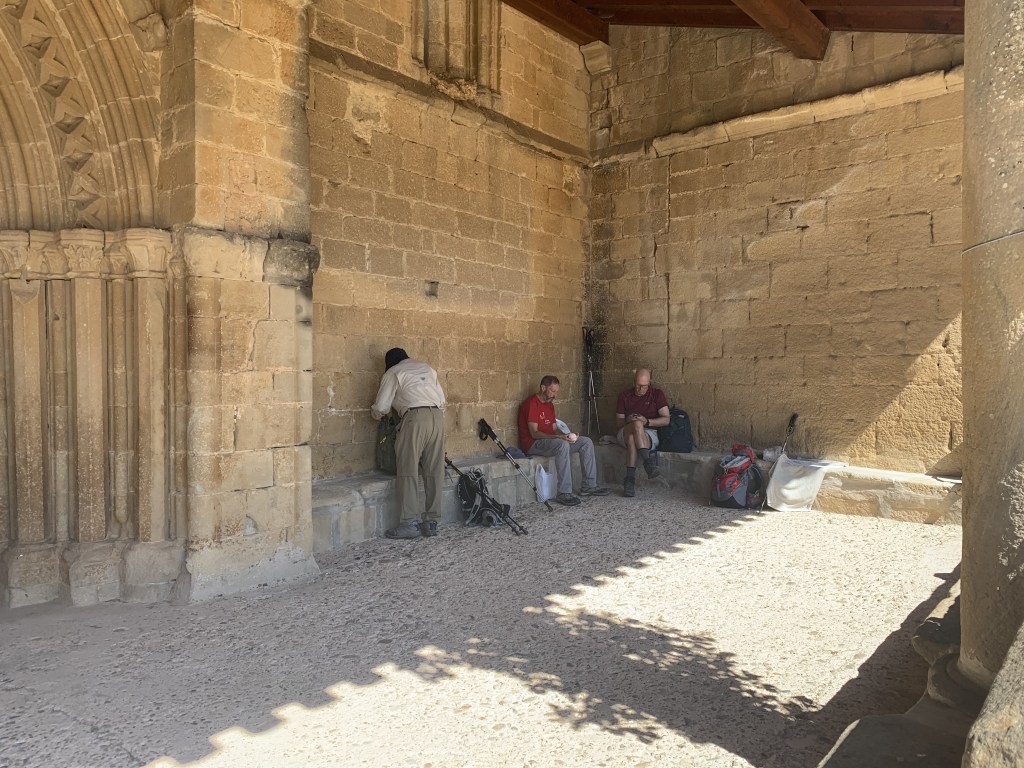
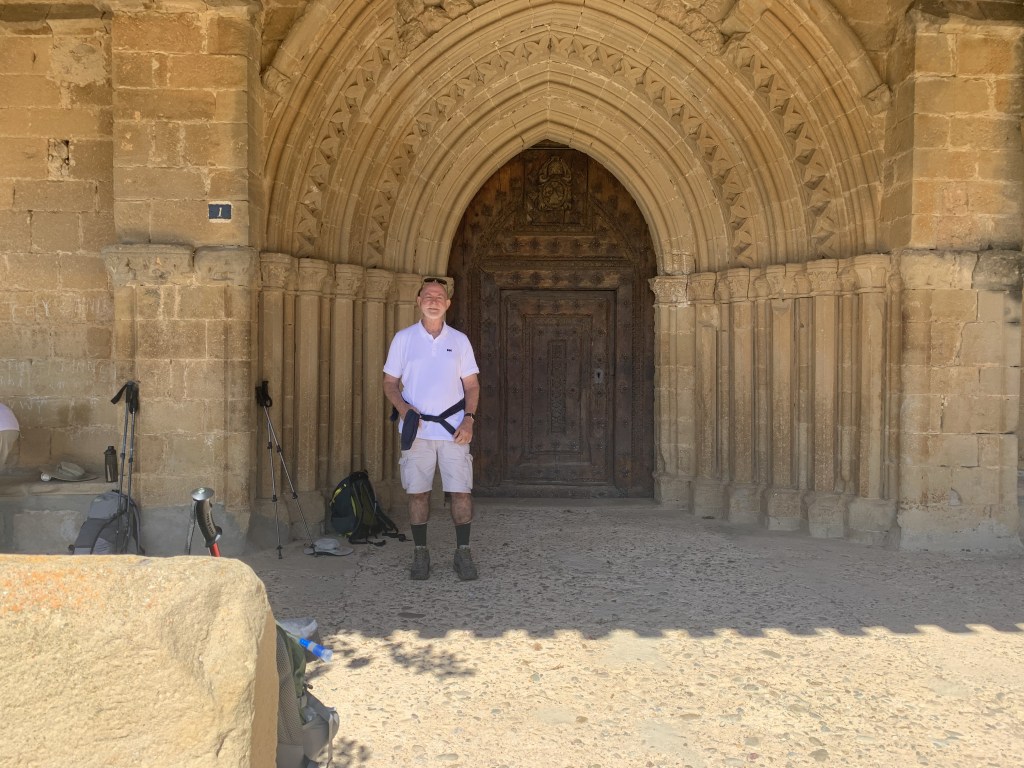
Eric May outside the door of the Church in Lapublacion where we stopped for lunch
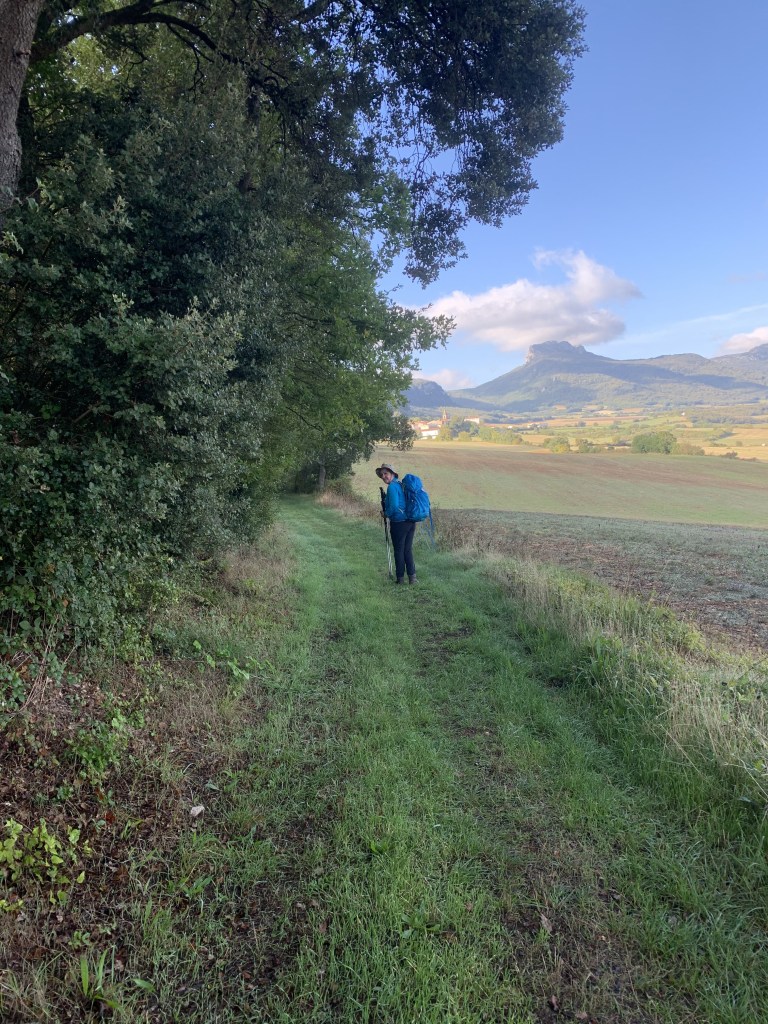
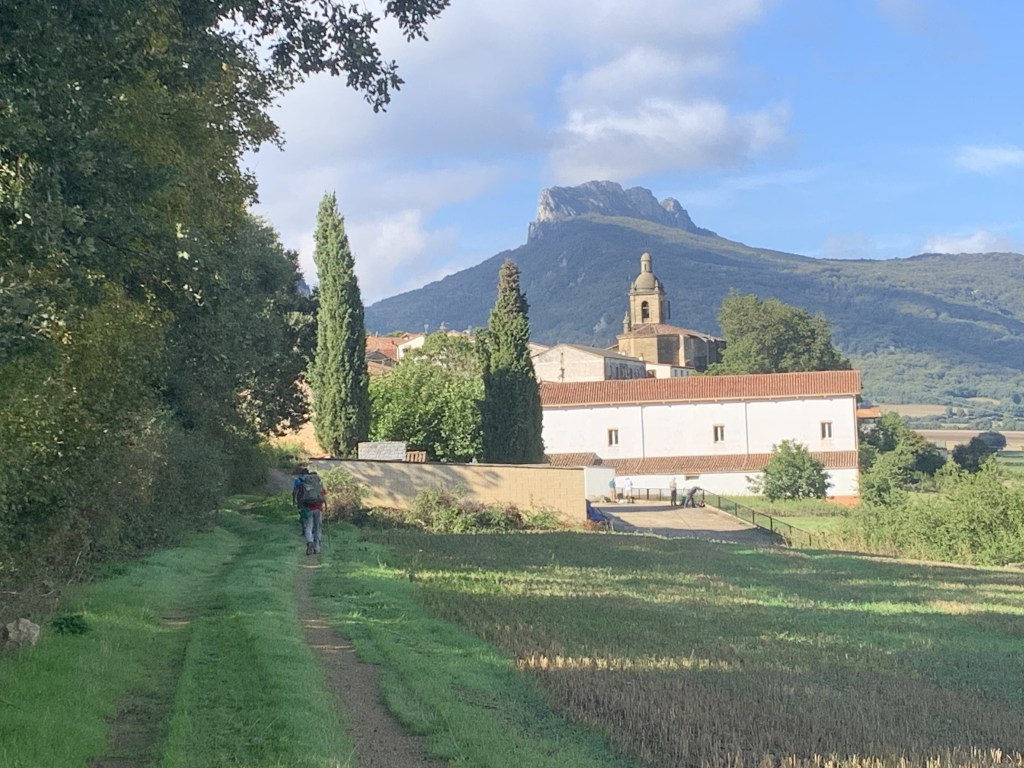
The Lion’s Head where we are headed today, along this track
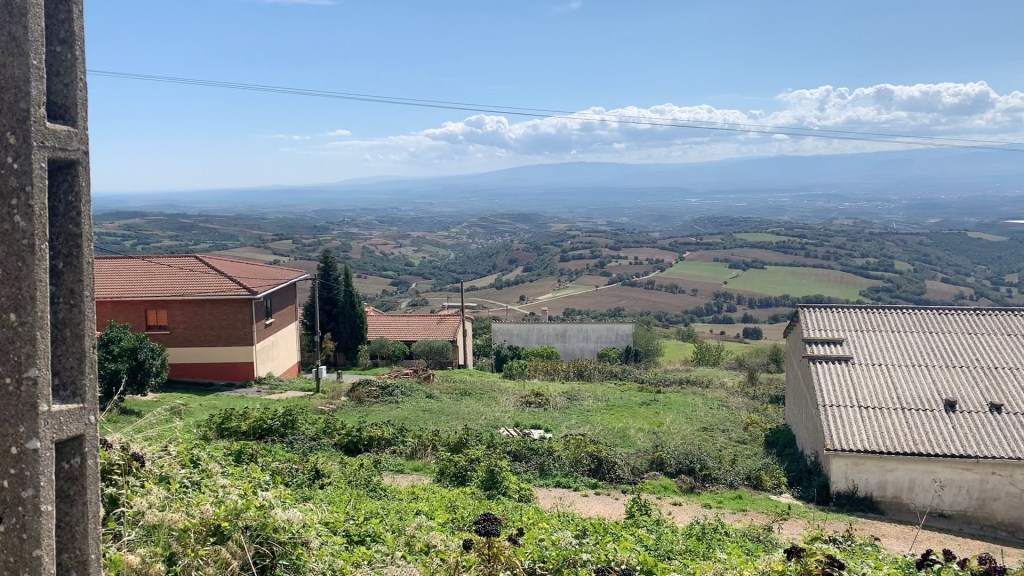
Walking under the mountain on a hot afternoon
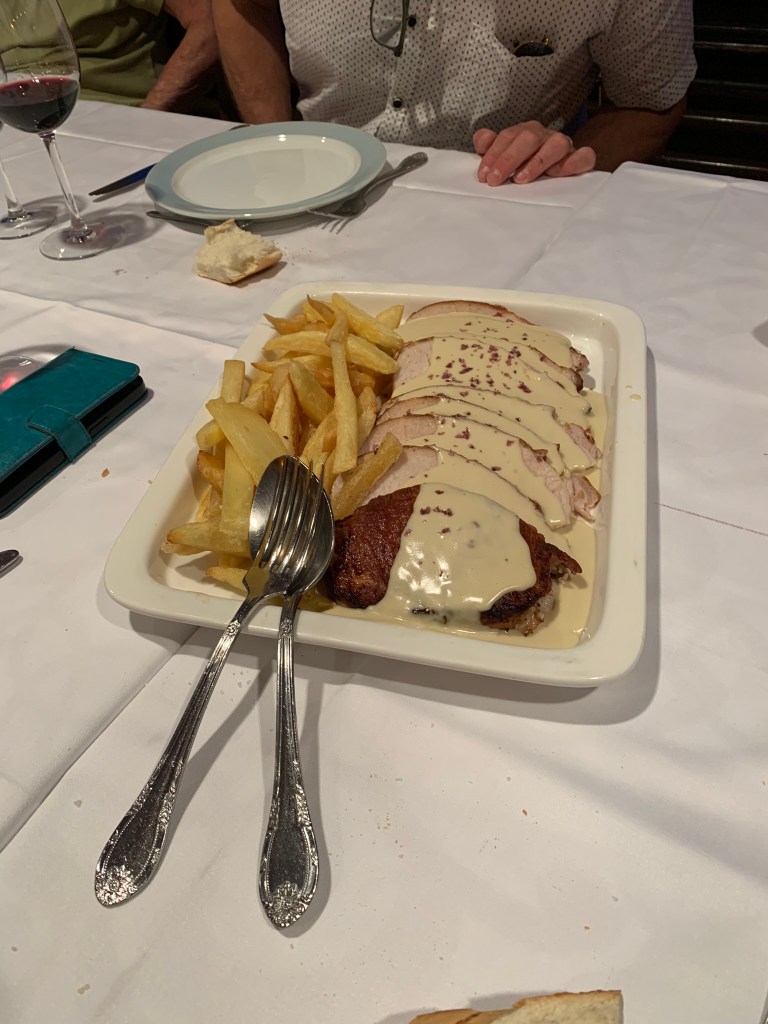
We had a delicious meal at the hotel where we are staying tonight
The pork was exquisite, as were the views

The Prayer of Sheer Silence

IN THIS PRAYER I OFFER MYSELF TO GOD IN SILENCE.  I silently show my willingness to be transformed more completely into the image of God in which I am created. I acknowledge that God is beyond my human knowing.  I enter into the presence of God with my deepest self, as I am right now, acknowledging that God matters above everything else.

Scripture   1 Kings 19:10-12

(The angel said to Elijah), “Go out and stand on the mountain before the Lord, for the Lord is about to pass by.” Now there was a great wind, so strong that it was splitting mountains and breaking rocks in pieces before the Lord, but the Lord was not in the wind; and after the wind an earthquake, but the Lord was not in the earthquake; and after the earthquake a fire, but the Lord was not in the fire; and after the fire a sound of sheer silence. When Elijah heard it, he wrapped his face in his mantle and went out and stood at the entrance of the cave.

The practice of the Prayer of Sheer Silence

  • You begin by invoking the presence of God: “In the name of the Holy One who creates, restores, and makes whole.”
  • You are invited to become aware of the silence and enter it as Elijah did. 
  • It might help to become aware of your breathing for a while.
  • Now reflect on the presence of God in the atmosphere around you. Reflect on God’s presence in the air you breathe in and out. Notice any feeling that arises as you imagine yourself breathing God in and out.
  • Now express yourself to God but see if you can do it non-verbally.
  • As you walk the Ignatian Camino today, see if you can enter into, and perhaps surrender to, the silence.

The Joyful Mysteries of My Life

RELIVING YOUR MEMORIES can be a method of prayer. It is called the prayer of reminiscence. If you wish to do the prayer of reminiscence, find a comfortable spot where you won’t be disturbed, relax and become centred before you begin. Read through the prayer first before you begin and then put the sheet aside. Spend around 10-15 minutes on a particular memory and then move on to another.

The prayer of reminiscence is very simple: allow your consciousness to wander to any memory that seems important at the present. After asking the guidance of the Spirit, seek to understand this memory and explore ways in which this has affected you. To jog your memory, you may like to consider some of the following:

  1. Mount the stairs of the home in which as a child you lived longest; go in the front door, walk through the living room with all its old furniture, through the dining room ready for a meal, through the warm kitchen smelling of tasty food and out the back door; or be present at a family meal; or
  • Take the short cut across the yard, past the shops, to your primary school; or
  • Walk through the classrooms of your secondary school; see the playing fields, your friends, the teachers; or
  • Walk leisurely through a day or a week of the first job which you ever held, or your first day at university.
  • Recall the place where you first met some of your closest friends.

When a memory arises, let it develop fully. Go with a memory which attracts you. Don’t hurry through it. Stay with a strong memory for 10 to 15 minutes—as long as it develops in you. But don’t moralise about it. Don’t say to yourself: “I should have been more…” Then move on to another memory.

The four stages of the Prayer of Personal Reminiscence

There are four stages to the Prayer of Personal Reminiscence. In the first two stages you consider only those stories that are a source of happiness and joy. These stories are a form of prayer that can fill you with a sense of God’s love for you through others and strengthen you to look at the hard things of your life later.

The First Stage is to consider only those memories in which people do good for you and to you.

The Second Stage is to consider only those memories in which you have poured goodness into the lives of others and helped them to love and become more human. For example, encouragement you have given; listening you have done; letters you have written; people you have helped. This is not vanity but an honest looking at your ability to do good. Stay with this for as long as you can.

The Third Stage: Once you feel secure in the love God has shown to you through others, then it is time to look at the memories of the injustices that have been done to you. It is hard to admit that we have been hurt deeply by those whom we love the most. We are inclined to suppress such memories, but they still operate and can make us unfree.

The Fourth Stage: Then, finally, you look at the hard things which you have done to others in your life — lack of acceptance, failure to listen or inability to understand, hardness in your heart which you’ve passed on to others. This entails looking at where you have been unjust to others. The great freedom to be searched for here is that God loves you as you are even when you have been in the wrong.

Praying about a moment of my life history

Scripture (Deuteronomy 1:29-32)

“And I said to you: Do not take fright, do not be afraid of them. Yahweh our God goes in front of you and will be fighting on your side as you saw God fight for you in Egypt. In the wilderness, too, you saw God: how Yahweh carried you, as one carries a child, all along the road you travelled on the way to this place.”

Imaging

With Deuteronomy 1:29-32, I imagine myself on a journey with the Lord as my companion throughout my life. I pay special attention to the blessed moments of my life.

The grace I seek

I want and desire to be present to and know my life story as it is lovingly told by God that I may more generously love and respond to God.

Points

  • I consider my history in terms of the blessings of my family background, childhood, school years, work years, my growing sense of God, my mission.
  • I remember different persons, places, situations and the historical state of the world at the different times I am remembering.
  • After this time of remembering I ponder the continual presence of God with me during these years.

Personal reflection

Take one key moment of your life and ponder it. Re-live the event by seeing the persons, hearing the words, observing the actions. Can you discern elements of your unique identity, vocation, mission that shone forth in that moment?

The Joyful Mysteries of my life[1]

Saint Paul writes: “Three things last, faith, hope and love, and the greatest of these is love” (1 Corinthians 13:13). The love that we have experienced in the past lasts and is, in some mysterious way, an enduring expression of God’s love. It can continue to nourish us. Each of us carries in his heart an album of lovely pictures of the past. Here is a way of entering deeply into your joyful memories:

Return to a scene in which you felt deeply loved… How was this love shown to you? In words, looks, gestures, an act of service, a letter…? Stay with the scene as long as you experience something of the joy that was yours when the event took place.

Make sure that you don’t just return to these scenes and observe them from the outside, so to speak. They have to be re-lived, not observed. Act them out again. Let the fantasy be so vivid that it is as if the experience is actually taking place right now for the first time.

It won’t be long before you experience the spiritual and emotional benefits of this exercise. You will become less resistant to accepting love and joy from your community, your friends and the people you work with. And your capacity for experiencing God and God’s love will also increase.

Questions to reflect on and write about after the prayer:

  • What happened in the prayer?
  • What moved you?
  • Did you experience any spiritual and emotional benefits in this exercise?

[1] This prayer exercise is from Anthony de Mello’s book Sadhana— a way to God. Anand, India: Gujarat Sahitya Prakash, 1988.