Do you love me?

PRAYER. In the preparatory prayer I will beg God our Lord for grace that all my intentions, actions, and operations may be directed purely to the praise and service of His Divine Majesty.

FIRST PRELUDE. This will consist in calling to mind the history of the subject I have to contemplate.

SECOND PRELUDE. This is a mental representation of the place.

THIRD PRELUDE. This will be to ask for what I desire. Here it will be to ask for the grace to be glad and rejoice intensely because of the great joy and the glory of Christ our Lord.

Gospel (John 21: 1 – 19)

Afterward, Jesus appeared again to his disciples, by the Sea of Galilee. It happened this way: Simon Peter, Thomas (also known as Didymus), Nathanael from Cana in Galilee, the sons of Zebedee, and two other disciples were together. “I’m going out to fish,” Simon Peter told them, and they said, “We’ll go with you.” So they went out and got into the boat, but that night they caught nothing. Early in the morning, Jesus stood on the shore, but the disciples did not realize that it was Jesus. He called out to them, “Friends, haven’t you any fish?” “No,” they answered. He said, “Throw your net on the right side of the boat and you will find some.” When they did, they were unable to haul the net in because of the large number of fish. Then the disciple whom Jesus loved said to Peter, “It is the Lord!” As soon as Simon Peter heard him say, “It is the Lord,” he wrapped his outer garment around him (for he had taken it off) and jumped into the water. The other disciples followed in the boat, towing the net full of fish, for they were not far from shore, about a hundred yards. When they landed, they saw a fire of burning coals there with fish on it, and some bread. Jesus said to them, “Bring some of the fish you have just caught.” So Simon Peter climbed back into the boat and dragged the net ashore. It was full of large fish, 153, but even with so many the net was not torn. Jesus said to them, “Come and have breakfast.” None of the disciples dared ask him, “Who are you?” They knew it was the Lord. Jesus came, took the bread and gave it to them, and did the same with the fish. This was now the third time Jesus appeared to his disciples after he was raised from the dead. When they had finished eating, Jesus said to Simon Peter, “Simon son of John, do you love me more than these?” “Yes, Lord,” he said, “you know that I love you.” Jesus said, “Feed my lambs.” Again Jesus said, “Simon son of John, do you love me?” He answered, “Yes, Lord, you know that I love you.” Jesus said, “Take care of my sheep.” The third time he said to him, “Simon son of John, do you love me?” Peter was hurt because Jesus asked him the third time, “Do you love me?” He said, “Lord, you know all things; you know that I love you.” Jesus said, “Feed my sheep. Very truly I tell you, when you were younger you dressed yourself and went where you wanted; but when you are old you will stretch out your hands, and someone else will dress you and lead you where you do not want to go.” Jesus said this to indicate the kind of death by which Peter would glorify God. Then he said to him, “Follow me!”

FIRST POINT. He appeared to His disciples by the Sea of Galilee.

SECOND POINT. He had breakfast with them.

THIRD POINT. He speaks personally with Peter and reconciles Peter.

FOURTH POINT. This will be to consider the divinity, which seemed to hide itself during the passion, now appearing and manifesting itself so miraculously in the most holy Resurrection in its true and most sacred effects.

FIFTH POINT. Consider the office of consoler that Christ our Lord exercises, and compare it with the way in which friends are wont to console each other.

COLLOQUY. Close with a colloquy, or colloquies, as the circumstances suggest, and at the end say the Our Father.

Your favorite verses or passages of Scripture

SOMETIMES YOUR FAVOURITE PASSAGES OR VERSES OF SCRIPTURE can give you a hint about your Name of Grace. You prepare for this prayer by writing out in your journal your favorite verses or passages from Scripture — those that speak to your heart. They might be from the Old or New Testaments.

Gospel invitations. Your favorite verse of Scripture may be one of the invitations that Jesus addressed to people in the Gospel.

Statements of Jesus like,

“Come, follow me…

“Come and see...”

Feed my lambs…

“Launch out into the deep…”

I shall make fishers of people.

“Watch and pray…”

Questions like,

“Who do you say that I am?…

“Do you love me?…

“Do you believe that I can do this?…

“What do you want me to do for you?…

“Do you want to be cured?… “

“Leave everything you own and come follow me.”

Choose your favorite invitations of the Lord and begin the exercise:

Imagine you see the risen Lord before you…Then imagine you hear him address to you one of those phrases, for instance, “Come and see…”

Do not respond immediately… Hear him repeat the words again and again… Let the words resound in your whole being…

Keep listening to the words… Let them challenge you, awaken you, provoke you to respond… until you can hold back your response no longer. Then say to the Lord what your heart dictates.

Other verses of Scripture: Your favorite verse of Scripture may be from the Old or New Testaments. For example:

“God you are my God, for you I long. For you my soul is thirsting, like a dry, weary land without water” (Psalm 63).

“Do not be afraid I have redeemed you. I have called you by your name you are mine” (Isaiah 43:1).

“You are precious in my eyes, you are honoured and I love you.” (Isaiah 43:4). “All I want is to know Christ and the power of his resurrection and to share in his sufferings by reproducing the pattern of his death” (Philippians 3:10). “…knowing the love of Christ, which is beyond all knowledge, you are filled with the fullness of God” (Ephesians 3:19).

Listen to the words… Let them challenge you, awaken you, provoke you to response… until you can hold back your response no longer. Then say to God what your heart dictates.

A devout and frequent reading of the Scriptures brings richness to your prayer and to your life. You will gradually discover some passages and phrases through which the Lord seems to communicate with you in a special way. Perhaps this will be an indication of your Name of Grace?

And frequently, in time of distress and need, or joy or solitude, the Lord will say those words again to your heart and make contact with you. And your heart will burn as did the hearts of the disciples of Emmaus when they heard the Lord explain the Scriptures to them.

Questions to reflect on and write about after the prayer:

  • What happened in the prayer?
  • Do these passages say anything to you about your Name of Grace?

The formulation in words of your Name of Grace sounds very general to those who read it or hear it. What it says, however, to the particular individual whose Name of Grace it is, is unrepeatably unique.
The Name of Grace is the unique, God-given meaning in a person’s life.
The Name of Grace is the secret unity and integration at the heart level of a whole life precisely because it is the unique God-given meaning in life.

Day 13: Verdú – Tarrega – Cervera

We had an 18 km walk from Verdu to Cervera. The temperature was 30 degrees centigrade and there was a steep climb up to Cervera. We walked for just an hour to Tàrrega where we stopped to visit the Church of Santa Maria de l’Alba. It was an exquisite example of an old church which has been refurbished beautifully.

Walking early in the morning with Joe Napolitano and Paul Walczyk
Walking down into Tarrega
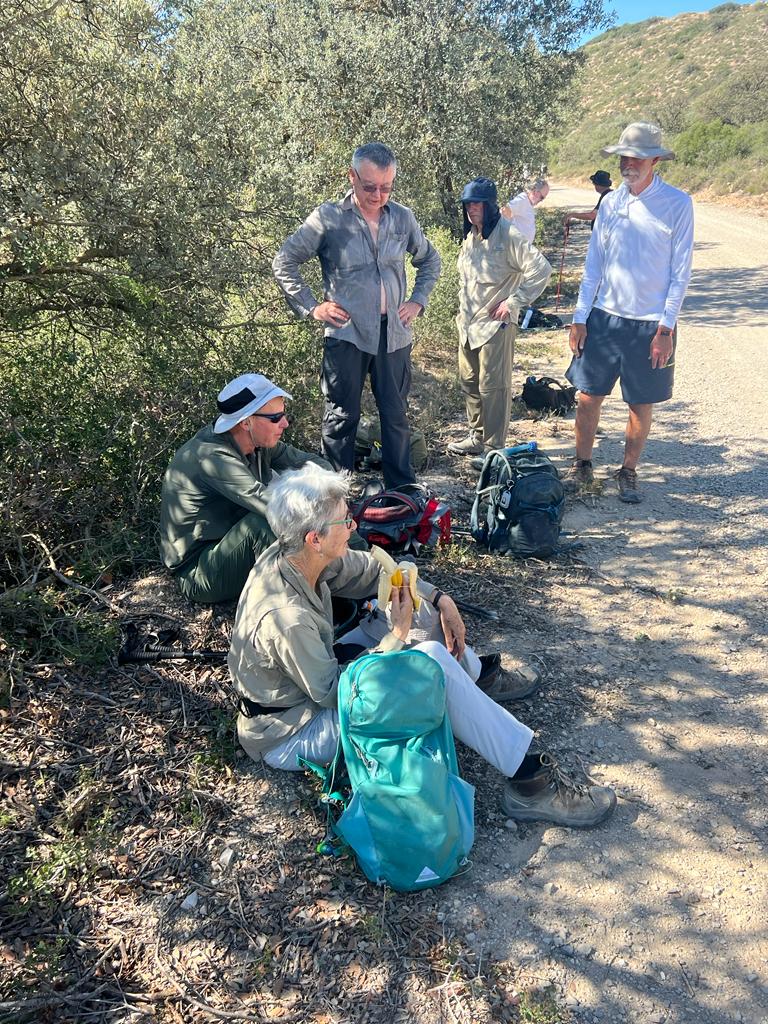
Shade was at a premium today, and we tried to find some when we stopped each hour
We visited a church that was burned down during the Spanish Civil War and reconstructed
We met a man in one of the squares in Tarrega who had his dog wearing a hat and sunglasses
Walking through one of the small villages on the way. (L-R) Joe Napolitano, Bob Foley and Peter Davine ahead
Some of the day we walked on bitumen which reflected the heat
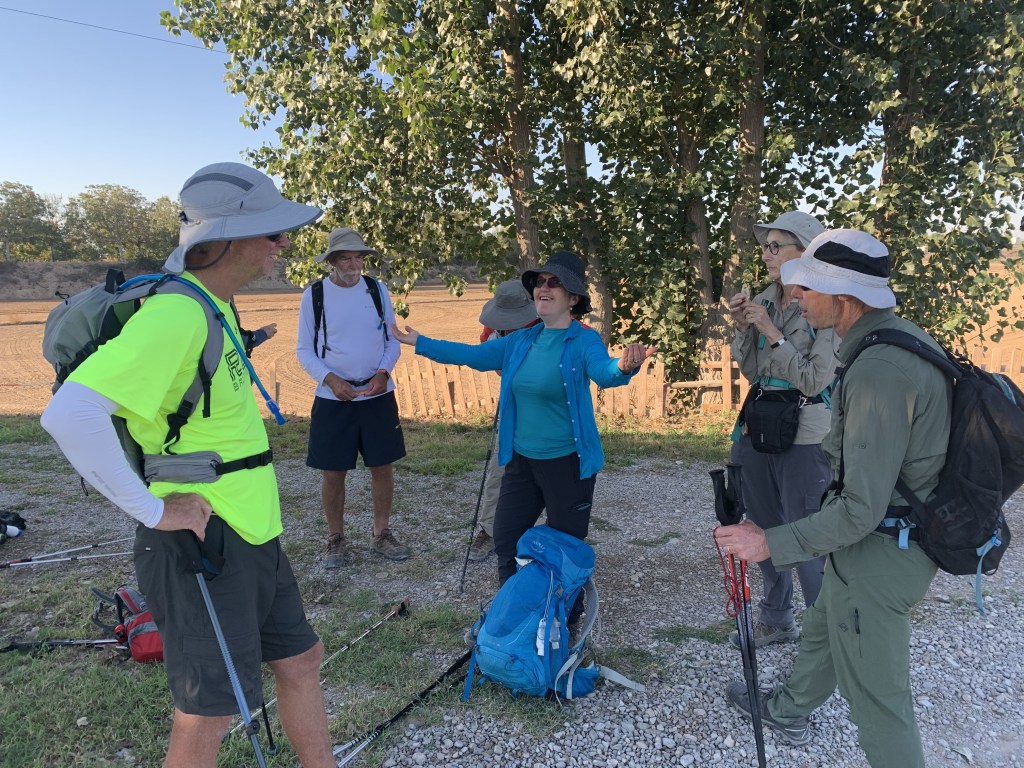
Don and Katherine Stewart, Paddy Mugavin, Peter Davine, John Egner, with Bob Foley and Nicola Reynolds in the background seeking some shade during our break
There is extensive irrigation in this area, but the water levels are low because there has been a drought for three years
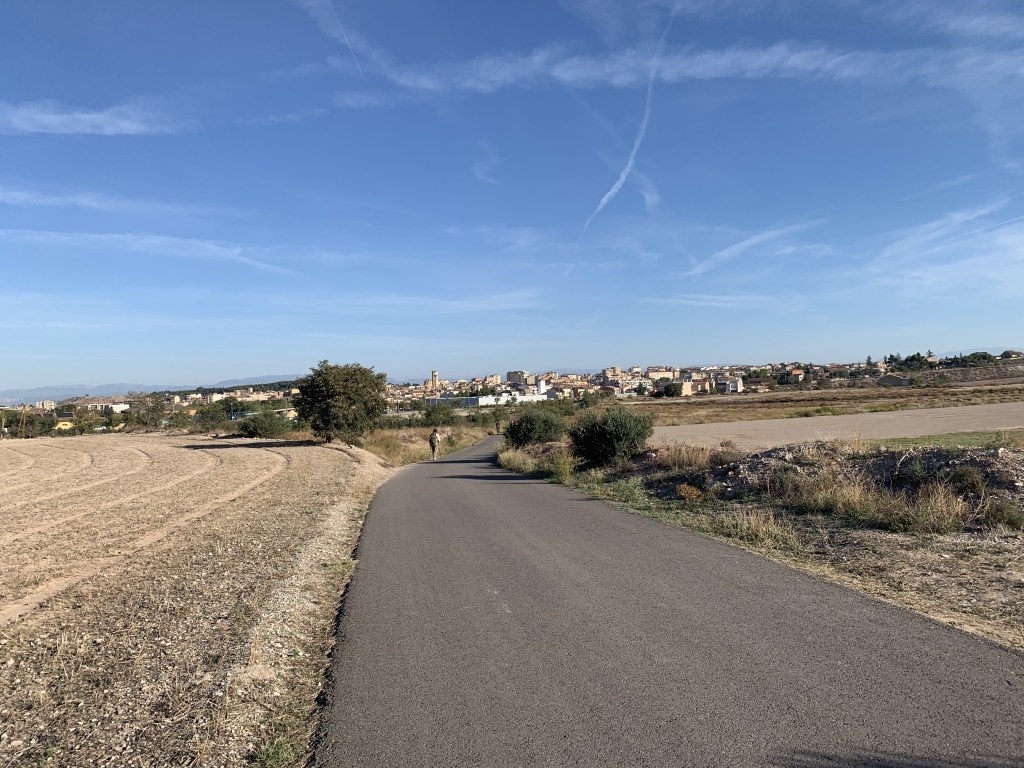
Joe Napolitano and I can see the town of Cervera in the distance, but it is still 1.5 hours of walking in the heat away
Katherine Stewart, Jim Strickler, and Tim Voelkel explore Cervera in the early evening

The Thousand Names of God[1]


IN THIS PRAYER YOU INVENT MANY NAMES FOR JESUS. Imitate the Psalmist who was not satisfied with the usual names of God like Lord, Saviour, King, but, with the creativity that comes to a heart full of love, invents new ones. “You are my rock,” he says, “my shield, my fortress, my delight, my song …”

So, give vent to your creativity: Jesus, my joy… Jesus, my strength… Jesus, my love… Jesus, my delight… Jesus, my peace…

Each time you breathe out, recite one of these names. If a particular name appeals to you say it more than once. Or recite it once and then rest lovingly in it for a while saying nothing… then take up another name… rest in it… and move on to another…

Now comes the part of the exercise that you may find moving:

Imagine you hear Jesus inventing names for you! What do you feel when you hear him call you by these names?

People frequently turn away from listening to the loving words that Jesus is saying to them. It is more than they can take — too good to be true. So, they either hear Jesus say negative things to them like Sinner… etc., or else they go blank and hear him say nothing! They still have to discover the God whose love for them is unconditional and infinite and to let themselves feel loved by God. That is just what this exercise will help them do.

Go one step further now and imagine you hear Jesus inventing names for you — the very same names that you invented for him — except those that directly express divinity… Do not be afraid to expose yourself to the intensity of his love.

There is a facet of the personality of Christ Jesus, a “face” of Christ Jesus, which is proper to each one of us, so that each one of us can in truth speak of “my Jesus” — not just piously, but in a deep theological and doctrinal sense.

There is a profoundly interpersonal love relationship between Christ Jesus and me — one opening out onto my social responsibilities and commitments in Christian witness and mission.

Maybe the names that Jesus calls you give you a sense of your unique God-given Name of Grace…

[1] Anthony de Mello, Sadhana— a way to God.  

Exploring my images of God and self

The following reflection is one way of getting in touch with your images of God and your images of yourself:[1]

Imagine you are sitting on the top of a mountain that is overlooking a vast city. It is twilight, the sun has just set, and you notice the lights coming on in the great city… Watch them coming on until the whole city seems like a lake of lights… You are sitting there all alone, gazing at this beautiful spectacle… What are you feeling?

After a while, you hear footsteps behind you and you know that they are the footsteps of a holy man who lives in these parts, a hermit. He looks at you and gently says just one sentence to you: “If you go down to the city tonight you will find God.” Having said this, he turns around and walks away. No explanations, no time for questions…

You have a conviction that this man knows what he is talking about. What do you feel now? Do you feel like acting on his statement and going into the city? Or would you rather stay where you are?

Whatever your inclination, go down now into the city in search of God… What do you feel as you go down?

You have now come to the outskirts of the city and you have to decide where to go to search for God and find him… Where do you decide to go? Please follow the dictates of your heart in choosing the place you go to. Don’t be guided by what you think you ‘ought’ to do, or go to where you ‘ought’ to go. Just go where your heart tells you to go….

What happens when you arrive at this place?… What do you find there?… What do you do there?… What happens to you?… Do you find God there?… In what way?… Or are you disappointed?…. What do you do then?… Do you choose to go somewhere else?… Or do you just stay where you are?…

Now change the fantasy. Choose some symbol for God; anything that for you symbolizes God best — the face of a child, a star, a flower, a tranquil lake… What symbol do you choose?…. Take your time in choosing it. Having chosen your symbol, stand reverently in front of it… What are you feeling as you gaze at this symbol?… Say something to it… Now imagine that it speaks back to you. What does it say?

I want you to become this symbol… and, having become this symbol look at yourself standing out there reverently…. What do you feel as you see yourself from the viewpoint and attitude of the symbol?… Now return to yourself standing there in front of the symbol… Stay for a while in silent contemplation… then say goodbye to your symbol… knowing that you can and will come back to it… Take a minute or two for this and then end the exercise.

It may be helpful to write down or draw your personal image or metaphor, and your image or symbol of God in your journal.


[1] This prayer exercise is from Anthony de Mello’s book Sadhana— A Way to God. Anand, India: Gujarat Sahitya Prakash, 1988.

True and False Images of God and Self

In the following pages, lists of negative and positive feelings, and false and true images of God and self are given. The feelings and images mentioned are common enough, but they are no more than illustrations selected from the much more varied experiences of actual individuals.[1]

1.    Negative feelings are experienced by everyone

It is important to notice your “black” feelings. It is alright and not a sin to experience negative feelings.

2.    Patterns of negative feelings may suggest themes for prayer

If you have a recurrent set of negative feelings (that is, a persistent return of the same kind of feelings), this might indicate the graces you need from God and what theme, what Scripture passages, might be useful for you to pray over.

3.    False images of God are linked to negative feelings

Traditionally Jews and Christians have warned against the worship of idols. Idols are false images of God. But here the phrase refers to imaginative forms at work within your own soul, rather than in the outside world. We are not usually conscious in a direct way of the false images that influence us. But our negative feelings in religious matters may lead us to new discoveries, to clarify what we have only vaguely sensed, about the way the divine mystery in our lives is subjectively “shaped” and narrowed by false images. If progress is made in recognizing a false image of God, the power of that false image begins to weaken. It may not disappear altogether until it is replaced by a better image.

4.    False images of self are usually linked to false images of God

Our relationship with divine mystery tends to be an interpersonal polarity, and corresponding to a false image of God at the upper end of the pole, we will usually find a false image of one’s self at the lower end. For example, if you feel God is like a “cold father”, you may feel yourself to be a “neglected child”. Such false self-images need to be identified in all their particularity in order to get free of any self-pity, anger, or bitterness that holds them in place. They are not always easy to dislodge — they often have been “in possession” of your soul for too long a time.

5.    True images of God are given in the Eight Themes

It is not enough to clean out false images from your spiritual cupboard. The beautiful and true images of God revealed to us in Scripture need to be recognized, brought gladly into our hearts, and given the place of honor in the heights of our spirit. You cannot do without images — those subjective structures of the human imagination that mediate and enable experiences of the divine mystery. But in Jesus Christ, the Divine Word, all the self-revealing acts of God were taken up and brought to their fullest symbolic power. Jesus is God’s self-image. God’s self-image is inexhaustible because God exceeds the limits of human receptivity. In the whole Bible, therefore, but especially in the Gospels, true images of God are expressed and given to us in a rich variety of situations, actions, and interpersonal exchanges. Pray with Scripture passages that bring true images of God into your deepest soul, and you will find healing and growth.

6.    True images of self may also need attention

As prayer with the “Eight Themes” proceeds, you may discover which false images afflict and inhibit you. It is hoped that God will provide you with new self-images which may replace any old ones which have come to light and have begun to wither. Sometimes we have to “bend the iron the wrong way” by strongly emphasizing the true self-image: “I am a chosen person.” “I am a beloved disciple of Jesus.” “I am a beautiful holy being”.

7.    Your true images of God and self may be associated with your Name of Grace

If you are making headway with true images of God and of self, you will usually begin to experience positive feelings more often. The lists of feelings and images given in the two models are merely examples of what you might experience. In practice, you will probably have diverse images of God and self. Maybe your true images of God and self will give you a sense of your unique Name of Grace.


[1] John Wickham, SJ “Appendix A: Eight Themes for Prayer with Scripture” in Prayer CompanionsHandbook. Ignatian Centre Publications, Montreal, Quebec Canada Third Edition, 1991, p. 200ff.

TABLE 1: False Images of God and Self

  NEGATIVE FEELINGS    FALSE IMAGES OF SELF  FALSE IMAGES OF GOD  PRAYER THEMES
  DISTRUST weak hope, despair    Neglected child unwanted, uncared for  Cold, aloof Father, uninterested, uncaring  God provides for me  
  SELF-HATRED   worthless “no good”    Flawed Being   an accident, a mistake  Insane Inventor,  
mad scientist,
makes evil things
  God chose to make me
  FAILURE useless to try fatalism    Incapable Person weak or battered child  Relentless Judge demanding very high standards  God loves to gift me
  GUILT defensiveness resentment    Criminal prisoner in a dungeon  Angry Policeman anxious to arrest and condemn  God desires to forgive me
  DEADNESS blocked feelings emptiness    Dull Subject zombie lifeless  Life-draining Boss Bluebeard Dracula  Jesus is my personal saviour
  STAGNATION no forward movement, boredom    Forgotten Slave   going through empty motions  Cruel Taskmaster   requires endless duties  Jesus calls me beyond all things
  MISUNDERSTAND-ING self-doubt, lack of meaning  Used Person   unlistened to, disregarded  Cold-Hearted Manager exploits and manipulates others    Jesus makes me His disciple
  ISOLATION not needed, unwanted by peers    Rejected Person unconnected, unfulfilled  Distant Tyrant Big Brother, suspicious of love  Jesus joins me to His Body    

TABLE 2: True Images of God and Self

  PRAYER THEMES    TRUE IMAGES OF GOD  TRUE IMAGES OF SELF  POSITIVE FEELINGS  
  God provides for me  Father Who Cares  Treasured Child surrounded with concern  CONFIDENCE, SECURITY, felt deep down  
  God, Chooses to make me  Loving Maker  Beautiful, Holy Being, goodness in depths of soul  AWE AND DELIGHT for all that exists  
  God loves to gift me    Giver of Gifts  Gifted Person filled with Potential    HOPEFULNESS powers will develop more and more  
  God desires to forgive me  Merciful Lord  Forgiven Sinner graced with pardon    PEACE ever-renewed forgiveness  
  Jesus is my personal saviour    Personal Saviour  Receiver of Divine Life new powers of soul  SENSE OF FREEDOM expanding life  
  Jesus calls me beyond all things  The One Who Calls  Chosen Person, hearer of God’s call    JOYFULNESS saying “Yes” generously  
  Jesus makes me his disciple  Intimate Lord  Beloved Disciple Jesus shares Himself  NEARNESS OF DIVINE LOVE appreciation of beauty  
  Jesus joins me to His Body  The Head of the Body  One who belongs; participant in community  HAPPINESS forgetting self in others  

TABLE 3: Prayer themes, graces and scripture readings

  PRAYER THEMES  GRACE TO BE PRAYED FOR  SCRIPTURE READINGS
  1.  God provides      for me     A deeper trust in the Father’s care for me Lk. 11: 1-11   Jesus’ teaching on prayer
Is. 41: 8-14    Do not be afraid
Mt. 10: 28-31  Do not be afraid
  2.  God chooses      to make me          A stronger “Yes” to my own existenceIs. 45: 9-13    Does a clay pot argue?
Eph. 2: 4-10   We are God’s handiwork
Jn 1: 1-18      In the beginning was the Word
  3.  God gives      Himself to me    The power to rejoice in my personal union with HimLk. 1: 46-55    My soul glorifies the Lord
Rm. 8: 26-39   We do not know what to pray
Ps. 34: 1-10    He delivered me  
  4.  God desires      to forgive me     A deeper sense of His mercy for meLk. 15: 11-32  Prodigal Son
Lk. 7: 36-50   The sinful woman
Lk. 19: 1-10    Zacchaeus the tax collector  
  5.  Jesus desires      to save me       To allow Him to act freely in meJn. 10: 7-18    I am the Good Shepherd
Gal. 2: 19-21   I live no longer but Christ lives
2 Cor. 4: 7-11  Treasure in jars of clay
  6.  Jesus calls      me beyond myself     To respond with generosity to His callJn. 1: 35-51    Jesus calls his disciples
Mt. 4: 18-22   Jesus calls his disciples
1 Sam. 3:1-14 The Lord calls Samuel  
  7.  Jesus makes me his intimate disciple     A deeper personal knowledge and love of JesusJn. 13: 1-17    Jesus washes the disciples’ feet
Mt. 11: 25-30  The Father revealed in the Son
Lk. 6:27-38    Love for enemies
  8.  Jesus unites  me to His BodyTo grow in my ability to share with and receive from others  Phil. 2: 1-8    Becoming obedient unto death
Rom. 12: 3-13  We, though many, form one body
Jn. 15: 12-17   Love one another as I love you  

Verdú — the hometown of Saint Pierre Claver

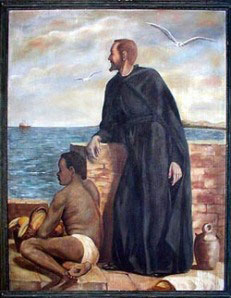
Our destination today was Verdú, a small village with great significance for the Society of Jesus in Cataluña, as it is here that the Jesuit Saint Pierre (Peter) Claver was born and raised.

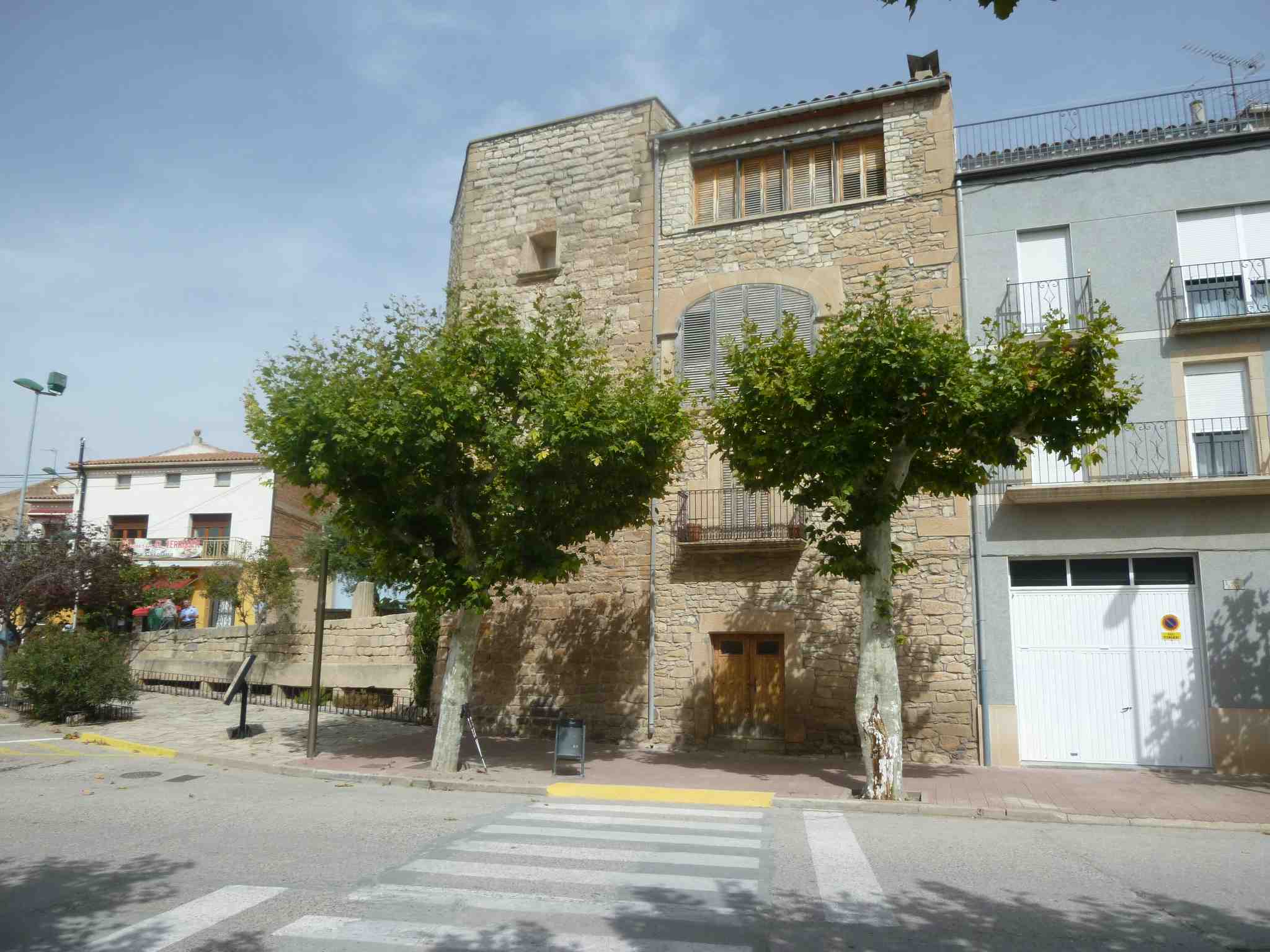
St Peter Claver's family home in Verdu
St Peter Claver’s family home in Verdu
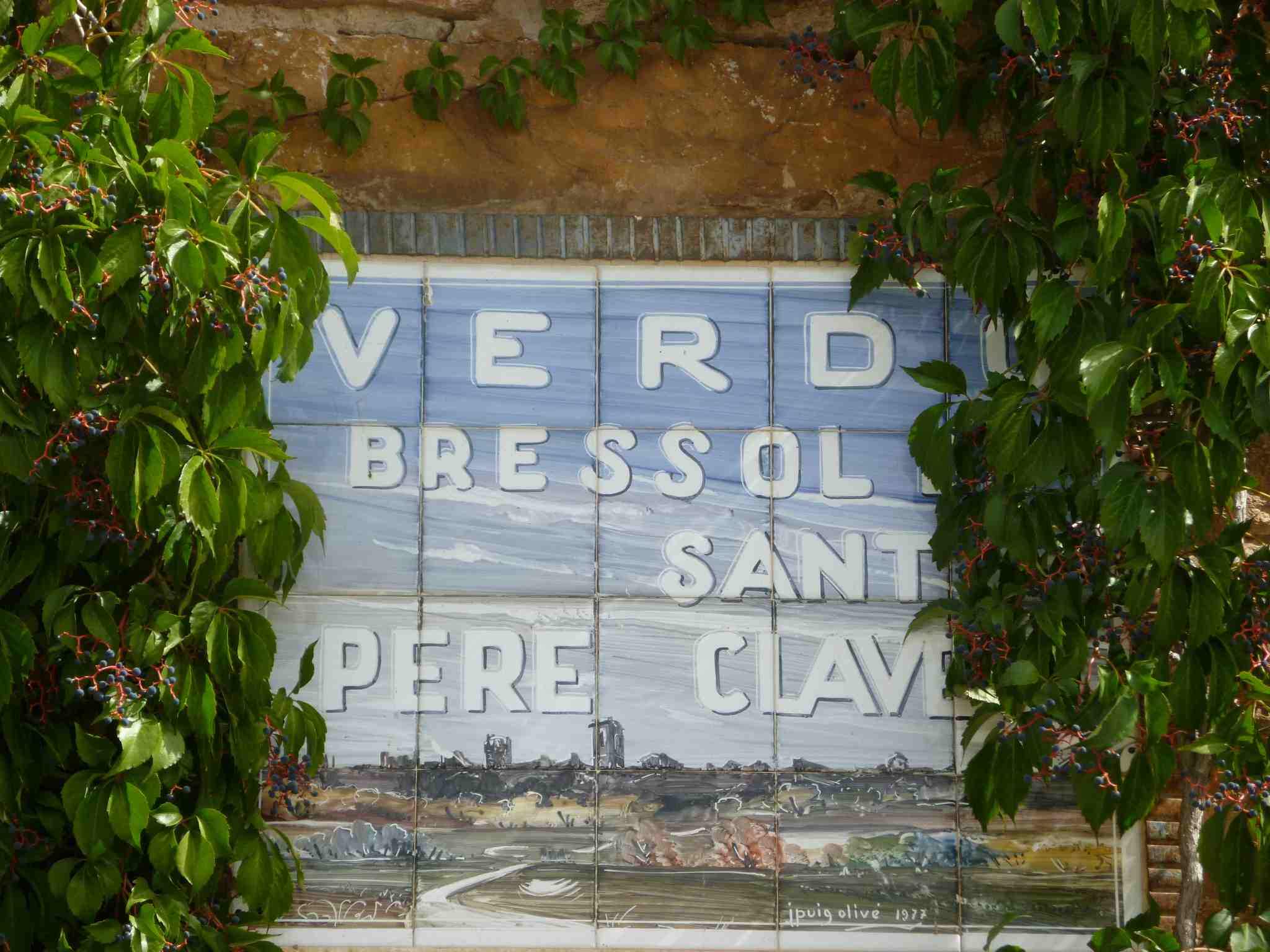
Sign on St Peter Claver's house
Sign on St Peter Claver’s house
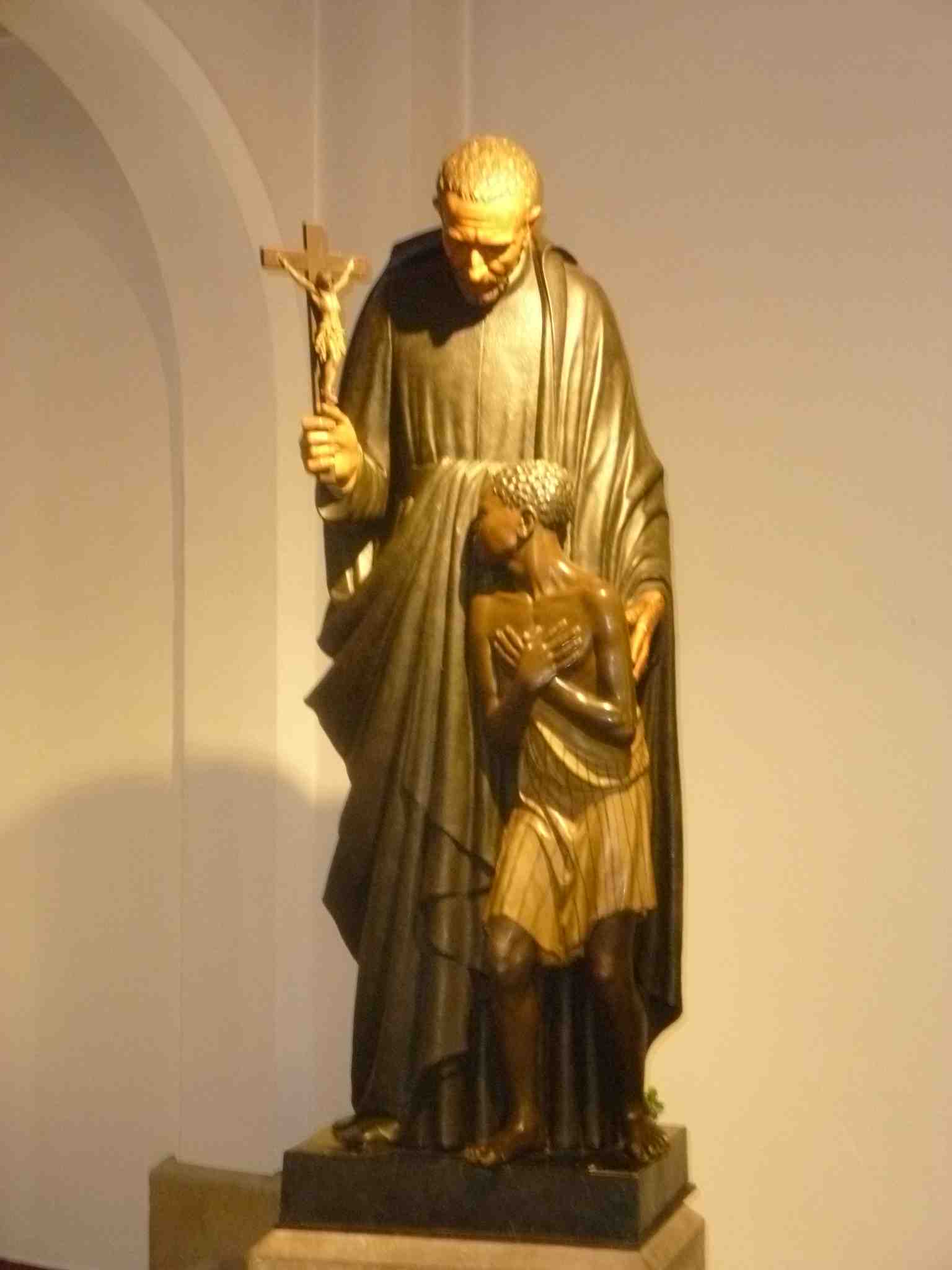
Statue of St Peter Claver in the Church

He would later become known as the “holy defender of the black slaves” in the port of Cartagena de Indias (Colombia).

St Peter Claver
St Peter Claver

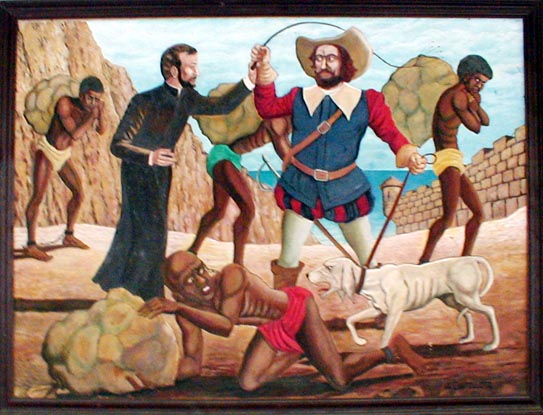
This was a dark time in history, stained by the injustice and cruelty of slavery. According to Glen David Short:

Between the 16th and the 19th centuries, more than 14,000,000 Africans were forcibly brought to the Americas. Hunted down like animals, they were chained together and loaded aboard the dark, damp, stinking hold of ships bound for the New World. Shipboard conditions were sickening, and beyond human description. One-third of the “cargo” was spared, for they died en route. In Cartagena they were sold in markets.

For more see: http://www.cartagenainfo.net/glenndavid/sanpedroclaver.html

Peter Claver was a witness to the arrival of slave ships and saw how the slaves were treated. He began to go to the port when a ship arrived, welcoming them with an open heart and a smile on his lips, at the same time distributing clothing, food, drink, and sweets. He wrote that he spoke to them not with words but with his hands and work. It was useless to speak to them any other way.  He would kneel beside the sick, wash them, tend to them, and try to make them happy with as many demonstrations of care as human nature can show to help lighten the burden of a sick person. His life was a beautiful example of human and evangelical love for his dear slaves. He cared for them materially, instructed them in the faith, and baptized them, always considering himself their servant. On April 3, 1622, he made a solemn commitment which he expressed with the following words: “Slave of the Black Slaves forever.” He signed it and fulfilled it with his life.

Here is some additional information about this Jesuit saint:

St Peter Claver was a Spanish Jesuit who gave his life in service to slaves in Columbia in Latin America. He was born in 1580 into a noble but not well-off family in Verdu in Spain and studied in Barcelona. He entered the Society of Jesus in 1601. When he studying philosophy in the Jesuit college in Majorca, Claver was encouraged by the saintly Brother Alphonsus Rodriguez to go to the new missions in America and save “millions of perishing souls.” In 1610 he landed in Cartagena, Columbia and, after completing his studies in Bogotá, he was ordained in 1616.

Map of Cartagena
Map of Cartagena

Cartagena was one of two ports where slaves from Africa arrived to be sold in South America. For 33 years, from 1616 to 1650, Peter Claver worked daily to minister to the needs of the 10,000 slaves who arrived each year.

94

When a ship arrived, Peter first begged for fruits, biscuits, or sweets to bring to the slaves. He then went on board with translators to bring his gifts as well as his skills as a doctor and teacher. Claver entered the holds of the ships and would not leave until every person received a measure of care. Peter gave short instruction in the Catholic faith and baptized as many as he could. In this way he could prevail on the slave owners to give humane treatment to fellow Christians.

The treatment of slaves

He was accused of being over-zealous, and of having profaned the Sacraments by giving them to creatures who scarcely possessed a soul.   The fashionable women of Cartagena refused to enter the churches where Father Claver assembled the slaves. His superiors were often influenced by his critics and some tried to curtail his activities. By 1651 he had baptized more than 300,000, when he at last became weakened by the plague.

In the last years of his life, Peter was too ill to leave his room and he was poorly cared for.  Claver never complained. He was convinced that he deserved this treatment.

When Cartagenians heard that Peter Claver was dying, they crowded into his room to see him for the last time. They treated Peter Claver’s room as a shrine, and stripped it of everything but his bedclothes for mementos. He died on 8 September 1654.

See: http://spirituality.ucanews.com/2013/09/09/st-peter-claver

The town of Verdú.  The most important religious monument in Verdú is the 13th-century parish church of Santa Maria, with its Romanesque portal. Inside are the 15th-century Gothic sculptures of the Virgin, in polychrome stone, and that of Saint Flavia, patron saint of the town. Beside the church stands the 12th-century castle, around which the community developed. The castle is currently being restored.

Now I become myself[1]


HERE IS ANOTHER WAY to understand the idea of Identity —> Vocation —> Mission = Name of Grace. In an article entitled Now I Become Myself, Parker Palmer writes:

“It can take a long time to become the person one has always been. Often in the process we mask ourselves in faces that are not our own. There can be much dissolving and shaking of ego to endure before we discover our deep identity — the true self within every human being that is the seed of authentic vocation. We hear a lot about vocation in the church. Vocation, or calling, is sometimes seen as coming from a voice external to ourselves, a voice of moral demand that asks us to become someone we are not yet — someone different, someone better, someone just beyond our reach. That concept of vocation is rooted in a deep distrust of selfhood, in the belief that the sinful self will always be “selfish” unless corrected by external forces of virtue. It is a notion that can make us feel inadequate to the task of living our own lives, creating guilt about the distance between who we are and who we are supposed to be, leaving us exhausted as we labor to close the gap. But there is another way of looking at vocation — not as a goal to be achieved but as a gift to be received. Discovering vocation does not mean scrambling toward some prize just beyond my reach but accepting the treasure of true self I already possess. Vocation does not come from a voice “out there” calling me to become what I am not. It comes from a voice “in here” calling me to be the person I was born to be, to fulfill the original selfhood given me at birth by God.

The birthright gift
 It is a strange gift, this birthright gift of self. Accepting it turns out to be even more demanding than attempting to become someone else. We sometimes respond to that demand by ignoring the gift, or hiding it, or fleeing from it, or squandering it. There is a Hasidic tale that reveals, with amazing brevity, both the universal tendency to want to be someone else and the ultimate importance of becoming one’s self. Rabbi Zusya, when he was an old man, said, “In the coming world, they will not ask me: ‘Why were you not Moses?’ They will ask me: ‘Why were you not Zusya?’”

“We arrive in this world with birthright gifts — then we spend the first half of our lives abandoning them or letting others disabuse us of them. As young people, we are surrounded by expectations that may have little to do with who we really are, expectations held by people who are not trying to discern our selfhood but to fit us into slots. In families, schools, workplaces and religious communities, we are trained away from true self toward images of acceptability; under social pressures like racism and sexism our original shape is deformed beyond recognition; and we ourselves, driven by fear, too often betray true self to gain the approval of others. We are disabused of original giftedness in the first half of our lives. Then — if we are awake, aware and able to admit our loss — we spend the second half trying to recover and reclaim the gift we once possessed.

Wearing other people’s faces
 When we lose track of true self, how can we pick up the trail? One way is to seek clues in stories from our younger years, years when we lived closer to our birthright gifts. From the beginning, our lives lay down clues to selfhood and vocation, though the clues may be hard to decode. But trying to interpret them is profoundly worthwhile — especially when we are in our forties or fifties, feeling profoundly lost, having wandered, or been dragged, far away from our birthright gifts.”Wearing other people’s faces
 When we lose track of true self, how can we pick up the trail? One way is to seek clues in stories from our younger years, years when we lived closer to our birthright gifts. From the beginning, our lives lay down clues to selfhood and vocation, though the clues may be hard to decode. But trying to interpret them is profoundly worthwhile — especially when we are in our forties or fifties, feeling profoundly lost, having wandered, or been dragged, far away from our birthright gifts.

“Those clues are helpful in counteracting the conventional concept of vocation, which insists that our lives must be driven by “oughts.” As noble as that may sound, we do not find our callings by conforming ourselves to some abstract moral code. We find our callings by claiming authentic selfhood, by being who we are, by dwelling in the world as Zusya rather than straining to be Moses. The deepest vocational question is not “What ought I to do with my life?” It is the more elemental and demanding “Who am I? What is my nature?”

“Everything in the universe has a nature, which means limits as well as potentials, a truth well known by people who work daily with the things of the world. Making pottery, for example, involves more than telling the clay what to become. The clay presses back on the potter’s hands, telling her what it can and cannot do — and if she fails to listen, the outcome will be both frail and ungainly. Engineering involves more than telling materials what they must do. If the engineer does not honor the nature of the steel or the wood or the stone, his or her failure will go well beyond aesthetics: the bridge or the building will collapse and put human life in peril.

“The human self also has a nature, limits as well as potentials. If you seek vocation without understanding the material you are working with, what you build with your life will be ungainly and may well put lives in peril, your own and some of those around you. “Faking it” in the service of high values is no virtue and has nothing to do with vocation. It is an ignorant, sometimes arrogant, attempt to override one’s nature, and it will always fail.

Joining self and service
 Our deepest calling is to grow into our own authentic selfhood, whether or not it conforms to some image of who we ought to be. As we do so, we will not only find the joy that every human being seeks — we will also find our path of authentic service in the world. True vocation joins self and service, as Frederick Buechner asserts:

“By and large a good rule for finding out is this: the kind of work God usually calls you to is the kind of work (a) that you need most to do and (b) that the world most needs to have done. … The place God calls you to is the place where your deep gladness and the world’s deep hunger meet.[1]

“Buechner’s definition starts with the self and moves toward the needs of the world: it begins, wisely, where vocation begins — not in what the world needs (which is everything), but in the nature of the human self, in what brings the self joy, the deep joy of knowing that we are here on earth to be the gifts that God created.

“Contrary to the conventions of our thinly moralistic culture, this emphasis on gladness and selfhood is not selfish. The Quaker teacher Douglas Steere was fond of saying that the ancient human question “Who am I?” leads inevitably to the equally important question “Whose am I?” — for there is no selfhood outside relationship. We must ask the question of selfhood and answer it as honestly as we can, no matter where it takes us. Only as we do so can we discover the community of our lives. As I learn more about the seed of true self that was planted when I was born, I also learn more about the ecosystem in which I was planted — the network of communal relations in which I am called to live responsively, accountably, and joyfully with beings of every sort. Only when I know both seed and system, self and community, can I embody the great commandment to love both my neighbor and myself.

“There are at least two ways to understand the link between selfhood and service. One is offered by the poet Rumi in his piercing observation: “If you are here unfaithfully with us, you’re causing terrible damage.” If we are unfaithful to true self, we will extract a price from others. We will make promises we cannot keep, build houses from flimsy stuff, conjure dreams that devolve into nightmares, and other people will suffer — if we are unfaithful to our true self.

Herbert Alphonso SJ writes:

the single greatest grace of my life is that I discerned my truest and deepest ‘self’, the unrepeatable uniqueness God has given to me in ‘calling me by name’… My own personal experience and my ministry of the Spirit have taught me that the deepest transformation in any person’s life takes place in the actual living out of this very ‘personal vocation’.[2]

Alphonso believes that the experience of one’s ‘fundamental consolation’, one’s ‘God-given uniqueness’, which he calls one’s ‘personal vocation’[3] is not only the ground of one’s relationship with God, but is foundational in any process of discernment. Dermot Mansfield SJ speaks of one’s ‘primordial experience’:

It is vital for any spirituality, or way of prayer, or process of spiritual accompaniment, to attend to that primordial experience, when I know that I have been called into existence to be uniquely who I am and to be sustained by that look of love. [4]

Alphonso argues that one’s personal vocation ‘becomes the criterion for discernment for every decision in life, even for the daily details of decision-making.’[5] He supports his argument reflecting on Jesus’ personal vocation, ‘captured in but one single word “Abba”.’[6] Based on his personal experience, Merton makes a similar claim: I have my own special peculiar destiny which no one else ever has had or ever will have… Because my own individual destiny is a meeting, an encounter with God, that God has destined for me alone… it is a gift of God to me which God has never given to anyone else and never will.[7]


[1] This article by Parker Palmer can be accessed at:  https://www.yesmagazine.org/issue/working-life/2001/04/01/now-i-become-myself

[1] Frederick Buechner, Wishful Thinking: A Seeker’s ABC, HarperOne, 1993, 118-119.

[2] Herbert Alphonso, The Personal Vocation (Rome: Centrum Ignatianum Spiritualitatis, 1990), 14. Alphonso (1930-2012) was an Indian Jesuit priest, director of the Ignatian Spirituality Centre and professor of Spiritual Theology at the Gregorian University in Rome.

[3] Alphonso, The Personal Vocation, 14.  

[4] Dermot Mansfield, “Spiritual Accompaniment and Discernment,” The Way 47, no. 1&2 (2008): 159.

[5] Ibid., 58.

[6] Ibid., 31-2.

[7] Thomas Merton in a letter to Mark van Doren, March 30, 1948. see Robert E. Daggy, ed. The Road to Joy: Letters of Thomas Merton to New and Old Friends (New York: Farrer, Straus, Giroux, 1989), 22.
Accepting the treasure of the true self I already possess

Scripture 1 Corinthians. 12:4-13

Now there are varieties of gifts, but the same Spirit; and there are varieties of services, but the same Lord; and there are varieties of activities, but it is the same God who activates all of them in everyone. To each is given the manifestation of the Spirit for the common good. To one is given through the Spirit the utterance of wisdom, and to another the utterance of knowledge according to the same Spirit, to another faith by the same Spirit, to another gifts of healing by the one Spirit, to another the working of miracles, to another prophecy, to another the discernment of spirits, to another various kinds of tongues, to another the interpretation of tongues. All these are activated by one and the same Spirit, who allots to each one individually just as the Spirit chooses. For just as the body is one and has many members, and all the members of the body, though many, are one body, so it is with Christ. For in the one Spirit we were all baptised into one body —Jews or Greeks, slaves or free —and we were all made to drink of one Spirit.      

Imaging

I imagine myself in the place where my deep gladness meets the world’s deep need.        

The grace I seek

I pray for the gift of knowing and accepting my truest and deepest self, the unrepeatable uniqueness God has given me in “calling me by name”, so that I might fully and creatively live out God’s call to me in my life.

Points for private prayer

  1. Ponder your birthright gift of self. These questions might help:
    1. What did I dream of becoming when I was a child?
    1. What fascinated me?
    1. What were my hobbies and interests?
    1. Have I wandered from my birthright gifts? Did others disabuse me of them?
    1. What clues to my selfhood and vocation — though the clues may be hard to decode and interpret — were laid down in my youth?
    1. What clues might there be in my childhood to the unique, God-given meaning of my life?

Writing

Spend some time at the end of the prayer making some notes on your prayer. These questions might help.

What fills you with “deep gladness”?

  • At home:
  • At work:
  • In creative projects:
  • With other people:
  • By yourself:

How do these things overlap with the deep needs of the world?

How could you give yourself more of that feeling of gladness?

What could you change in your existing roles and projects, or what new roles and projects could you pursue?

Is there anything you would need to let go of in order to find that gladness?