Remember two things about love: First, love is act, not talk; it shows itself in the deed done, not simply in words spoken. Second, love works itself out in mutual sharing, so that the lover always gives to and receives from the beloved—everything: gifts, money, convictions, honors, position.
I begin by asking the Lord God to let me become aware of myself in the divine presence, and I offer myself to God.
Then I use my fantasy. I imagine that I am standing before the throne of God, and all around me I see saints and martyrs, angels and powers and dominions. They all smile at me and seem to recommend me to God the Lord.
Then I ask God for what I want right now. I want to have an intimate understanding of myself and my life as gift, and all my world as gift, so that I will be incandescent with gratitude, and then go beyond that to love the Giver of all this, who loves me vastly in deed and in sharing.
Now, I divide my consideration of all God’s gifts and giving into four parts:
FIRST PART
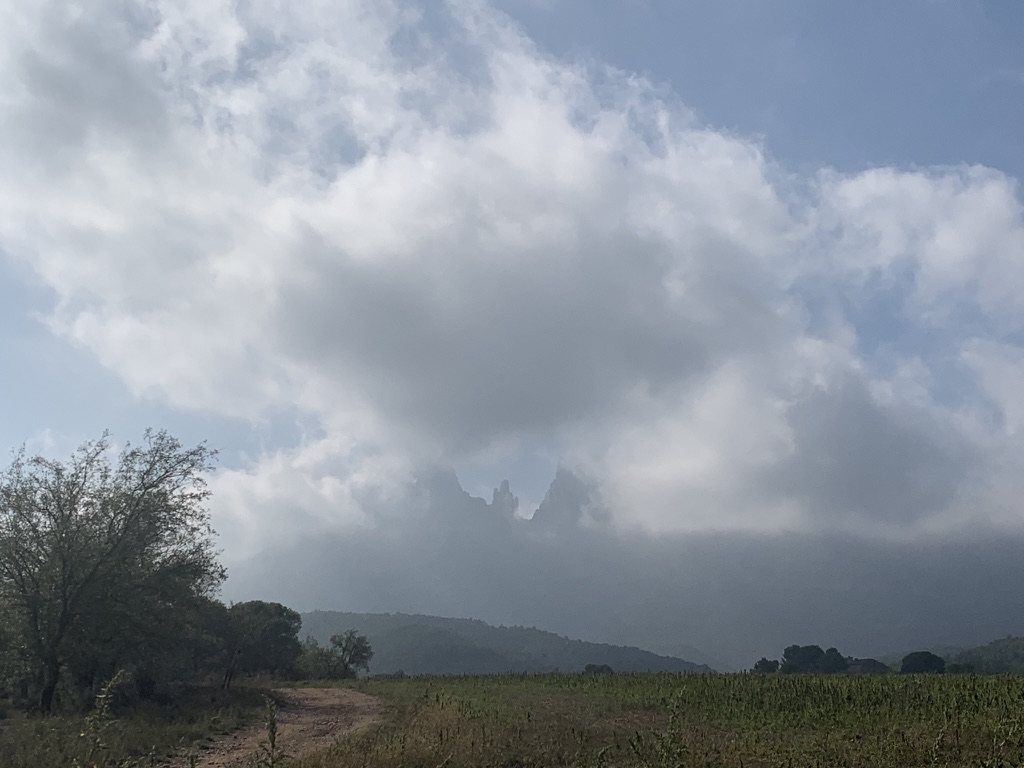
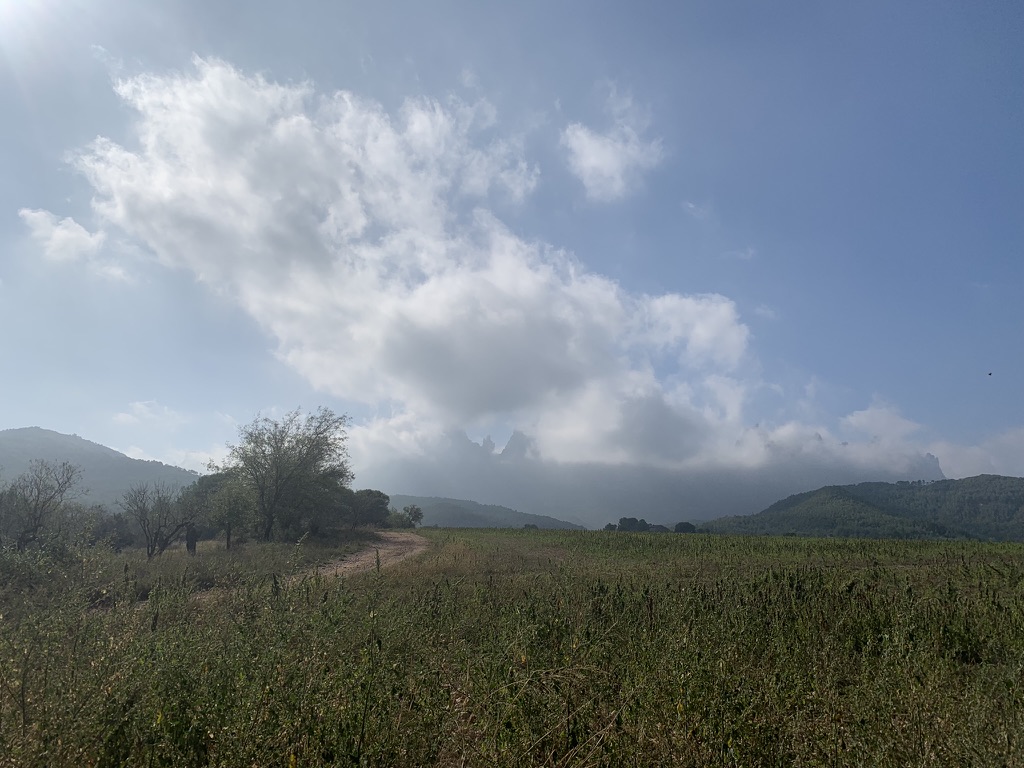
I just run through my mind all the splendors of the created world. I wonder at the vast plains and mountains and the tiny wildflower. I let my mind run among the stars and planets, and then delve into the tiniest atom with its elegant particles and forces. I remember that God has created and does create all humankind, and that God has redeemed and does redeem all peoples. And I remember how much God gives me in all this.
I consider this, and ponder it, letting my heart go out to God. The Lord has done much for me. He lavishes on me life, light, understanding, desiring, free choice, and the summons to love and to be loved.
Most astonishing of all, God plainly wants to and does communicate God’s Self to me.
Then I think about my own case, about my own life history and my own self. I am being created by this great Lord to live and function according to gifts coming from God’s Self. How am I to love in return? What makes sense except to do as God does, to give as God gives? What would be right except to offer all that I am and all that I have?
So, I say the prayer below, putting my whole mind and strength into the offering and the petition.
Take, Lord, and receive all my liberty, my memory, my understanding, and my entire will, all that I have and possess. You have given all to me. To You, O Lord, I return it. All is Yours, dispose of it wholly according to Your will. Give me only your love and Your grace, for this is sufficient for me.
SECOND PART
I look at all the varieties of creatures on the earth and in space and let it come home to me that God continues creating them and dwells within them. Through eons and eons, God faithfully stayed present to each kind of living thing, energizing by the divine presence through all the centuries the genetic codes that opened each phylum to its proper evolution. At this very moment, God gives each order and kind of creature what God can give it: To rocks, weight and solidness and presence. To plants, affinity for light and an inward impulse to grow and to mature authentically according to its kind. To animals, sight and smell and feeling, and the enormous range of impulses and instincts that move herds to migrate and butterflies to sip nectar from flowers. All of that God sustains.
Then I consider and ponder this, that God remains present at every moment to every creature. God stays there always, sustaining existence and life and reflection. For at the core of the core of all creation flames the creative love of God, summoning out of chaos and nothingness all that exists and lives and comprehends.
Finally, I think about my own case. I turn to myself and ask what this means to me? God present at my conception. God present at my birth and my growth into infancy. God faithful to me as I came to the use of reason and to freedom. God loyal to me who committed myself to be a soldier of Christ, and through my other permanent commitments. All along, the energies of God rising through mine, through digestion and gesture and muscle growth and seeing and interpreting. God the ground of my being. God the core of myself.
So I wonder what I ought to do and offer to God, now. And I say with all my heart the prayer below.
Take, Lord, and receive all my liberty, my memory, my understanding, and my entire will, all that I have and possess. You have given all to me. To You, O Lord, I return it. All is Yours, dispose of it wholly according to Your will. Give me only your love and Your grace, for this is sufficient for me.
THIRD PART
I consider that God—to use St. Peter’s words—works busily in all creation. I use a metaphor here, of course, but I can see that if God attends to each and every creature and keeps shaping instincts and consciences and raising the energies that form our weather and our interactions, then I make a lot of sense when I say that God works busily. I let my mind run through all created things: the far reaches of space, our own galaxy, the globe of the earth, imagining how God labors to keep their magnificent order and functioning. Then I enter into living things, perhaps into individual birds or animals and individual persons, imagining how God keeps nerves crackling and bone marrow producing blood, and the like. I might consider a tiny little bug or flower, and imagine how many other living and nonliving things conspired to bring it to life and sustain it.
I consider this and ponder it, letting my heart go out to God. How great God is! How full of life, and how eager to have others exist, particularly other rational creatures. God labors and hopes and keeps sustaining us even when we destroy.
Then I think about my own case, about my own life history and my own self. How did God have to labor to keep me alive? to keep me growing and learning and believing and hoping? Were there no times when I realized that God was working in me? for me?
So, I say the prayer below, putting my whole mind and strength into the offering and the petition.
Take, Lord, and receive all my liberty, my memory, my understanding, and my entire will, all that I have and possess. You have given all to me. To You, O Lord, I return it. All is Yours, dispose of it wholly according to Your will. Give me only your love and Your grace, for this is sufficient for me.
FOURTH PART
I consider that all the good that I see and know comes to be as a share in the divine good. That is, all power echoes the divine power whose action elicited it from chaos. All beauty mirrors the divine beauty and comes from it in the first place the way an image in a mirror comes from the Origin. All holiness on earth is the fragrance of God present in and with all of us. And so through justice, goodness, mercy, understanding, compassion.
Then I consider this, and ponder it, letting my heart go out to God who pours out His own Self and all His infinity of gifts.
And I think about my own case, about how my own gifts are a share, an effulgence, of God my Creator and Lord. I am like a mirror reflecting the sun. I am like a leaf’s chlorophyll, moving excitedly and warmly with the sun’s excited and warm light.
All that I am and all that I have are a participation in God.
So, I say the prayer below, putting my whole mind and strength into the offering and the petition.
Take, Lord, and receive all my liberty, my memory, my understanding, and my entire will, all that I have and possess. You have given all to me. To You, O Lord, I return it. All is Yours, dispose of it wholly according to Your will. Give me only your love and Your grace, for this is sufficient for me.
[1] Tetlow, Joseph. Choosing Christ in the World: A Handbook for Directing the Spiritual Exercises of St Ignatius Loyola According to Annotations Eighteen and Nineteen, St. Louis: Institute of Jesuit Sources, 2000.













 Walking with Inigo — The Ignatian Camino